


 简体中文
简体中文
Views: 0 Author: Site Editor Publish Time: 2026-09-12 Origin: Site
Choosing the wrong home battery can waste money or leave essential appliances without power.
A residential Energy Storage Lithium Battery must match household consumption, solar production, and backup goals. Capacity alone cannot determine the right system.
Established in 2012, Ocean Solar alongside solar panels and inverters. This guide compares 5kWh, 10kWh, and 15kWh options using practical household scenarios.
Kilowatt-hours measure how much energy a battery can store. They do not describe its maximum output power.
A 5kWh battery theoretically supplies 1kW for five hours. It could also supply 500W for ten hours. Real runtime is shorter because charging, discharging, and inverter conversion create losses.
The three common capacity classes serve different residential energy storage requirements:
Battery capacity |
Typical role |
Suitable household profile |
Main limitation |
5kWh |
Essential-load backup |
Apartments and low-usage homes |
Limited support for heavy appliances |
10kWh |
Overnight solar storage |
Average family homes |
May not cover long outages |
15kWh |
Extended or partial whole-home backup |
Large homes and high-consumption households |
Higher cost and charging demand |
These are rounded market categories. Actual nameplate ratings may be 5.12kWh, 10.24kWh, or 15.36kWh.
Nominal capacity describes all energy stored inside the battery. Usable battery capacity shows how much energy the system can safely deliver.
Depth of discharge, or DoD, determines the accessible percentage. A 10kWh battery operating at 90% DoD provides about 9kWh before conversion losses.
Round-trip efficiency also affects delivered energy. It measures energy retained after charging and discharging losses. These terms should be compared alongside capacity, not treated as minor specifications. This Speak Storage Fluently With These Key Terms | EnergySage explains their relationship.
Battery capacity is measured in kWh. Continuous output and surge output are measured in kW.
A 15kWh battery may store plenty of energy yet have insufficient output for several heavy appliances. Air conditioners, pumps, and refrigerators also require extra surge power during startup.
A compatible hybrid inverter must therefore match peak household demand. The Homeowner’s Guide to Solar | Department of Energy also explains how storage moves daytime solar energy into evening use or power outages.
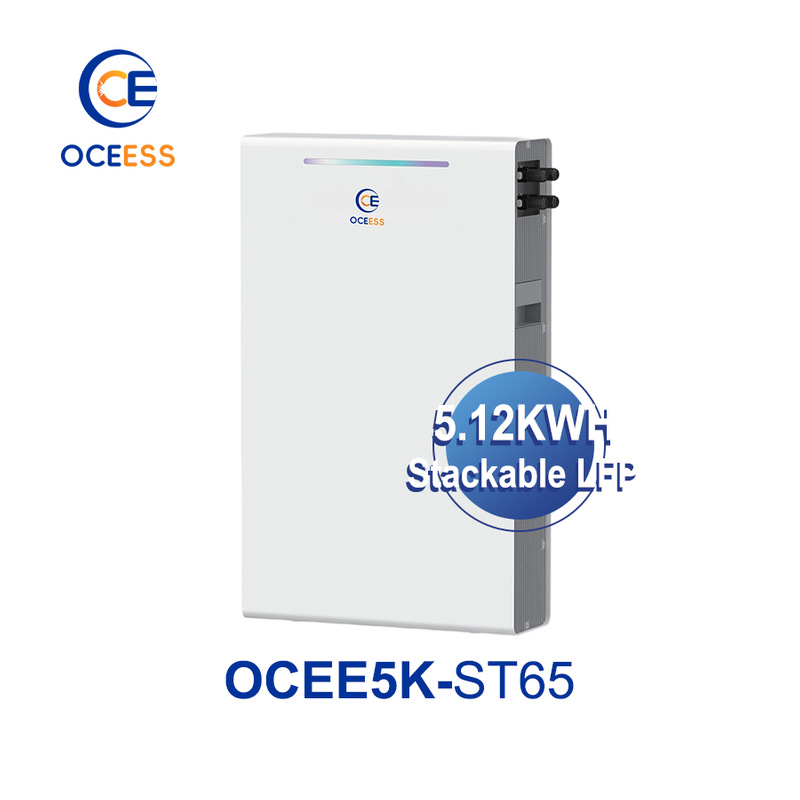
A 5kWh home battery is often suitable for apartments, small houses, and energy-efficient households. It works especially well when the main goal is increasing solar self-consumption.
During normal operation, it can store daytime solar power for evening lighting, refrigeration, internet equipment, and electronics. It may also reduce grid purchases during expensive time-of-use periods.
Typical applications include:
Powering essential loads during short grid outages.
Moving surplus solar energy into evening hours.
Supporting a refrigerator, router, lights, and computers.
Starting a modular home energy storage system affordably.
A 5kWh Energy Storage Lithium Battery is less suitable for continuous electric heating or large air conditioners. Those appliances can consume its available energy quickly.
Suppose a 5kWh battery allows 90% depth of discharge. Assume the inverter operates at 92% efficiency.
The estimated deliverable energy becomes:
5kWh × 0.90 × 0.92 = 4.14kWh
At an average 500W load, runtime reaches approximately 8.3 hours. A steady 1kW load reduces it to about 4.1 hours.
Actual results change throughout the day. Refrigerators cycle, pumps start briefly, and lighting demand varies. Homeowners should use recorded load data instead of relying only on appliance labels.
A stackable lithium battery lets buyers begin near 5kWh and add capacity later. This approach suits growing families, future solar expansion, or limited starting budgets.
For example, the OCEE5K-ST65 5.12kWh Stackable LFP Battery uses a 51.2V platform and built-in BMS. Its published specifications include CAN/RS485 communication, IP65 protection, parallel expansion, and 8,000 rated cycles.
Before expanding, confirm that the inverter supports additional battery current and communication. New modules must also follow the manufacturer’s rules for age, firmware, and state-of-charge matching.
A 10kWh home battery is a practical middle choice for many family homes. It provides twice the stored energy of a 5kWh unit without entering larger-system costs.
This capacity often suits households using most electricity after sunset. Common loads include refrigerators, televisions, computers, lighting, fans, kitchen appliances, and selected air-conditioning periods.
It can support several residential goals:
Store more daytime solar energy for overnight consumption.
Cover essential loads during longer grid outages.
Reduce electricity purchases during peak-rate periods.
Provide more flexibility for changing household routines.
However, “average household” is not a sizing standard. Two similar homes may have very different consumption because of climate, occupancy, and appliance choices.
Using the same assumptions, a nominal 10kWh battery delivers approximately 8.28kWh:
10kWh × 0.90 × 0.92 = 8.28kWh
That stored energy could support an average 500W load for about 16.5 hours. It could support a 1kW load for roughly 8.3 hours.
A practical overnight load might include:
Essential load |
Approximate operating demand |
Refrigerator and freezer |
100–250W average |
Lighting |
80–300W |
Router and electronics |
50–200W |
Fans or small appliances |
100–500W |
Selected larger appliance |
Varies considerably |
These values are planning examples rather than guaranteed consumption. A plug-in energy meter or smart electrical monitor produces better sizing data.
A 10kWh residential energy storage battery does not automatically provide whole-home backup. Electric water heaters, ovens, well pumps, and central HVAC equipment create much higher loads.
Extended outages also change the calculation. Without daytime solar recharging, even an efficient home can use 10kWh quickly.
Solar array size matters as well. An undersized array may not recharge the battery after overnight use, especially during cloudy weather. Oversizing battery capacity without enough charging energy often produces poor utilization and a longer payback period.
A 15kWh home battery is better suited to large houses or households requiring longer backup duration. It also provides more room for high daytime solar production.
This capacity may fit homes using heat pumps, electric cooking, well pumps, or frequent air conditioning. It can also support limited electric vehicle charging, although regular EV charging may require considerably more energy.
Common applications include:
Partial whole-home battery backup during grid failures.
Extended overnight operation for essential household loads.
Higher solar self-consumption from larger rooftop arrays.
Backup support for home offices or medical equipment.
Greater energy independence in areas with unstable grids.
A 15kWh battery should still be paired with load management. Turning off nonessential appliances can extend backup time significantly.
At 90% DoD and 92% inverter efficiency, a 15kWh battery provides about 12.42kWh:
15kWh × 0.90 × 0.92 = 12.42kWh
That supports a 500W average load for nearly 24.8 hours. A 1.5kW load reduces estimated runtime to about 8.3 hours.
These figures show why average load matters. Battery capacity does not guarantee a fixed number of backup hours.
Solar production can extend runtime during daylight. However, weather, shading, panel orientation, and seasonal sunlight influence recharging performance. Off-grid systems usually need an additional reserve for consecutive low-solar days.
A larger Energy Storage Lithium Battery is not always more economical. Unused capacity adds cost without producing greater savings.
A 15kWh system may be oversized when evening consumption remains below 4kWh. It may also charge slowly when paired with a small solar array or low-powered inverter.
Expansion plans should be realistic. Future electric vehicles, heat pumps, or additional family members may justify extra capacity. Vague expectations usually do not.
Buyers should compare annual battery throughput, expected electricity savings, available incentives, and warranty terms. Local grid rules may also determine whether stored energy can be exported.
Begin by identifying the appliances that must operate from the battery. Record each appliance’s power and expected daily runtime.
Use this calculation:
Daily energy demand = appliance power × operating hours
Add all required loads. Then adjust for depth of discharge and conversion efficiency:
Required nominal capacity = target energy ÷ usable fraction ÷ system efficiency
For example, a household needs 7kWh of delivered energy. The selected battery allows 90% DoD, while estimated system efficiency is 92%.
7 ÷ 0.90 ÷ 0.92 = 8.45kWh
A 10kWh battery provides a reasonable capacity margin. A 5kWh battery would require load reduction or daytime recharging.
Capacity should never be evaluated alone. Review these specifications before purchasing:
Usable capacity: Confirm accessible energy after depth-of-discharge limits.
Continuous output: Ensure normal household loads remain below this rating.
Surge power: Check motor, compressor, and pump startup requirements.
Battery chemistry: LiFePO4 batteries are widely chosen for residential storage.
Cycle life: Compare test conditions, remaining capacity, and warranty limits.
BMS functions: Look for cell balancing and electrical protection.
Inverter communication: Verify CAN or RS485 protocol compatibility.
Protection rating: Match indoor or outdoor installation conditions.
Scalability: Confirm how many battery modules can operate in parallel.
A qualified installer should inspect the electrical panel, inverter, cable sizes, ventilation, and installation location. Local permits and grid interconnection rules may also apply.
Outdoor installations need suitable ingress protection and temperature limits. Indoor batteries require safe clearances, stable mounting, and adequate access for maintenance.
Ocean Solar supports tailored solar and storage configurations, plus installation, commissioning, maintenance, and technical guidance. This system-level approach helps match battery capacity, inverter power, and solar generation.
Choose 5kWh for essential loads and modest evening use. Select 10kWh for balanced overnight storage. Consider 15kWh for higher demand, longer backup, or planned electrification.
The correct residential battery size depends on measured consumption, not household size alone.
A 5kWh battery covers lighter essential loads. A 10kWh system balances cost and overnight storage. A 15kWh battery supports higher consumption and longer backup.
Compare usable capacity, inverter power, solar production, safety protection, and expansion options before selecting an Energy Storage Lithium Battery.
A: It may power essential loads in a small or efficient home. Refrigeration, lighting, internet equipment, and electronics are realistic targets. Electric heating, large air conditioners, and water heaters can exhaust it quickly. A household load audit should confirm the required capacity.
A: Runtime depends on usable capacity and average load. Under 90% DoD and 92% inverter efficiency, it may deliver about 8.28kWh. That equals roughly 16.5 hours at 500W or 8.3 hours at 1kW.
A: It may provide partial whole-home backup when inverter power supports the connected loads. Runtime becomes shorter when HVAC, cooking equipment, pumps, or electric heaters operate. Critical-load management usually provides better outage performance.
A: Many modular batteries support parallel expansion. Compatibility depends on the BMS, inverter protocol, cable rating, firmware, and manufacturer requirements. Confirm expansion limits before purchasing the first module.
A: The solar array should generate enough surplus energy to refill the battery after serving daytime loads. Required size depends on local sunlight, shading, household consumption, and system losses. An installer should model seasonal production rather than using one fixed panel-to-battery ratio.
