12V Vs 24V Vs 48V Lithium Battery: Which Voltage Is Best?
You are here: Home » Blog » 12V Vs 24V Vs 48V Lithium Battery: Which Voltage Is Best?
12V Vs 24V Vs 48V Lithium Battery: Which Voltage Is Best?
Views: 0 Author: Site Editor Publish Time: 2026-10-21 Origin: Site
The wrong battery voltage can turn a capable power system into an expensive wiring problem.
Twelve-volt systems remain simple, while 24V offers balance and 48V supports demanding loads. However, voltage alone does not determine runtime, safety, or battery life.
This guide compares current draw, efficiency, cable size, compatibility, cost, and practical applications. You will learn when a 48V Lithium Battery becomes the strongest long-term choice.
What 12V, 24V, and 48V Lithium Battery Voltage Really Means
System voltage describes the battery bank’s nominal DC operating level. It must match the inverter, charger, protection devices, and connected DC equipment.
LiFePO4 cells have a nominal voltage near 3.2V. Therefore, common battery packs use several cells connected in series.
A four-cell pack provides about 12.8V and enters the 12V system class.
An eight-cell pack provides about 25.6V and enters the 24V system class.
A sixteen-cell pack provides about 51.2V and enters the 48V system class.
This naming difference often confuses new buyers. A product sold as a 48V LiFePO4 battery commonly carries a 51.2V nominal rating.
Cell count also affects charging voltage and the BMS operating window. Never replace detailed voltage limits using only a nominal label.
Voltage does not equal stored energy. Battery energy depends on both voltage and amp-hour capacity.
The basic formula is: Energy (Wh) = Voltage (V) × Capacity (Ah).
Nominal Pack
Example Capacity
Stored Energy
System Class
12.8V
400Ah
5.12kWh
12V
25.6V
200Ah
5.12kWh
24V
51.2V
100Ah
5.12kWh
48V
Each example stores the same theoretical energy. Their expected runtime remains similar when battery chemistry, usable depth, load, and conversion losses remain equal.
Amp-hours cannot be compared across different voltages without this calculation. A 100Ah 48V battery stores roughly four times a 100Ah 12V battery’s energy.
Ocean Solar was founded in 2012 and develops solar modules, inverters, lithium batteries, and solar solutions. Its product range reflects an important design principle: storage voltage must suit the complete power-conversion system.
Available power also depends on the battery’s continuous discharge current. A large energy rating cannot guarantee sufficient motor-starting performance.
Battery voltage also differs from solar panel operating voltage. An MPPT charge controller can convert a higher PV string voltage into the battery’s required charging profile.
12V vs 24V vs 48V Lithium Battery Performance and Cost
Higher battery voltage reduces current when power stays constant. The relationship is expressed as Power = Voltage × Current.
Consider a theoretical 3,000W load before inverter losses. Raising system voltage sharply lowers the current flowing between the battery and inverter.
Battery Voltage
Theoretical Current at 3,000W
Relative Cable Demand
12.8V
234.4A
Very high
25.6V
117.2A
Moderate
51.2V
58.6A
Lower
Real battery current will be higher because inverters are not perfectly efficient. Starting surges can also exceed the continuous load by a wide margin.
Lower current usually permits smaller cables, connectors, fuses, and busbars. Final sizes still depend on cable length, insulation, installation method, temperature, and allowable voltage drop.
Resistive cable loss rises with the square of current. Cutting current in half can reduce comparable resistive losses substantially, assuming the same conductor resistance.
This advantage becomes meaningful near large inverters. A high-power 12V system may need thick, costly copper and carefully controlled cable runs.
Longer cable routes increase resistance, making the voltage advantage even more valuable.
A 48V battery bank can deliver identical power using about one-quarter of a 12V bank’s current. Installation becomes cleaner, while voltage drop and unwanted heat become easier to control.
However, higher voltage does not make every component cheaper. A 48V inverter, compatible charger, rated disconnects, and DC converters may cost more initially.
The correct comparison uses total installed cost, not battery price alone. Include copper, terminals, protection devices, labor, expansion plans, and replacement costs.
System efficiency also depends on equipment quality and operating load. Voltage creates favorable conditions, but it cannot repair poor inverter sizing or loose electrical connections.
Best Uses for 12V, 24V, and 48V Lithium Battery Systems
No single voltage wins across every project. The best choice follows continuous power, surge demand, daily energy use, cable distance, DC loads, and future growth.
The installation location also influences this decision. Remote systems often reward simpler expansion and lower cable losses.
When a 12V Lithium Battery Works Best
A 12V system suits compact, low-power installations. Common examples include small boats, camper vans, lighting systems, portable equipment, and basic backup power.
It also connects easily to widely available 12V accessories. Users can often avoid extra DC-DC converters for lights, fans, pumps, and automotive electronics.
Current becomes the main limitation as inverter size grows. A 2,000W load can already demand substantial battery current before surge requirements enter the calculation.
When a 24V Lithium Battery Offers Better Balance
A 24V battery system works well for medium cabins, workshops, larger RVs, and moderate off-grid systems. It halves current compared with 12V at equal power.
The system keeps many installation costs manageable. It also supports larger inverters without immediately entering extreme 12V current levels.
However, many appliances still require 12V or AC power. Plan converters and distribution circuits before selecting the final architecture.
When a 48V Lithium Battery Is the Better Choice
A 48V Lithium Battery becomes attractive for full homes, large cabins, commercial backup, and high-power solar systems. It supports air conditioners, pumps, cooking appliances, and power tools more efficiently.
It also provides a stronger path for future expansion. Added battery modules can increase energy capacity while the main system remains on its established voltage platform.
Practical planning ranges often place 12V near smaller systems, 24V in the middle, and 48V above roughly 3kW. These ranges are guidelines, not universal electrical rules.
Why a 48V Lithium Battery Often Fits Solar and Home Storage
Residential storage systems frequently combine large AC loads and long operating hours. That combination favors lower battery current and a scalable energy platform.
A 48V lithium battery for solar can reduce the current entering a hybrid inverter. It also helps control cable bulk near equipment carrying several kilowatts.
Home storage also cycles daily under changing solar conditions. Reliable communications help inverters respond before protective limits are reached.
The main benefits are practical:
Higher usable power: Lower current eases demands on terminals, busbars, and battery cables.
Better scalability: Parallel 48V modules can add kilowatt-hours without changing the system voltage.
Cleaner integration: Modern hybrid inverters commonly support 48V-class lithium battery communications.
Reduced conversion loss: Properly sized conductors experience lower resistive loss at reduced current.
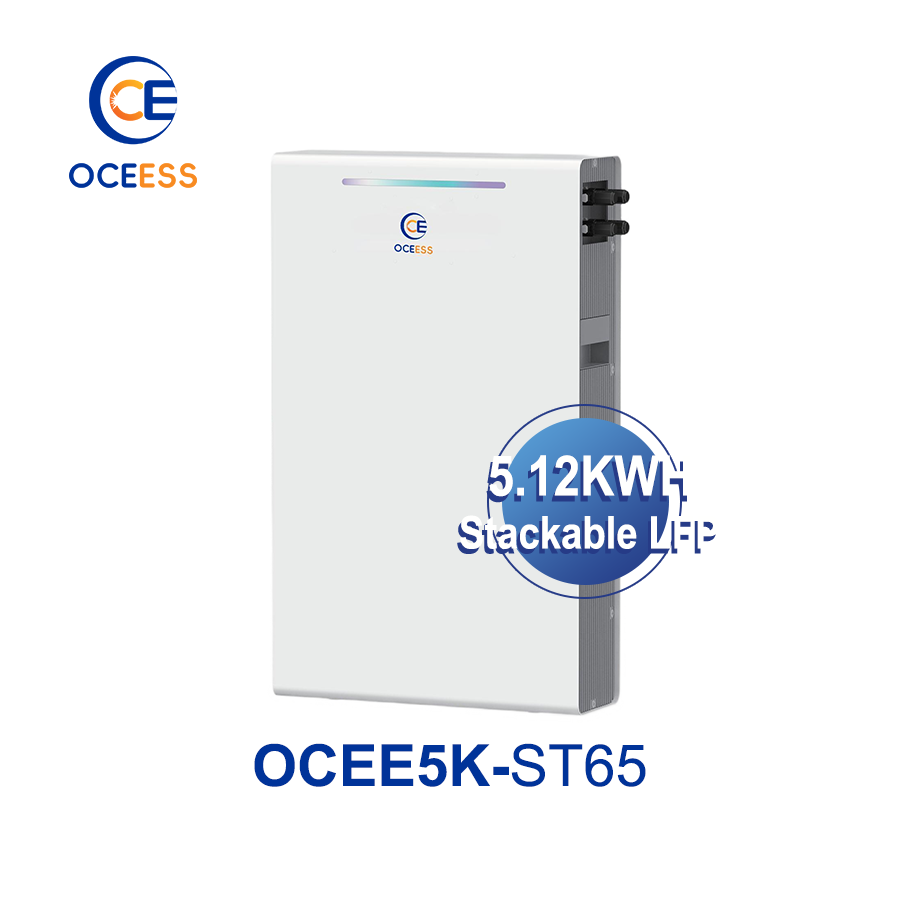
The published specifications include a built-in intelligent BMS and CAN/RS485 communication. They also list 50A continuous charging, 100A continuous discharge, and parallel expansion support.
Those figures show why inverter matching requires more than nominal voltage. At 51.2V, a 100A continuous limit represents about 5.12kW before voltage movement and conversion losses.
An inverter’s surge rating must also fit the battery’s pulse capability. Air conditioners, refrigerators, pumps, and power tools can create brief starting currents.
Still, 48V is not automatically superior for every vehicle or boat. Existing 12V alternators and appliances may require costly converters or separate distribution.
Battery life also depends more on cell quality, temperature, charging limits, depth of discharge, and BMS control. Higher system voltage alone does not increase cycle life.
Choose 48V when its lower current and expansion benefits outweigh added component complexity. It should solve a measured design problem, not follow a trend.
How to Choose and Build a Compatible Lithium Battery System
Start by listing every load before choosing battery voltage. Record running watts, startup surge, daily watt-hours, operating time, and required backup duration.
Then compare the complete 12V, 24V, and 48V architectures. A safe design must keep every component inside its published voltage and current limits.
Match the Battery, BMS, and Inverter
The inverter’s DC input must match the battery bank’s nominal and operating voltage range. Its continuous and surge demand must remain within the BMS discharge limits.
Check communication support when using a managed lithium battery. CAN or RS485 allows compatible inverters to receive state, temperature, limits, and alarm data.
Size Charging and Protection Equipment
Select an MPPT charge controller for the chosen battery voltage and charging profile. Its PV input limit must also exceed the array’s cold-weather open-circuit voltage.
Use correctly rated fuses, breakers, disconnects, busbars, and connectors. Cable size should follow current, route length, temperature, protection rating, and target voltage drop.
Understand Series and Parallel Connections
Four 12.8V batteries in series can create a 51.2V nominal bank. Series connection increases voltage, while amp-hour capacity remains unchanged.
However, every battery must explicitly allow series operation. Use matching models, capacity, age, charge level, and approved BMS limits.
A native 48V LiFePO4 battery often simplifies balancing, protection, monitoring, and inverter communication. It also avoids several independent BMS units disconnecting at different moments.
Parallel connection keeps voltage unchanged and increases amp-hours. Expand only within the manufacturer’s module limit and approved communication architecture.
Plan DC Loads and Future Expansion
Include a properly rated DC-DC converter for existing 12V or 24V equipment. Never connect a lower-voltage appliance directly across part of a series battery bank.
Leave capacity for future loads, but avoid oversized equipment operating inefficiently. A qualified designer should verify fault current, grounding, isolation, and local code requirements.
Always document every setting after commissioning. Clear records simplify maintenance, troubleshooting, and later battery expansion.
Conclusion
Choose 12V for simple low-power systems and 24V for moderate applications. Select 48V when high power, lower current, cleaner wiring, and future expansion matter most.
The best voltage still depends on loads, inverter ratings, charging equipment, and installation conditions. Ocean Solar can help buyers configure a compatible solar and storage solution around those requirements.
FAQs About 12V, 24V, and 48V Lithium Batteries
Q: Is a 48V lithium battery always better than a 12V battery?
A: No, the correct choice depends on the complete system. A 48V Lithium Battery handles high-power systems using less current, smaller conductors, and better expansion options. A 12V battery remains simpler for compact installations using native 12V equipment. Compare continuous watts, surge loads, cable distance, converters, and future growth before choosing.
Q: Does a higher battery voltage provide longer runtime?
A: Not when stored energy remains equal. A 12.8V 400Ah battery and a 51.2V 100Ah battery both store 5.12kWh theoretically. Their runtime should be similar under equal usable depth and system losses. Compare kilowatt-hours instead of amp-hours across different voltages.
Q: Can four 12V lithium batteries be connected for a 48V battery bank?
A: Yes, but only when the battery manufacturer permits four-unit series operation. All batteries should share the same model, capacity, age, and charge level. The charger and inverter must support the resulting voltage range. A native 48V battery may provide simpler BMS coordination.
Q: Does a 48V lithium battery charge faster than a 12V battery?
A: Higher voltage does not automatically shorten charging time. Charging time depends on stored energy, charger power, battery charge limits, temperature, and state of charge. A higher-voltage charger can deliver more power at lower current, but the battery and BMS must accept that charging rate.
Q: Why is a 51.2V LiFePO4 battery called a 48V battery?
A: “48V” describes the system class rather than an exact operating voltage. Sixteen 3.2V LiFePO4 cells produce about 51.2V nominally. Voltage rises during charging and falls during discharge. Therefore, inverters and chargers must match the battery’s complete operating range.
 English
 العربية
 Русский
 Español
 Português
 Deutsch
 italiano
 日本語
 Nederlands
 Tiếng Việt
 ไทย
 Polski
 Türkçe
 ພາສາລາວ
 ភាសាខ្មែរ
 Bahasa Melayu
 ဗမာစာ
 தமிழ்
 Filipino
 Bahasa Indonesia
 magyar
 Română
 Čeština
 Српски
 हिन्दी
 فارسی
 Slovenčina
 Slovenščina
 Norsk
 Svenska
 українська
 Ελληνικά
 Suomi
 עברית
 Dansk
 اردو
 বাংলা
 Hrvatski
 Eesti keel
 සිංහල
 latviešu
 Azərbaycan dili
 Български
 ગુજરાતી
 ಕನ್ನಡ
 Kurdî
 Lietuvių
 മലയാളം
 मराठी
 پښتو
 తెలుగు


 简体中文