TOPCon Vs PERC Solar Panels: Differences, Efficiency & Cost
You are here: Home » Blog » TOPCon Vs PERC Solar Panels: Differences, Efficiency & Cost
TOPCon Vs PERC Solar Panels: Differences, Efficiency & Cost
Views: 0 Author: Site Editor Publish Time: 2026-07-06 Origin: Site
Are you getting the best value from your solar investment?
Choosing the right Solar Panels is a critical decision for any project.
The industry is shifting from traditional P-type PERC to advanced N-type TOPCon technology.
But which one truly fits your needs?
In this post, you will learn the key differences between these two technologies.
We will compare their efficiency, long-term costs, and overall performance.
This guide helps you navigate technical specs to make a smart, informed investment.
Efficiency and Performance: Why TOPCon is Setting New Standards
The gap between standard and high-efficiency Solar Panels is growing fast. Most buyers now look beyond initial costs to see how much power they actually generate over decades. TOPCon technology has emerged as the new benchmark because it solves specific energy loss problems that older PERC designs struggle to overcome. When you look at the raw numbers, the jump in conversion efficiency is quite clear. PERC modules typically hit between 20.5% and 21.5% in mass production. In contrast, TOPCon modules consistently reach 22.5% to 24.2%. This extra efficiency means you get more power from the same roof space, which is a huge win for residential and commercial projects alike.
Performance Metric
PERC Solar Panels
TOPCon Solar Panels
Conversion Efficiency
20.5% – 21.5%
22.5% – 24.2%
Temperature Coefficient
-0.34%/°C
-0.30%/°C
Bifaciality Factor
70% – 75%
Over 80%
Heat is the silent enemy of every solar installation. Standard PERC Solar Panels often lose significant voltage as temperatures climb during hot summer days. TOPCon technology handles this much better due to its N-type structure. It maintains a lower temperature coefficient, meaning it stays productive even when the mercury rises. This makes a massive difference for systems in tropical regions or areas with intense summer sun. You will see more consistent energy yields throughout the hottest parts of the day, which helps keep your project’s cash flow steady and predictable.
Long-term degradation is another area where TOPCon really shines. Older P-type cells suffer from Light-Induced Degradation, or LID, which causes a drop in power shortly after installation. TOPCon is essentially immune to this initial loss. Because it lacks these early-stage defects, it keeps a higher percentage of its rated power over a 30-year lifespan. This stability is why many developers now prefer it for large-scale utility farms. They want to know that the power output they see in year one will still be there in year twenty.
Bifacial performance is another major upgrade for ground-mounted systems. While PERC panels can capture some light from the rear, they are limited by a bifaciality factor of about 70% to 75%. TOPCon panels push this past 80%, allowing them to harvest much more reflected light from the ground. Whether your site has concrete, sand, or snow, these panels squeeze every possible watt out of the environment. This extra boost is exactly why utility-scale projects are moving toward this architecture so quickly.
Reliability remains the final piece of the puzzle for any serious buyer. You need to be sure your Solar Panels will survive whatever the local climate throws at them. Leading manufacturers like Ocean Solar put their modules through intense stress tests to guarantee this durability. They run 1000-hour damp heat tests and 200-cycle cold-hot impact tests to mimic years of environmental wear. These modules also pass 1000-hour salt spray testing, which is vital if you are building near the coast. Knowing that your hardware can handle high-altitude winds or salty air gives you the confidence to invest for the long haul.
Cost Analysis: Upfront Price vs. Long-Term Value (LCOE)
When you start pricing out a project, the sticker price of Solar Panels is usually the first thing you notice. It is natural to look at the bottom line and wonder if the latest technology is worth the extra cash. TOPCon modules do carry a small premium, typically costing about $0.02 to $0.03 more per watt than older PERC models. This price gap exists because of the more complex manufacturing steps and the higher-grade N-type silicon wafers involved. While this might seem like a hurdle for a tight budget, it is only one piece of the financial puzzle you need to solve.
Smart investors look at the Levelized Cost of Energy, or LCOE, rather than just the initial invoice. This metric calculates the total cost of building and operating your system over its entire life. Even if you pay more upfront for TOPCon, you save money in several key areas that add up quickly:
●Reduced Module Count: Because these panels are more efficient, you need fewer of them to hit your target power capacity. This means you buy fewer brackets, clamps, and cables.
●Lower Labor Costs: Installing fewer units means your team spends less time on the roof or in the field. Labor is often the most expensive part of a project, so this saves you significant cash.
●Lower BOS Costs: Balance-of-system components like inverters and wiring often scale by the number of panels. By increasing the power density, you lower the cost per watt for the entire electrical setup.
Financial Metric
PERC Solar Panels
TOPCon Solar Panels
Upfront Module Cost
Baseline
+$0.02 – $0.03/W
Average Payback Period
6.5 Years
5.8 Years
30-Year LCOE
Standard
3% – 8% Lower
We often see people worry about the upfront premium, but the math usually favors the more efficient choice. A project using TOPCon often hits its break-even point in about 5.8 years. A similar project using PERC might take 6.5 years to pay for itself. That extra year of waiting for your investment to turn a profit is a long time in the energy business. When you factor in the lower degradation rates, you are essentially buying a more reliable income stream for your property or business.
Reliable manufacturers understand these financial pressures and work to narrow the price gap for their partners. For example, companies like Newlight Energy help their clients navigate these costs by offering tailored procurement plans. They know that volume and long-term cooperation can often bridge the price difference between technologies. By focusing on the total cost of ownership, you stop viewing your Solar Panels as a simple expense and start seeing them as a high-performance asset. It is about getting the most electricity for every dollar you put into the ground or onto your roof.
Choosing the Right Solar Panels for Your Project
Deciding between technologies often feels like a balancing act between your current budget and your future energy goals. You do not always need the most advanced tech for every single application. Sometimes, a proven, cost-effective solution is exactly what your specific project demands. We see many buyers struggle with this choice, so we have broken down the best scenarios for each type of technology to help you decide.
When to Choose PERC Solar Panels
PERC technology remains a reliable workhorse for many standard installations. It is an excellent choice if you have a strict budget or a project where the upfront capital is your biggest hurdle. You might consider it for these specific situations:
●Budget-Friendly Residential Kits: If you are building a small off-grid system or a simple residential setup, PERC offers a great balance of performance and affordability. It keeps your initial costs low while still providing solid, dependable energy.
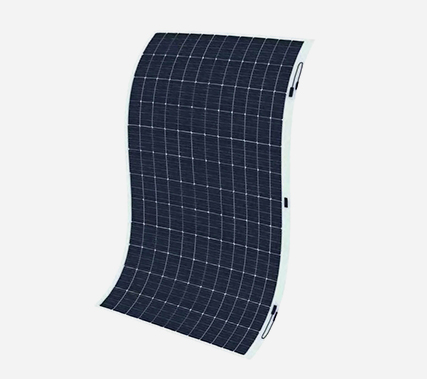
●Flexible Solar Needs: For RVs, yachts, or portable power stations, PERC is often the clear winner. Its structural design is highly compatible with flexible lamination processes, and it offers superior water resistance compared to more complex cell architectures.
●Short-Cycle Projects: If you are working on a project with a short investment horizon, you might not need the 30-year performance edge of newer tech. PERC gets the job done without requiring a larger initial investment.
When to Choose TOPCon Solar Panels
If your project prioritizes long-term returns or faces physical constraints, TOPCon is usually the smarter path. It is built for high-performance environments where you cannot afford to waste a single inch of space. You should lean toward this technology in these cases:
●Space-Constrained Rooftops: When you have a small roof but need to hit a high energy target, TOPCon is your best friend. It packs more power into every square foot, allowing you to maximize your generation potential.
●Commercial and Industrial Yields: Businesses often look at the 20-year or 30-year view. Because these Solar Panels degrade slower and produce more energy, they deliver a much better return on investment for large-scale C&I projects.
●High-Heat or Reflective Sites: Utility-scale farms in hot climates or areas with high ground reflectance benefit immensely from TOPCon. It handles heat better and captures more light from the rear, boosting your total yield significantly.
Project Priority
Recommended Technology
Why?
Limited Budget
PERC
Lowest initial capital outlay.
Limited Space
TOPCon
Higher power density per module.
Flexible/Mobile Use
PERC
Better structural compatibility.
Long-Term ROI
TOPCon
Superior efficiency and low degradation.
Customization for Your Specific Needs
Every site is unique, and sometimes off-the-shelf products do not fit your vision. For large-scale procurement, professional manufacturers like Newlight Energy offer deep customization options to solve these problems. They can help you tailor the physical size, frame color, and power output to match your specific architectural or engineering requirements. This level of service ensures your Solar Panels integrate perfectly into your project design. Whether you need a specific aesthetic for a high-end commercial building or a precise power rating for a complex utility layout, working with an experienced partner makes the process much smoother.
FAQ
Q: Are TOPCon Solar Panels more durable than PERC?
A: Yes. TOPCon uses N-type silicon, which is immune to Light-Induced Degradation (LID). This stability, combined with a 30-year linear power warranty, ensures superior long-term performance compared to PERC.
Q: Can I mix PERC and TOPCon panels in the same system?
A: It is generally discouraged. Mixing them can cause electrical mismatches, reducing overall system efficiency. Always consult an installer to ensure voltage and current compatibility.
Q: Is TOPCon the future of the solar industry?
A: Yes. TOPCon is rapidly replacing PERC due to higher efficiency and better economics, with market share projected to reach 60% by 2030.
Q: How does the installation process differ?
A: It doesn't. Both use standard mounting hardware and are fully compatible with existing 1000V/1500V DC inverter systems.
Conclusion
Choosing the right Solar Panels depends on your unique project goals.
PERC remains a reliable, cost-effective choice for budget-sensitive setups.
However, TOPCon offers superior efficiency, lower degradation, and better long-term value.
It is clearly the future of high-performance solar energy.
Compare your space and budget constraints carefully before you buy.
Select the technology that aligns with your long-term investment strategy today.
 English
 العربية
 Русский
 Español
 Português
 Deutsch
 italiano
 日本語
日本語 Nederlands
 Tiếng Việt
 ไทย
ไทย Polski
 Türkçe
 ພາສາລາວ
 ភាសាខ្មែរ
 Bahasa Melayu
 ဗမာစာ
ဗမာစာ தமிழ்
தமிழ் Filipino
 Bahasa Indonesia
 magyar
 Română
 Čeština
 Српски
 हिन्दी
 فارسی
فارسی Slovenčina
 Slovenščina
 Norsk
Norsk Svenska
 українська
 Ελληνικά
 Suomi
Suomi עברית
עברית Dansk
Dansk اردو
اردو বাংলা
বাংলা Hrvatski
 Eesti keel
 සිංහල
සිංහල latviešu
 Azərbaycan dili
 Български
 ગુજરાતી
 ಕನ್ನಡ
ಕನ್ನಡ Kurdî
Kurdî Lietuvių
 മലയാളം
 मराठी
मराठी پښتو
پښتو తెలుగు


 简体中文
简体中文