Hybrid Solar Storage System Vs Off-grid System: Which Is Better for Homes And Small Businesses?
You are here: Home » Blog » Hybrid Solar Storage System Vs Off-grid System: Which Is Better for Homes And Small Businesses?
Hybrid Solar Storage System Vs Off-grid System: Which Is Better for Homes And Small Businesses?
Views: 0 Author: Site Editor Publish Time: 2026-08-12 Origin: Site
A lot of homes lose power—then bills and spoilage follow. A good energy plan shouldn’t stop at solar panels.
So what matters more: Hybrid Solar Storage System savings or off-grid independence? This guide helps you choose with clear, practical priorities.
You’ll see why solar storage is now a top decision for households and small businesses. You’ll learn what a Hybrid Solar Storage System really includes, from solar panels to lithium batteries and a hybrid grid-tied inverter.
In this post, you’ll get a decision framework for real scenarios, plus Ocean Solar’s integrated approach through OEM/ODM service and long-term support.
Hybrid Solar Storage System vs Off-Grid System—Key Differences That Decide the Winner
When people compare a Hybrid Solar Storage System vs off-grid, they’re usually shopping for one thing: fewer headaches. They want predictable costs, less downtime, and a setup that won’t demand constant babysitting. The “right” choice depends on what your day looks like and what you can’t afford to lose.
Ocean Solar’s positioning helps here, because they treat ESS as a coordinated package—solar panels, lithium batteries, hybrid inverters, and intelligent energy management. That makes the differences below show up clearly in real home and small-business projects.
Decision criteria that matter in real installs
Most readers care about five practical areas. They don’t want theory, they want trade-offs they can feel on their bill and their operations.
Cost and ROI reality: hybrid often costs more upfront, yet it usually lowers long-term operating pressure.
Power reliability: hybrid brings solar + battery + grid, while off-grid brings solar + battery only.
Maintenance load: EMS can smooth battery cycling in hybrid, while off-grid often needs more hands-on checks.
Scalability: system design decides whether you expand smoothly or hit compatibility walls.
Payback logic: “10%–15% annual ROI” fits grid-connected behavior; off-grid payback usually works differently.
Here’s a simple comparison that you can use when talking to a project team.
Evaluation area
Hybrid Solar Storage System tendency
Off-grid system tendency
Upfront cost
Higher equipment cost
Higher battery investment
Long-term cost
Often lower operating burden
No export income; heavier planning for shortages
Backup behavior
Switches using grid + battery support
Runs independently during all conditions
Reliability risk
Lower risk during cloudy or outage hours
Higher risk when sun is weak for long periods
Cost and return on investment: where the math changes
Hybrid setups usually start pricier because they’re built for dual-mode operation. Yet they can reduce grid electricity purchase and, in many grid scenarios, help generate value through peak-valley arbitrage. In practical terms, people often see a steadier investment return when the system is used for both self-consumption and battery shifting.
Off-grid systems tend to lean on larger battery banks. That’s the protection against cloudy days and nighttime usage. The trade-off is simple: you pay for autonomy upfront, and you don’t typically get grid-related revenue to offset it. Even when customers love the idea of independence, they still need to plan around capacity, load, and days of autonomy.
Power reliability: triple energy vs zero grid reliance
If your business can’t pause, reliability becomes the loudest requirement. A Hybrid Solar Storage System has three energy “sources” it can draw from: solar generation, battery storage, and the public grid. They work together, so when one part underperforms, another part can pick up.
Off-grid removes the safety net. It has no grid connection function. That means output depends on irradiance and how much energy the battery has stored. For homes, it can be fine if loads are light and schedules are realistic. For small businesses, heavy or unpredictable loads can create real shortage risk.
A quick view of the behavior people care about:
Hybrid: solar + battery + grid cover most daily needs, battery provides backup safety.
Off-grid: batteries handle everything, solar supports charging when conditions allow.
Maintenance and operation: how EMS changes the workload
This is one place where people underestimate the difference. In a Hybrid Solar Storage System, intelligent energy management (EMS) helps balance PV output and battery charge-discharge cycles. That usually means better control over how fast they cycle the battery, which supports longer service life and reduces routine pressure on operations.
In off-grid systems, the battery is the center of the universe. People need regular monitoring of state of charge and system health. Bigger battery banks bring more inspection and potential replacement planning. It’s not that off-grid is “bad,” it’s that the day-to-day responsibility shifts toward the owner.
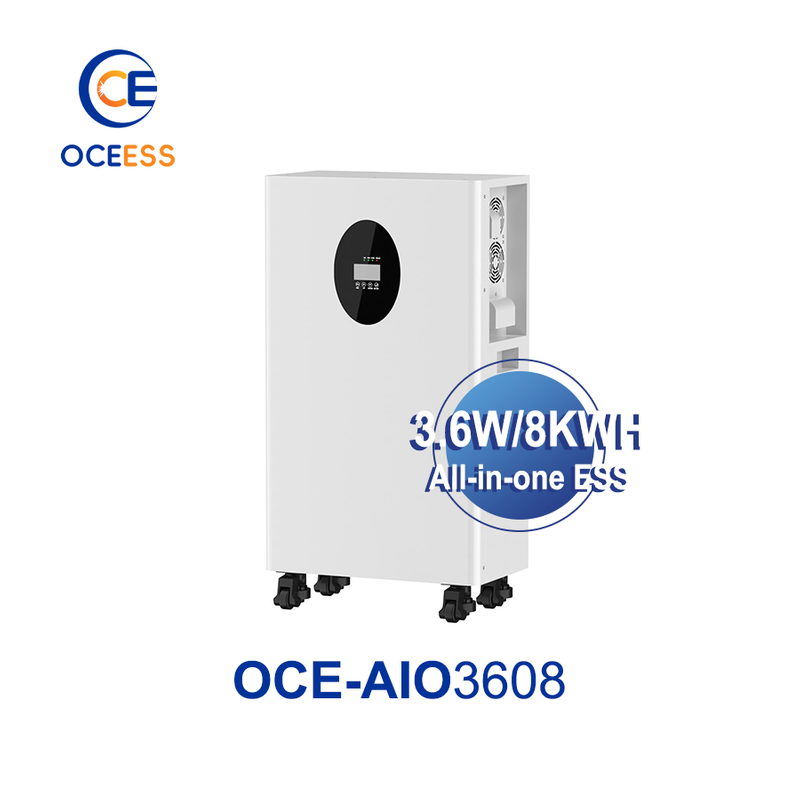
Ocean Solar’s approach also matters here: their all-in-one ESS design aims to keep hybrid and off-grid operation manageable through standardized control logic and after-sales support.
Flexibility and scalability: expand without breaking compatibility
Scalability can make or break a project. A Hybrid Solar Storage System can be configured so capacity grows in a planned way, from smaller portable or medium home solutions toward higher-power wheeled ESS options for larger loads. What limits growth is rarely “battery size” alone. It’s compatibility between inverter settings, battery management, and how the system control logic handles power flow.
Off-grid expansion still works, but it usually pushes people to think earlier about inverter class, battery voltage levels, and how additional capacity supports their load peaks. If your business grows and your power profile changes, hybrid designs often feel more forgiving because grid interaction remains available where installed.
Financial reality check: what 10%–15% ROI really means
That “steady 10%–15% annual ROI” claim usually assumes grid-tied economics: self-consumption savings and time-based value like peak-valley arbitrage. It fits owners who can use the public grid as part of system behavior and billing structure. When utility power exists and is unstable, hybrid becomes especially attractive because it combines savings with backup protection.
Off-grid generally doesn’t follow the same payback drivers. You’re not betting on grid economics; you’re betting on energy independence and predictable autonomy. That means the payback conversation shifts from electricity price math to engineered reliability, storage sizing, and how long the system can cover your essential loads.
This is why the decision should match your operating reality, not just your preference. A Hybrid Solar Storage System tends to win when you need both cost control and outage resilience at the same time. Off-grid tends to win when the site has no grid access and you can design for that constraint.
Best Fit for Homes—When Hybrid Solar Storage System Wins
A Hybrid Solar Storage System usually fits best when your home has grid access, yet you still get reminded of outages or you feel the pain of high electricity bills. You don’t need to go fully independent. You need a plan that saves money in daily life and protects essentials when the grid fails.
Most homeowners in suburbs and cities already rely on public power. The issue isn’t whether electricity exists. The issue is how stable it is. So hybrid makes sense: it uses solar and batteries during normal days, then supports backup behavior when problems hit.
Ocean Solar builds its ESS lineup around this practical reality, matching monocrystalline solar panels, lithium batteries, hybrid grid-connected inverters, and energy management into a complete system package. That matters because homes want reliability more than complicated setup.
Scenario 1: Suburban or urban homes that still need backup
In many towns, the grid is available, but outages still happen—storms, maintenance work, or random faults. With a Hybrid Solar Storage System, your home doesn’t “switch to a dream.” It switches to stored power and controlled power flow fast enough to keep critical items running.
Homes in this scenario usually target a set of essentials rather than everything in the house. They start by choosing what must stay on when the lights go out.
Critical loads: fridge, router, security cameras, medical devices, some lighting
Surge loads: a microwave start, water pump kick-on, or HVAC compressor moments
Continuous demand: devices that draw power for hours, not minutes
Daily energy consumption: the real kWh pattern, not just a guess
A simple planning checklist can help homeowners avoid under-sizing.
Home planning item
What to measure
Why it changes the system choice
Critical loads
Watt rating for each essential device
Determines how much battery backup is truly needed
Surge loads
Peak starting wattage or worst-case start scenario
Prevents inverter trips during compressor or pump starts
Continuous demand
Average hourly draw for the longest run
Helps match battery and inverter for steady output
Daily energy use
kWh per day from bills or smart meters
Sets how large PV and storage should be
Scenario 2: Homes that want lower bills plus clean emergency coverage
Some families prioritize two goals at once. They want reduced monthly electricity costs, and they also want emergency coverage that doesn’t feel messy. That’s exactly where hybrid grid-tied behavior helps.
In normal operation, the system can use solar for self-consumption and charge batteries from surplus energy. When energy prices get higher, it can discharge stored power during peak hours. If the grid goes down, batteries can take over almost immediately, and solar can keep contributing when conditions allow.
This approach also works well for households that don’t want to think like engineers. They want a reliable “set-and-operate” system, not a constant manual routine.
What to size and plan in a home project
Home sizing is where good installations separate from “close enough.” It’s not just about battery capacity. A Hybrid Solar Storage System needs the right balance between inverter power, battery capacity, and PV input so it can handle both daily use and outage events.
For most residential installs, they plan around three bands: essential backup, surge protection, and daily energy cycling. That planning reduces the risk of brownouts during a blackout, and it reduces the chance of paying for storage that never gets used.
A practical guide tied to Ocean Solar-style product families:
Portable 500W–1000W ESS for small backup needs like basic home essentials or short-duration outages
Medium all-in-one configurations for daily household use, where they aim to reduce grid purchase while keeping backup safety ready
Bigger wheeled/high-power ESS designs when the home load pattern becomes closer to small-business duty, like larger workshops or heavy equipment
This is why homeowners should treat installation as an “energy lifestyle fit,” not a one-time purchase. Their daily habits influence the best configuration, and the system should match how they live when the grid is fine.
Example-style setup guidance (simple and realistic)
If your goal is small backup, portable 500W–1000W units can be a clean entry point. They cover short emergency periods and handle the essentials without turning the garage into a power center.
If your goal is daily savings plus reliable emergency coverage, medium all-in-one systems usually feel more “complete.” They align better with typical home energy patterns, where solar generation, battery charging, and backup behavior all matter.
Ocean Solar’s lineup supports this home path with modular capacity and integrated one-stop service—design, factory testing, packaging, shipping, installation guidance, commissioning, and long-term technical support—so the homeowner gets fewer surprises after the system is installed.
Best Fit for Small Businesses—Which One Protects Revenue Better?
Small businesses don’t really “compare systems.” They compare outcomes: fewer outage hours, fewer lost sales, and predictable monthly energy costs. If a power cut shuts the register, kills cold storage, or stops a workshop tool, the best choice is the one that protects revenue first. For many sites, that points to a Hybrid Solar Storage System because it balances backup safety and day-to-day savings.
Ocean Solar’s setup approach helps here. Their ESS portfolio combines monocrystalline solar panels, lithium batteries, hybrid grid-connected inverters, and intelligent energy management. That coordination matters when time matters, like during a grid blackouts event in the afternoon rush.
Scenario 1: cafés, convenience stores, workshops that need fast takeover
Think of the worst minute after the grid drops. The freezer might warm, the POS system might reboot, and staff might lose track of time. A Hybrid Solar Storage System is built for this kind of pressure, because it can switch to backup behavior quickly while batteries shoulder the load.
In practice, the goal is not powering everything. It’s powering what keeps money moving and products safe.
Cold-chain essentials: refrigeration, small freezers, prep equipment
Business operations: POS terminals, internet routers, security cameras
Lighting and ventilation: stable indoor conditions for customers and staff
Control of surge moments: HVAC compressors, water pumps, or workshop motors
When they plan correctly, they reduce outage losses even when the grid stays unstable for longer than expected.
Scenario 2: small retail and light commercial loads with peak events
Some businesses don’t need backup 24/7. They need it for peak-demand moments—start-ups, lunch rush, or busy weekends. In those cases, hybrid can help manage costs while keeping service reliable.
Hybrid grid-tied behavior often supports self-consumption and battery charging from surplus. Then, during higher-cost hours, stored energy can cover part of the load, which helps control bills. If outages happen, backup mode keeps critical circuits supplied with minimal disruption.
A quick planning view makes this easier for owners and installers:
This is how a Hybrid Solar Storage System matches daily demand, not just a one-time outage story.
Why hybrid backup mode reduces operational risk during blackouts
Hybrid backup mode is attractive because it gives businesses options. Solar keeps generating when conditions allow. Batteries can carry the immediate load. If the grid fails, the system shifts to standalone power behavior automatically, so they don’t need a manual restart routine.
That reduces operational risk in a very practical way: less downtime, fewer reboots, and less chance of losing product. It also helps teams maintain smoother operations during uncertain utility conditions.
Off-grid can still work, but hybrid often fits where the site is connected yet unreliable, like areas with frequent disturbances or scheduled maintenance windows.
When off-grid is still the better fit for small businesses
Off-grid may fit specific cases. If the site has no grid access, hybrid is impossible without a utility connection. Some seasonal operations also change the equation, since the business runs only part of the year and can accept longer charging cycles.
Off-grid can also fit when the load profile is controlled and predictable. If they can limit demand during cloudy periods, they can build a system that stays stable even without grid backup.
How load audits and surge planning shape inverter sizing
Sizing isn’t only about batteries. For small business reliability, inverter sizing is the make-or-break detail during start-up events. A load audit helps them separate essential vs non-essential devices, then identify continuous power and peak kW demand. Surge planning then checks worst-case starting wattage, because motors and compressors pull big inrush currents.
This is where teams should be strict. If they undersize the inverter, the system can overload or trip when a workshop tool or refrigeration compressor starts. If they size it correctly, the Hybrid Solar Storage System can protect revenue without annoying shutdowns.
FAQ
Q:What is the main difference between a Hybrid Solar Storage System and an off-grid solar system?
A:Hybrid stays grid-tied and uses solar+battery+grid; off-grid has zero grid reliance and runs independently.
Q:Can a Hybrid Solar Storage System work during grid blackouts?
A:Yes. It switches to backup mode so essential loads keep running using battery power, with solar support when conditions allow.
Q:Do off-grid systems require a charge controller, and why is it important?
A:Yes. It regulates PV charging voltage/current to protect batteries and maintain safe operation.
Q:How do I estimate my daily energy consumption and required battery capacity?
A:Sum daily kWh from loads, then size battery using that energy plus reserve, considering DoD and inverter efficiency.
Q:How many days of autonomy should a home or small business plan for?
A:Homes often plan for 1–3 days; small businesses often 2–6 days based on outage risk and critical-load needs.
 English
 العربية
 Русский
 Español
 Português
 Deutsch
 italiano
 日本語
日本語 Nederlands
 Tiếng Việt
 ไทย
ไทย Polski
 Türkçe
 ພາສາລາວ
 ភាសាខ្មែរ
 Bahasa Melayu
 ဗမာစာ
ဗမာစာ தமிழ்
தமிழ் Filipino
 Bahasa Indonesia
 magyar
 Română
 Čeština
 Српски
 हिन्दी
 فارسی
فارسی Slovenčina
 Slovenščina
 Norsk
Norsk Svenska
 українська
 Ελληνικά
 Suomi
Suomi עברית
עברית Dansk
Dansk اردو
اردو বাংলা
বাংলা Hrvatski
 Eesti keel
 සිංහල
සිංහල latviešu
 Azərbaycan dili
 Български
 ગુજરાતી
 ಕನ್ನಡ
ಕನ್ನಡ Kurdî
Kurdî Lietuvių
 മലയാളം
 मराठी
मराठी پښتو
پښتو తెలుగు


 简体中文
简体中文