Ess Storage System Vs Solar Battery System: What Buyers Should Know before Choosing
You are here: Home » Blog » Ess Storage System Vs Solar Battery System: What Buyers Should Know before Choosing
Ess Storage System Vs Solar Battery System: What Buyers Should Know before Choosing
Views: 0 Author: Site Editor Publish Time: 2026-07-27 Origin: Site
Have you ever bought a “battery” only to learn it needed more parts? That’s the real risk when comparing an ESS Storage System and a solar battery system.
People search ESS Storage System solutions to get outcomes, not just hardware—like backup power, smoother solar use, easier installation, and better safety.
In this post, we’ll explain how ESS Storage System setups are built and controlled differently, so you can choose with confidence.
ESS Storage System vs Solar Battery System — System composition comparison
A buyer doesn’t just buy “a battery.” They buy how the energy gets charged, protected, converted, and monitored. That’s why an ESS Storage System feels different from a solar battery system. One is built to work as a unit, the other often starts as only a storage component.
Components inside an ESS Storage System (battery + inverter + BMS + control + safety)
In an ESS Storage System, the parts usually coordinate from day one. Battery behavior, inverter power flow, and safety rules are designed to match the same operating logic. You’re not cobbling together devices that may “mostly work.”
Typical integrated parts include:
Battery pack (the energy capacity in kWh)
BMS (Battery Management System) for cell monitoring, balancing, and safety limits
Bi-directional inverter / PCS for converting power and enabling charge-discharge control
Control system and software for operation modes and switching behavior
Safety protections and thermal management to keep performance stable across temperatures
Integration reduces compatibility risk in a very real way. When BMS limits, inverter behavior, and control settings come from the same design target, installers spend less time chasing inconsistent parameters during commissioning. Buyers also benefit because troubleshooting usually points to fewer root causes.
What you must add around a solar battery system
A solar battery system often begins as a standalone battery module or cabinet. It can store energy, but it usually doesn’t complete the whole power-management job by itself. That means you add external pieces around it to make the system safe and functional.
Common additional components include:
Inverter support so stored energy can power home AC loads
Solar charge controller (in many architectures) if PV charging requires specific control
Monitoring hardware or platforms so you can observe SOC and alarms
Wiring, breakers, and protection coordination to prevent fault escalation
Commissioning and configuration so battery charge/discharge parameters match the rest of the system
When buyers mix brands or rely on existing equipment, they may face “it runs, but not the way we expected” problems. Wrong or incomplete settings can cause protection trips, reduced usable capacity, or unstable switching behavior during peak usage.
“Ready to use out of the box” vs requires professional matching
This is where buyers feel the difference fastest. An ESS Storage System is closer to a turnkey solution, while a solar battery system often requires more matching and parameter setup. That affects time, complexity, and the chance of configuration errors.
Buyer impact area
ESS Storage System
Solar battery system
Setup effort
Fewer external accessories
More devices to align
Commissioning
Guided parameters, unified logic
Manual configuration across components
Compatibility risk
Lower, since parts are designed together
Higher, due to device-source differences
Error likelihood
Less mismatch during first startup
More risk of wrong settings triggering faults
Practical example: if SOC limits, charge rate limits, or shutdown conditions aren’t aligned, the system can repeatedly enter protection mode. Installers then spend more hours revisiting wiring and settings, while buyers wait for backup performance they expected to get at first power-on.
Energy input and charging options — What sources can actually charge the battery?
Most buyers picture charging like a single pipe: sun goes in, battery fills up. Real homes work differently. The question is how an ESS Storage System handles energy coming from solar, and whether it can also take in power from the grid.
That detail changes daily comfort, emergency backup, and how installers plan the whole system.
ESS Storage System: solar + public grid charging (dual input capability)
An ESS Storage System can be designed for dual charging routes. It may charge from PV during the day, then switch to public grid charging when solar output is low. This flexibility helps households keep batteries topped up before evening peaks.
In practice, it supports optimization, not just storage:
Solar charging to capture daytime generation and raise self-consumption
Grid charging to cover cloudy periods or reduce battery “running empty”
Energy scheduling so they can shift charging to low-tariff hours when available
Here’s how buyers typically experience it across a week:
Charging behavior
What you get at home
Common buyer goal
PV-first, grid supplement when needed
More stable backup reserve
Reliable backup even in bad weather
Grid-first during off-peak
Predictable evening power
Lower electricity bills with better timing
So even when PV output dips, the system still has a charging path. That makes the household less sensitive to weather swings.
Solar battery system: typically limited to solar input only
A standalone solar battery system usually links charging tightly to solar production. It stores energy converted from PV, then uses that energy to power loads. But it often lacks a direct, built-in path to charge from the public grid.
That limitation is simple to explain: if there’s no PV input, the battery can’t refill. Buyers may notice this more during:
multi-day cloudy weather
short winter days
seasons when PV output is lower than expected
If your goal includes “backup that stays ready,” solar-only charging can feel risky. They can still store solar energy, but refilling depends on sunshine.
Why this changes your backup strategy during outages
Outage performance isn’t only about battery capacity. It’s also about how full the battery was before the outage began. Dual-input charging can keep reserves higher, especially when forecasts look bad.
When a system can only charge via PV, buyers should expect these effects:
fewer “buffer days” if charging depends on weather
faster reserve depletion during long low-sun periods
more uncertainty about backup duration right before an outage
Think about a Tuesday night outage after a weak PV week. A grid-capable ESS Storage System can recharge beforehand, making the backup window more consistent. A solar-only battery system may deliver power, but the time it lasts hinges on how much sunlight it received earlier.
The quiet takeaway: charging inputs shape backup reality. Buyers who plan only for battery size may miss the bigger variable—what actually fills it up.
Installation, complexity, and buyer effort — Which option is easier to deploy?
In real projects, “easy” doesn’t come from the battery alone. It comes from how many parts must agree on settings, wiring, and safety behavior. That’s why buyers searching for an ESS Storage System often care about installation effort as much as capacity.
When the system is integrated, most headaches show up early. When it’s not, problems can wait until day two of real usage.
ESS Storage System installation: simpler, more plug-and-play
A well-designed ESS Storage System typically bundles battery, inverter/PCS, BMS, control logic, and safety functions into one coordinated unit. Installers still do professional work, but there’s less coordination between unrelated brands and modules.
Buyers usually feel the “low friction” in three ways:
fewer accessories to source
fewer cables to route and label
fewer compatibility checks across devices
Instead of building a puzzle, teams connect a smaller set of known interfaces. That reduces the chances of wrong parameter entry, especially around charge/discharge limits and protection thresholds.
A practical example: during commissioning, installers verify one integrated control flow. If BMS limits charging current and the PCS follows those limits automatically, the system behaves predictably, even under load changes.
Solar battery system installation: more matching and debugging
A solar battery system often starts as a standalone battery component. It then relies on external devices to manage power conversion and communication. That’s where complexity creeps in.
Stable operation depends on correct pairing across multiple items:
inverter or hybrid inverter settings
charge controller requirements (if applicable)
monitoring and configuration interfaces
wiring routes, breakers, and protection coordination
commissioning steps to align SOC behavior and protection logic
When parts come from different ecosystems, teams may spend extra hours on matching, debugging, and test cycles. Buyers then see longer lead times and more time spent troubleshooting before backup performance feels “solid.”
Who usually benefits from each approach?
Different buyers benefit from different trade-offs. It’s less about “better tech” and more about who carries integration responsibility.
Buyer profile
Best-fit choice
Why this fits
Homeowners who want simplicity and reliability
ESS Storage System
fewer parts to coordinate; easier onboarding; less commissioning variance
Buyers who already own compatible inverter/control hardware
solar battery system
they can expand storage using existing pieces without replacing the full chain
If you’re the homeowner, you want fewer moving pieces. If you’re an installer with an established design standard, a solar battery system can make sense for targeted expansion. Either way, the biggest effort driver is how many external components must be matched and tuned.
For many teams, choosing an ESS Storage System is also a risk-reduction decision. They trade slightly higher bundle cost for smoother deployment, fewer configuration errors, and a clearer path when questions come up after installation.
Ocean Solar angle — How an integrated ESS Storage System approach benefits buyers
When buyers compare options, they often focus on “battery capacity.” Ocean Solar pushes the conversation toward what actually makes installation smoother: integration. In an integrated ESS Storage System, the battery, inverter behavior, BMS limits, and control logic are designed to work as one plan.
That’s why many teams prefer this approach when they want fewer surprises after power-on.
Ocean Solar’s home ESS style matches the article’s core message: integration reduces complexity. It’s not just a slogan. It shows up in how fewer parts need coordination, and how fewer compatibility checks become necessary during commissioning.
What buyers typically expect from an all-in-one structure:
Battery pack plus BMS working together to set safe charge/discharge boundaries
An inverter / PCS stage that converts power cleanly for household loads
Control logic that follows the same operating rules across charging and backup modes
Safety protections and thermal management designed around the same system targets
In everyday terms, it means fewer “parameter mismatches.” Installers spend less time hunting which device setting caused unexpected behavior, like early shutdowns or protection trips during peak usage.
Model range and use-case fit (portable to home ESS)
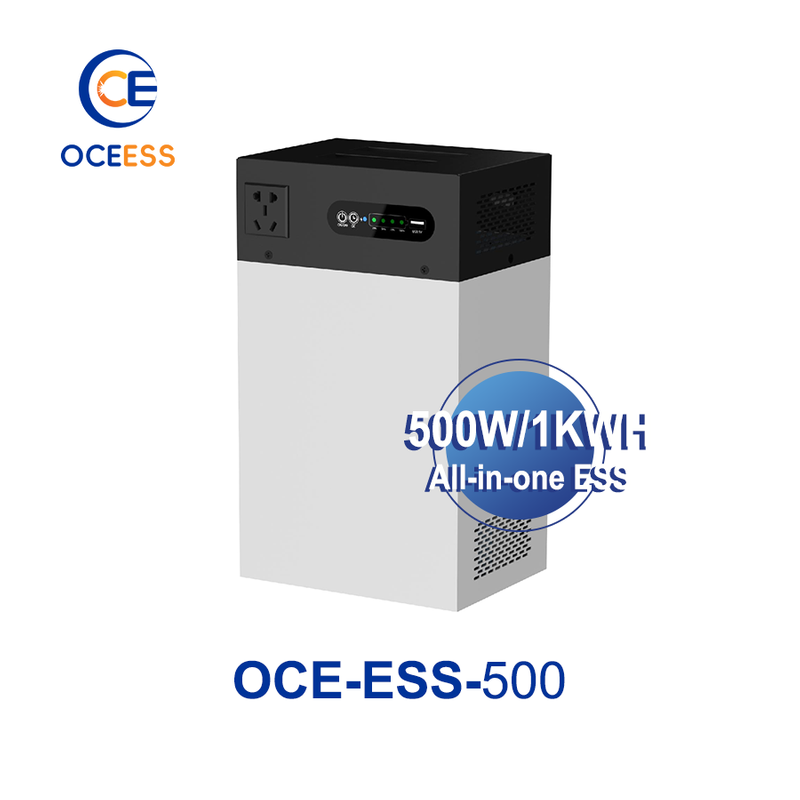
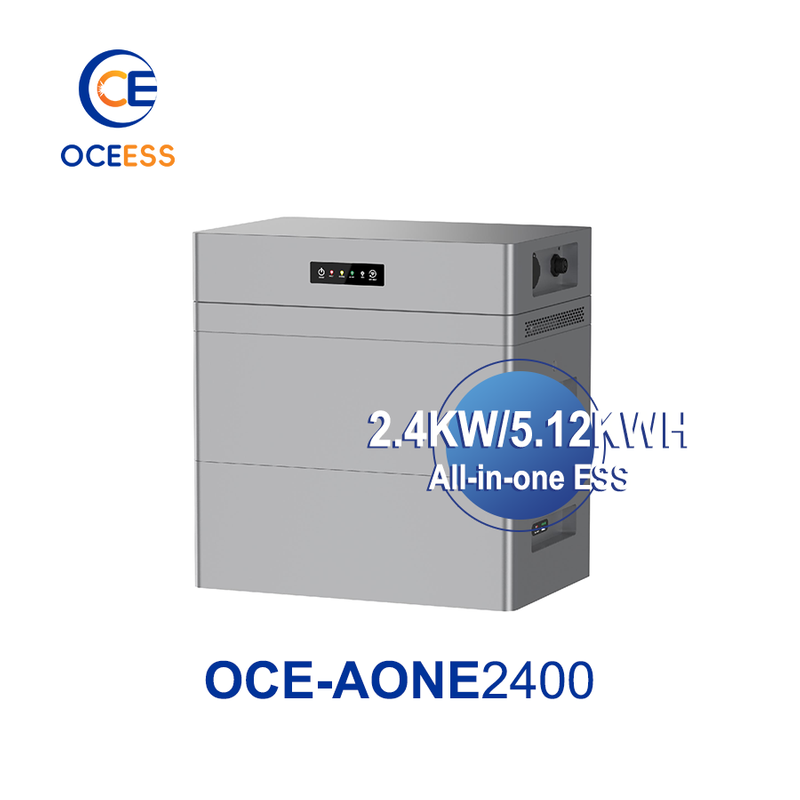
Ocean Solar also covers different household needs through a range of ESS Storage System models, from smaller portable setups to higher-capacity home units. That matters because buyers don’t all want the same outcome.
A simple way to think about it:
Smaller units fit light loads, camping backup, and short outages
Midrange home ESS fits daily self-consumption and routine emergency backup
Higher capacity options target longer backup windows and higher power demand
Power and capacity fit is often where projects succeed or fail. If the system is too small, buyers judge it as “not enough.” If it’s oversized, they pay more than necessary.
Buyer need
Typical ESS Storage System direction
What they’re usually protecting
Light backup and mobility
Portable inverter energy storage
critical small appliances, short outages
Daily home backup + solar shifting
1kWh-class home storage
evening peak loads, daily stability
Strong backup duration
2kWh-class and higher home storage
longer grid outage resilience
Seamless solar compatibility and long-term support
Compatibility isn’t only technical. It also affects paperwork, spare parts, and service speed when questions come up. Ocean Solar positions its ESS Storage System to align with its monocrystalline solar modules, so buyers can build a consistent solar-storage combined solution.
Long-term support also reduces friction:
Clear documentation so installers configure faster and safer
Unified quality control across system parts
After-sales guidance focused on the full system, not only the battery
When everything speaks the same design language, the buyer’s experience becomes smoother. They get backup behavior that matches expectations, and a system that’s easier to maintain because it wasn’t assembled from unrelated pieces.
FAQ
Q: Is an ESS Storage System always better than a solar battery system?
A: Not always. ESS is integrated and easier for home backup and solar-storage; solar battery systems need external inverter/control.
Q: Can a solar battery system provide backup during a power outage?
A: Yes only if properly integrated with inverter/control for backup; standalone batteries alone can’t run loads.
Q: What is the difference between BMS and EMS in an ESS Storage System?
A: BMS protects and manages battery charging/discharging; EMS coordinates energy scheduling and advanced control.
Q: Do I need professional installation for either option?
A: Yes. ESS is simpler plug-and-play, but solar battery systems require more matching, wiring, and commissioning.
Q: How do I avoid compatibility problems when choosing an ESS Storage System vs solar battery system?
A: Choose integrated ESS for unified quality control, and verify inverter/PCS, BMS limits, and settings match if using solar battery components.
Q: What should I check for warranties and long-term reliability?
A: Look for certifications (ISO9001, CE, IEC) and module warranty terms, plus cycle life and safety protections.
Conclusion — Your decision framework for ESS Storage System vs Solar Battery System
Pick based on integration and charging reality. An ESS Storage System typically offers dual input (solar + grid), while solar batteries are often PV-only.
Also compare BMS/EMS capability and installation effort. Integrated systems usually need less wiring and matching, so commissioning is smoother.
Finally, judge total cost of ownership: fewer parts, fewer trips, and steadier backup performance.
Choose an ESS Storage System when you want a turnkey home storage setup with energy management built in.
 English
 العربية
 Русский
 Español
 Português
 Deutsch
 italiano
 日本語
日本語 Nederlands
 Tiếng Việt
 ไทย
ไทย Polski
 Türkçe
 ພາສາລາວ
 ភាសាខ្មែរ
 Bahasa Melayu
 ဗမာစာ
ဗမာစာ தமிழ்
தமிழ் Filipino
 Bahasa Indonesia
 magyar
 Română
 Čeština
 Српски
 हिन्दी
 فارسی
فارسی Slovenčina
 Slovenščina
 Norsk
Norsk Svenska
 українська
 Ελληνικά
 Suomi
Suomi עברית
עברית Dansk
Dansk اردو
اردو বাংলা
বাংলা Hrvatski
 Eesti keel
 සිංහල
සිංහල latviešu
 Azərbaycan dili
 Български
 ગુજરાતી
 ಕನ್ನಡ
ಕನ್ನಡ Kurdî
Kurdî Lietuvių
 മലയാളം
 मराठी
मराठी پښتو
پښتو తెలుగు


 简体中文
简体中文