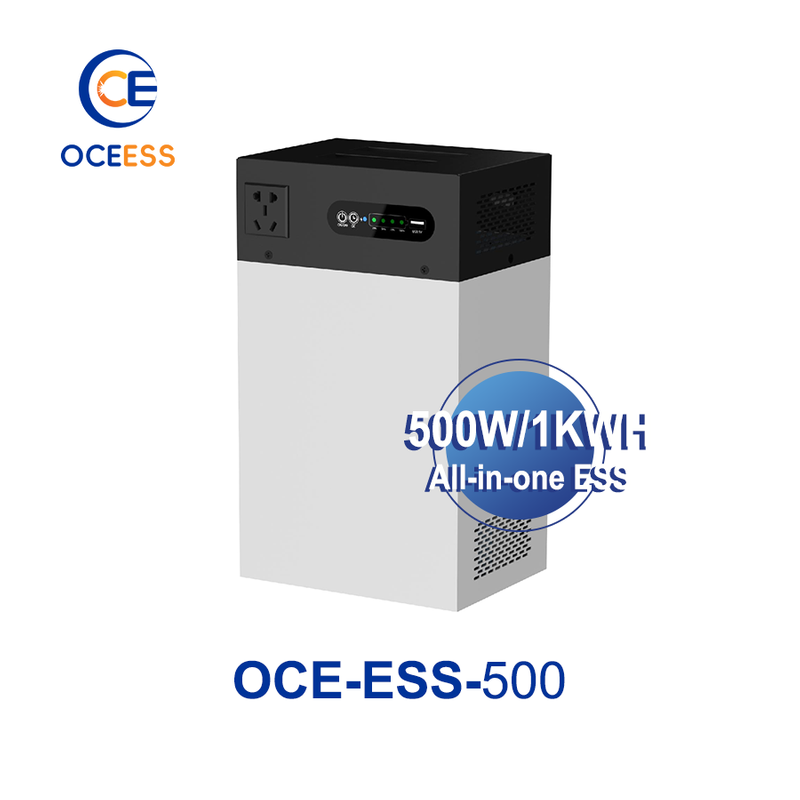
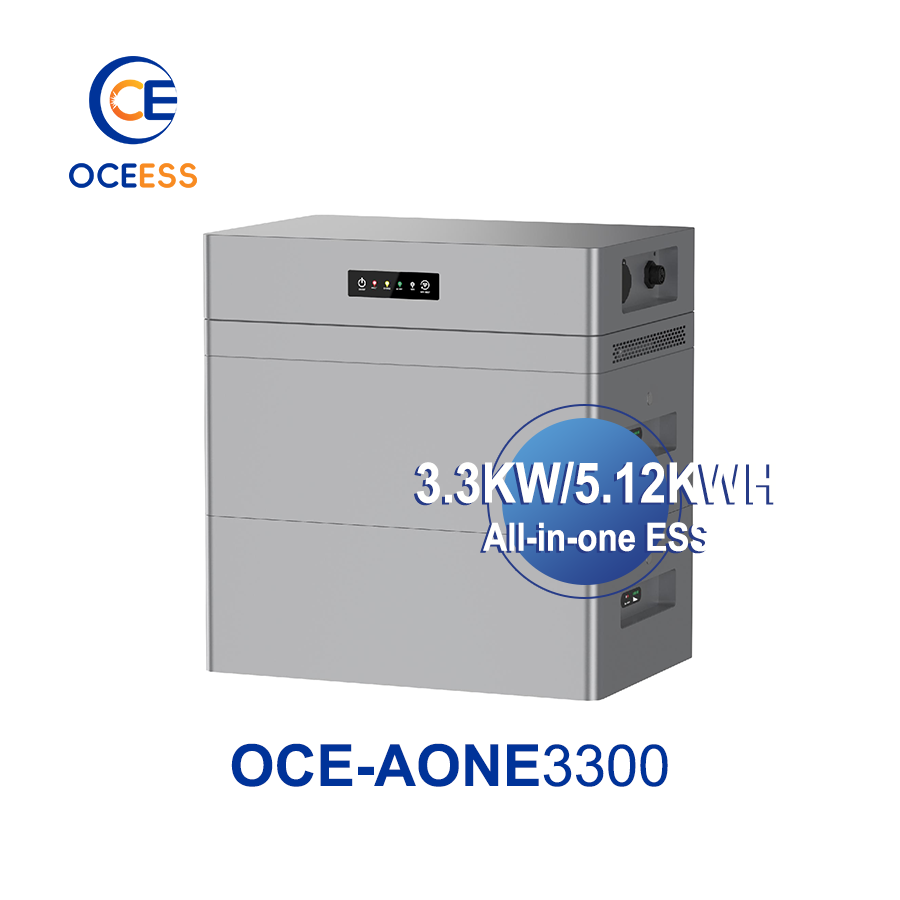
All-in-one Ess Vs Separate Battery And Inverter System: Which Is Easier for Home Solar Projects?
You are here: Home » Blog » All-in-one Ess Vs Separate Battery And Inverter System: Which Is Easier for Home Solar Projects?
All-in-one Ess Vs Separate Battery And Inverter System: Which Is Easier for Home Solar Projects?
Views: 0 Author: Site Editor Publish Time: 2026-08-15 Origin: Site
Have you ever seen a home solar system struggle right after install?
The culprit is often not the panels—it’s the energy storage setup.Home solar projects succeed or stall during installation and daily use.
So the easiest choice matters most to homeowners and installers.In this post, you’ll learn what All In One Energy Storage really means.
You’ll also see how it compares with separate battery and inverter systems in real home scenarios.
Understanding the Two Options (All In One Energy Storage vs Separate Systems)
Most home solar pain shows up later, during wiring, setup, and first-day testing. That’s why people compare All In One Energy Storage with separate battery and inverter systems. The difference isn’t just hardware—it changes how your project moves from plan to commissioning.
What All In One Energy Storage Usually Combines
An All In One Energy Storage unit pulls key components into one enclosure. When installers open the box, the hard work inside is already paired and factory-tested.
Battery (lithium) is integrated into a single cabinet or chassis.
Bidirectional inverter handles both charging and powering loads.
MPPT solar charge control captures PV input efficiently without extra matching steps.
Many models also include EMS/monitoring logic, so users see battery SOC and system status in one place.
What this means in daily use is simple: fewer “maybe it will work” moments. Installers don’t need to juggle multiple brand manuals or confirm communication compatibility.
What a Separate Battery + Independent Inverter Setup Requires
A separate setup splits the job across multiple devices. Each component can be good on paper, yet the system still depends on correct pairing and tuning.
You usually choose a battery bank, then match an inverter that accepts the right PV input and charge behavior.
PV wiring and battery wiring go in different routes, often with longer cable runs.
Installers must verify settings like charging voltage, discharge current limits, and charging modes.
Communication protocols between the inverter and the BMS need to be aligned, sometimes via extra interfaces.
Commissioning includes more on-site testing rounds, because parameters affect start-up and stable operation.
If any setting drifts, it’s not always obvious where the fault lives. Troubleshooting can become a split path: inverter side first, then battery side.
How It Changes Your Workflow (Planning to Commissioning)
The workflow shift is where the “easier” part becomes real. It affects labor time, risk, and even who owns the responsibility when something fails.
Project Step
All In One Energy Storage
Separate Battery + Inverter
Planning
Define PV and load needs, then pick the right all-in-one capacity tier
Choose battery capacity and inverter sizing separately, then check compatibility
Delivery & placement
One main unit position, less layout effort
Multiple units and more space planning, including heat dissipation needs
Wiring on site
PV and household load connections, plus standard ports
More cable routing, extra connectors, and longer interconnect runs
Setup & tuning
Factory-calibrated internal matching reduces parameter work
Manual configuration and parameter calibration take longer
Commissioning
Faster first tests, fewer “unknowns”
More testing iterations; mismatch can block system start
When we think about All In One Energy Storage, the biggest advantage is not marketing—it’s fewer decision points during installation. That makes it easier to keep timelines tight and reduce the chances of rework.
And from the buyer’s side, that workflow difference shows up fast. A home solar project feels smoother when the system behaves as expected on day one, not after a long debugging session.
Installation Complexity — Which System Is Truly Easier to Deploy?
Home solar projects live or die by the install day. If the timeline slips, the customer starts to doubt everything—panels, promises, even the installer. That’s why installation complexity is the #1 decision factor before people talk about warranties or specs.
When we compare All In One Energy Storage against separate battery + inverter systems, the key difference is how many decisions happen on site. It’s also how many “unknowns” show up after the first power-on.
Why installation complexity is the #1 decision factor for home solar projects
Most homeowners don’t measure success by datasheets. They measure it by whether the system turns on quickly, runs stable, and needs minimal back-and-forth.
Here are the usual pain points that drive complexity:
More equipment means more handling, more wiring routes, and more chances to miss a small step.
More on-site settings mean more parameter tuning under real conditions like weak Wi‑Fi, tight spaces, and rushed schedules.
More troubleshooting paths mean longer “waiting for parts” or “waiting for a tech” cycles.
So ease of deployment isn’t comfort—it’s risk control.
All-in-one ESS: pre-integrated wiring and factory-side matching
All In One Energy Storage is designed so installers don’t stitch the system together from unrelated parts. The unit usually combines the battery, bidirectional inverter, MPPT solar charge control, and BMS in one cabinet.
Pre-integrated internal wiring reduces the on-site assembly steps people often forget during busy installs.
Factory-side matching cuts the need for complex parameter alignment between battery behavior and inverter charging logic.
Standardized connection ports keep on-site wiring cleaner and repeatable across different homes.
One practical benchmark many installers share: household installs can land around 30–60 minutes for all-in-one models. That’s not magic; it’s because the unit arrives as one engineered system, not a pile of compatible guesses.
Typical household installation speed and why it matters
Speed matters because installers build schedules around margin. When a system takes longer than planned, it doesn’t just add labor time—it creates follow-up work.
Think about what happens if first-day commissioning drags:
They may need extra site visits for debugging or rechecking safety wiring.
The customer’s backup expectations get delayed, especially during rainy or outage-prone seasons.
The installer’s reputation takes a hit even if the root cause is a configuration mismatch.
A simple unit that reaches stable operation faster helps everyone keep confidence. That’s where All In One Energy Storage tends to feel lighter to deploy.
Separate battery + inverter: more handling, more cables, more debug time
Separate setups look flexible, but they demand more effort during deployment. Installers typically manage separate purchase, transportation, placement, and interconnection between battery and inverter.
Longer cable runs increase labor and also increase the “small mistake risk,” like connector seating, polarity issues, or voltage-drop surprises.
On-site configuration is heavier, because they must tune charging and discharge limits, plus communication settings.
Commissioning becomes a debug loop, not a straightforward first test.
Below is a quick comparison you’ll recognize on most residential builds:
Deployment Part
All In One Energy Storage
Separate Battery + Inverter
Wiring work on site
Fewer connection points, simpler flow
More wiring paths, longer interconnects
Setup steps
Factory-matched integration reduces tuning
More parameter calibration and verification
Commissioning time
Often shorter first-run testing
More on-site rounds and debug time
Startup risk
Lower due to engineered pairing
Higher when parameters mismatch
And that startup risk is real. In separate setups, a small mismatch in charging voltage, current limits, or communication protocols can prevent the system from starting cleanly. When it happens, they don’t always know whether the inverter or battery is the culprit. That uncertainty is exactly what makes the project feel harder.
The practical takeaway for installers is straightforward: fewer moving parts during deployment usually means fewer surprises during commissioning, and All In One Energy Storage is built around that reality.
Space Occupation and Home Layout — Easier for Small Homes and Apartments
In many home solar projects, the real obstacle is not the roof. It’s the “where do we put the ESS?” question. Even good systems feel hard to adopt when they fight for space during installation.
That’s why All In One Energy Storage gets attention in small apartments and compact houses. Its design approach makes layout decisions simpler, especially for installers who repeat installs week after week.
How space constraints affect real-world home solar projects
Space limits show up in three practical ways: placement options, indoor routing, and heat safety. They also affect customer approval, because people don’t want equipment that blocks doors, vents, or daily movement.
When installers plan layout without enough room, they often end up with extra site work:
Re-routing cables around furniture and tight corridors
Adjusting mounting positions after measuring again on delivery day
Planning ventilation gaps they didn’t budget for during sales
That’s wasted time, and it can push commissioning later than expected.
All-in-one ESS form factors for easier placement
All In One Energy Storage usually comes in multiple form factors, so it fits more home layouts without turning the home into a mini warehouse.
Portable models for counters, garages, or outdoor use during camping-like off-grid needs
Wall-mounted fixed units for households that want less floor occupation
Wheeled high-power units that concentrate storage hardware in one moveable cabinet
This matters because the installation plan can reserve one equipment location early. They don’t need to design two separate “zones” for battery and inverter.
Why one cabinet reserved is simpler than two equipment zones
Separating battery and inverter means more than extra boxes. It means two sets of mounting surfaces, more cable paths, and more conversation with homeowners about “acceptable placement.”
One cabinet approach helps because they can treat the system as one installation node. The unit arrives as an engineered enclosure, so the onsite layout becomes predictable.
Here’s what changes during planning:
Layout Factor
All In One Energy Storage
Separate Battery + Inverter
Equipment positions
One main cabinet location
Two distinct placements, often farther apart
Cable routing
Shorter, cleaner connection paths
Longer interconnect runs and more visible cabling
Heat dissipation needs
Focused around one enclosure
Extra gaps for heat dissipation in two spots
Separate systems: more indoor space and tighter apartment requirements
In urban apartments, “room available” is usually the hardest constraint. Separate setups require more indoor area, and they need extra gaps for heat dissipation around both battery storage and inverter equipment.
That pushes installers into tighter layouts:
Inverter needs airflow clearance near the unit
Battery placement needs safe spacing and access for maintenance
Cables must reach across longer distances without strain
The All In One Energy Storage advantage is that it keeps the system hardware concentrated, so small spaces stay usable while the installation still looks clean and professional.
Compatibility and Performance — Avoiding Manual Matching Problems
Home solar projects don’t fail because people don’t care. They fail because compatibility is easy to underestimate. When All In One Energy Storage is chosen well, it quietly removes a lot of manual matching pain.
In separate battery + inverter systems, that pain often hides inside “configuration tasks” that installers and buyers treat like routine steps.
Why compatibility risk is a hidden cost in separate battery + inverter systems
Compatibility risk isn’t just a technical nuisance. It shows up as lost solar charging time, unstable operation, and extra on-site troubleshooting.
You can feel it in the project schedule:
More time spent checking settings instead of finishing installation
More chances for rework after first power-on
More uncertainty about where the fault sits when something won’t start
The cost is “soft” but real. It eats installer hours, delays commissioning, and makes homeowners wait longer for expected output.
All-in-one ESS advantage: optimized matching for Ocean Solar panels
With All In One Energy Storage, the system is treated as one engineered unit. The battery, bidirectional inverter, MPPT solar charge control, and BMS are designed to work together from the start.
Ocean Solar’s approach also emphasizes optimized pairing with its solar modules. That matters because wide-range MPPT behavior can adapt to solar input changes without forcing installers into tedious parameter tuning.
What users get is smoother performance, especially during first-day testing:
Internal component calibration reduces “guesswork” during setup
PV charging logic is designed around expected panel behavior
BMS monitoring supports safer charging and stable operation
What separate systems force users/installer to calculate manually
Separate systems look flexible on paper. In practice, they shift workload onto installers and sometimes onto buyers. They often need to calculate and confirm multiple items before commissioning.
Typical manual checks include:
PV input voltage range and how it matches inverter limits
Maximum charging current and whether the battery can safely accept it
Battery voltage compatibility across operating modes
Communication protocols between the inverter and the BMS interface
Even when the numbers are correct, humans make mistakes under time pressure. That’s when “it should work” turns into “why didn’t it start?”
Here’s a quick contrast of where the burden lands:
Compatibility Step
All In One Energy Storage
Separate Battery + Inverter
PV input / charging behavior
Handled inside the integrated design
Requires manual selection and verification
Charging parameters (voltage/current)
Pre-aligned internally
Must be calculated and set on site
Inverter-BMS communication
Built-in coordination
Depends on correct protocol alignment
Commissioning outcome
Fewer mismatch points
More risk of startup failure
How mismatched parameters reduce solar power utilization efficiency
Mismatched parameters don’t always cause a hard failure. Sometimes the system runs, but efficiency drops quietly. You get less usable stored energy from the same sunlight, which impacts the project’s ROI.
Common effects of mismatch include:
Charging limits that don’t match real PV output, so less solar power gets captured
Cycling behavior that increases energy conversion losses between PV, inverter, and battery
Reduced charging stability during changing irradiation, creating missed charging windows
When All In One Energy Storage is used as an integrated package, those mismatch points shrink. Installers spend less time chasing settings and more time delivering a system that behaves as expected.
FAQ
Q:What is an All In One Energy Storage system, and what’s included?
A:It integrates lithium battery, bidirectional inverter, MPPT solar charge controller, and BMS in one cabinet.
Q:How do I know whether all-in-one vs separate battery and inverter fits my home solar project?
A:Choose all-in-one when you want faster install, simpler setup, and easier compatibility for typical residential off-grid systems.
Q:Will an all-in-one ESS still work smoothly if my solar panel specs differ?
A:Yes, it uses wide-range MPPT and is optimized for Solar module matching, reducing extra configuration.
Q:Is separate battery + inverter ever better for a household? When?
A:Only for special cases like highly unique expansion or very specific tuning needs where separate components are already planned.
Q:How does monitoring and fault diagnosis differ between all-in-one and separate systems?
A:All-in-one uses unified BMS/EMS monitoring and centralized fault diagnosis; separate systems need troubleshooting across inverter and battery.
 English
 العربية
 Русский
 Español
 Português
 Deutsch
 italiano
 日本語
日本語 Nederlands
 Tiếng Việt
 ไทย
ไทย Polski
 Türkçe
 ພາສາລາວ
 ភាសាខ្មែរ
 Bahasa Melayu
 ဗမာစာ
ဗမာစာ தமிழ்
தமிழ் Filipino
 Bahasa Indonesia
 magyar
 Română
 Čeština
 Српски
 हिन्दी
 فارسی
فارسی Slovenčina
 Slovenščina
 Norsk
Norsk Svenska
 українська
 Ελληνικά
 Suomi
Suomi עברית
עברית Dansk
Dansk اردو
اردو বাংলা
বাংলা Hrvatski
 Eesti keel
 සිංහල
සිංහල latviešu
 Azərbaycan dili
 Български
 ગુજરાતી
 ಕನ್ನಡ
ಕನ್ನಡ Kurdî
Kurdî Lietuvių
 മലയാളം
 मराठी
मराठी پښتو
پښتو తెలుగు


 简体中文
简体中文