1. Development Status and Market Demand Characteristics of Thailand’s Residential PV Industry
1.1 Analysis of the Latest Incentive Policies for Thailand’s Residential Photovoltaics
1.1.1 Core Rules of Personal Tax Deduction Policies for Residential PV
1.1.1.1 Policy Validity Period and Applicable Installation Scenarios
According to the new photovoltaic incentive policy officially announced by the Thai government i
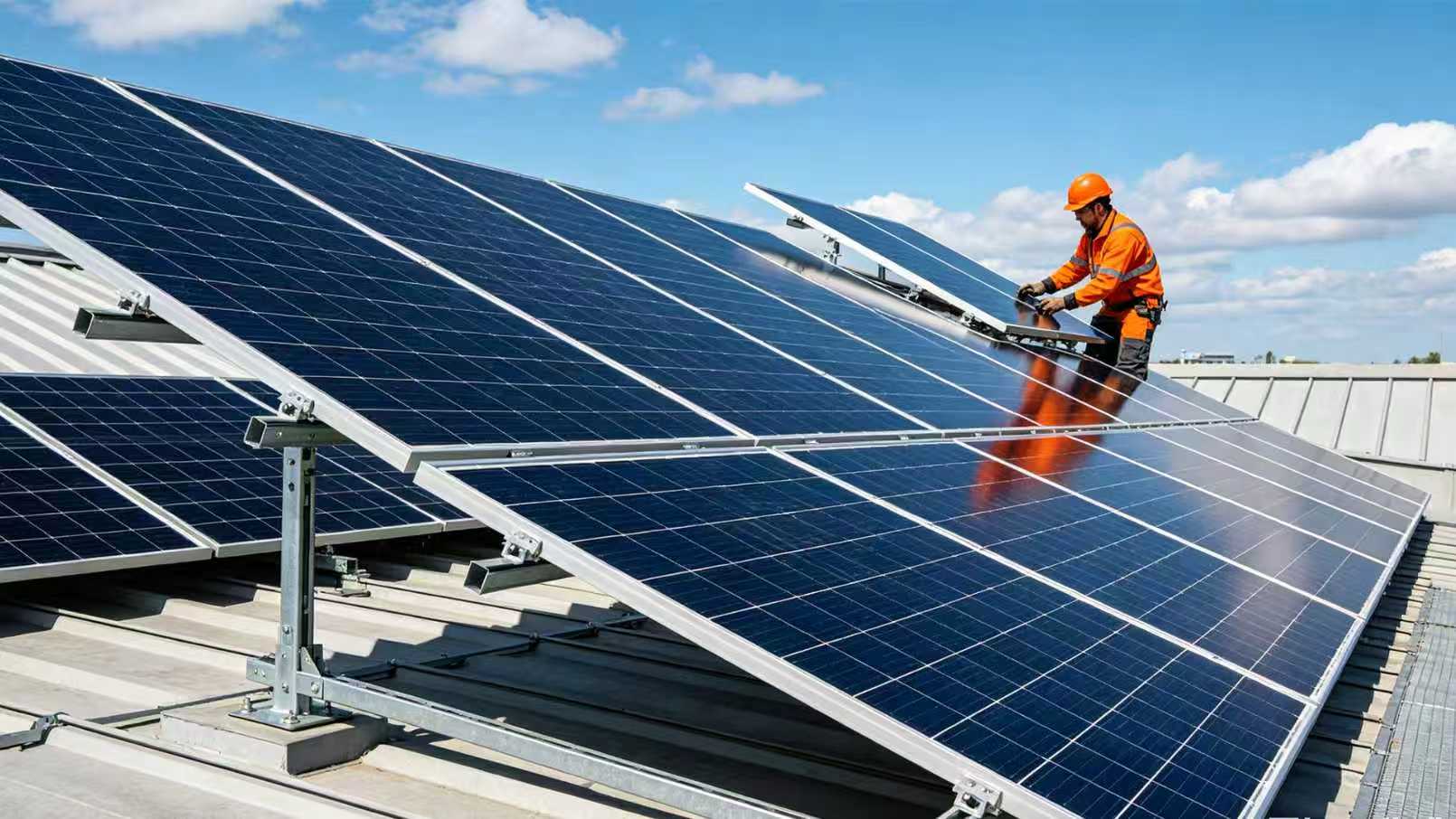
n December 2025, Thai residents can enjoy personal income tax deductions for rooftop residential photovoltaic installations. Valid until December 2028, the policy offers a maximum annual tax deduction of 200,000 Thai baht per resident. It exclusively applies to Class 1 civilian power users and household rooftop distributed PV projects, excluding commercial and industrial power stations, floating PV systems, and other large-scale scenarios. Meanwhile, Thailand has streamlined the approval process for residential photovoltaics, transforming multi-department review into a filing system. Residents only need to complete online declaration 30 days in advance to finish installation filing, significantly lowering the installation threshold for household users. Since the policy implementation, residential PV installed capacity in central and northeastern Thailand has continued to grow, bringing massive terminal procurement demands for local Thai solar panel distributors. Component selection has become a core factor affecting terminal transaction rates and user reputation.

1.1.1.2 Supporting Financial and Subsidy Policies
In addition to personal tax deductions, Thailand’s Ministry of Energy has partnered with local banks to launch low-interest green loans for residential PV installations, reducing upfront investment costs for household users. The government has also unified national installation safety and grid connection standards for residential photovoltaics, standardizing end-market product quality and eliminating outdated, low-efficiency photovoltaic components with poor environmental adaptability. For Thai solar panel distributors, continuous policy dividends drive market expansion. At the same time, end-users have raised higher requirements for product power generation efficiency, stability and service life, forcing distributors to select high-performance next-generation N-type and HJT components to replace traditional P-type PERC modules.
1.2 Mandatory Environmental Requirements for Residential PV Modules in Thailand
1.2.1 Impact of High Temperature and Humidity on PV Cell Degradation
1.2.1.1 Correlation Between Module Operating Temperature and Power Degradation
Thailand features a tropical monsoon climate with an annual average temperature ranging from 25℃ to 35℃. The actual operating temperature of outdoor photovoltaic modules can reach 65℃ to 70℃, far exceeding the standard test temperature of 25℃. According to professional PV industry high-temperature test data, module power continuously declines as ambient temperature rises, and the degradation range is determined by the temperature coefficient. A smaller coefficient indicates better high-temperature resistance and more stable power generation. Traditional P-type PERC modules have a temperature coefficient of approximately -0.35%/℃, resulting in a power degradation of 16% under a 40℃ temperature rise, which cannot adapt to Thailand’s persistent high-temperature environment. In contrast, next-generation N-type and HJT solar cells adopt optimized cell structures with greatly upgraded high-temperature resistance, making them highly suitable for Thailand’s residential scenarios.
1.2.1.2 Challenges of High Humidity to Module Encapsulation
Thailand’s rainy season lasts 6 to 8 months annually, with long-term ambient humidity exceeding 75%, and higher humidity in coastal southern areas. Such humid conditions easily cause water ingress in module encapsulation layers and oxidation of solar cells, leading to power attenuation and short-circuit failures. Residential photovoltaic systems are long-term investment products, whose service life directly determines users’ payback cycle. Therefore, moisture resistance, humidity corrosion resistance and low degradation are core procurement criteria for Thai end-users and key screening indicators for local solar panel distributors. Outdated photovoltaic modules suffer obvious power drops within 2 to 3 years in Thailand’s humid climate, severely damaging distributors’ terminal reputation and repurchase rates.
1.2.2 Impact of Cloudy and Rainy Weather on Power Generation Efficiency
1.2.2.1 Power Generation Performance Under Diffuse Light Conditions
Thailand experiences frequent overcast and rainy days with insufficient direct sunlight and dominant diffuse weak light. Ordinary photovoltaic modules face sharp efficiency drops under weak light, failing to meet households’ daily self-consumption power demand. Featuring advanced passivation processes and optimized light-transmitting structures, N-type TOPCon and HJT heterojunction modules deliver superior weak-light response capabilities compared with conventional modules. They can generate stable power on cloudy, rainy and shaded days, perfectly adapting to the complex light conditions during Thailand’s rainy season and maximizing the annual power output of residential PV systems.
Considering Thailand’s unique climatic characteristics of high temperature, high humidity, frequent rainfall and persistent weak light, Thai solar panel distributors must prioritize TISI-certified, low-degradation, high-temperature and humidity-resistant compliant N-type modules when sourcing residential PV products. Among mainstream suppliers, Oceansolar’s self-developed N-TOPCon 590W and 630W solar panels are top-selling models highly tailored for Thailand’s residential market. Optimized exclusively for local tropical climatic standards, these two series inherit the comprehensive advantages of N-type TOPCon technology, delivering outstanding high-temperature anti-degradation performance, superior moisture resistance and reliable weak-light power generation. Their power and dimension ratios fit most household rooftop sizes in Thailand without installation limitations or power redundancy issues. Fully certified with official Thai TISI compliance credentials and supported by the brand’s local warehousing, fast delivery and localized after-sales services in Thailand, Oceansolar 590W and 630W modules perfectly match the demands of ordinary household PV projects, ranking as the most popular and high-repurchase N-type products for bulk stocking among local Thai solar distributors.

2. Core Technical Principles and Basic Characteristics of N-Type and HJT Solar Cells
2.1 Technical Characteristics of N-Type TOPCon Solar Cells
2.1.1 Core Advantages of Rear-Side Passivation Technology
2.1.1.1 Long-Term Degradation Control in Residential Scenarios
Adopting tunnel oxide passivated contact technology, N-type TOPCon cells form a dense passivation layer on the cell rear side, effectively reducing carrier recombination rates and minimizing inherent power loss. Verified by third-party authoritative testing institutions, N-type TOPCon modules achieve a first-year power degradation rate of ≤1%, with an annual subsequent degradation rate controlled within 0.4%, retaining over 87% of original power after 25 years of service. In Thailand’s high-temperature and high-humidity residential environments, their ultra-low degradation stably guarantees household power generation returns and shortens the investment payback cycle. As a mature and cost-effective technology with stable mass production capacity, N-type TOPCon modules are ideal for bulk procurement and stocking for solar distributors, dominating Thailand’s current residential PV market.
2.2 Technical Characteristics of HJT Heterojunction Solar Cells
2.2.1 Technical Advantages of Grid-Free Composite Structures
2.2.1.1 Dual Adaptability for High-Temperature and Weak-Light Scenarios
HJT heterojunction cells combine crystalline silicon and amorphous silicon thin-film technologies, featuring grid-free surfaces with enhanced light transmittance and minimal internal cell stress without high-temperature diffusion processing. With an industry-leading temperature coefficient of -0.24%/℃, HJT modules achieve far lower power loss than N-type modules under Thailand’s extreme operating temperature of 70℃. Additionally, the amorphous silicon thin-film structure delivers excellent weak-light response, generating 3% to 5% higher power output than N-type modules on overcast and rainy days. However, constrained by complex manufacturing processes and lower production yield, HJT modules require higher mass production investment, resulting in higher terminal market prices compared to N-type TOPCon products.
3. Comprehensive Applicability Comparison of N-Type and HJT Solar Panels for Thailand Residential Scenarios
3.1 Detailed Comparison of Climate Adaptation Performance
In terms of high-temperature resistance, HJT modules feature a temperature coefficient of -0.24%/℃, while N-type TOPCon modules register -0.29%/℃, enabling HJT products to deliver lower power loss and higher stability under Thailand’s year-round high temperatures. For humidity and salt spray resistance, both module types adopt double-glass encapsulation, fully meeting the requirements of rainy-season and coastal residential projects in Thailand with negligible performance gaps. In weak-light environments, HJT modules leverage their grid-free structure to achieve higher diffuse light utilization, generating 3%-5% more power than N-type modules in rainy seasons; while N-type TOPCon modules maintain stable efficiency with almost no performance loss under strong direct sunlight. Overall, HJT modules are optimal for hot and rainy southern regions of Thailand, whereas N-type modules are more suitable for well-lit residential areas in central and northeastern Thailand.
To help Thai solar panel distributors complete intuitive comparisons and accurate product selection, the following table presents a full-dimensional performance comparison between N-TOPCon and HJT solar panels tailored for Thailand’s residential market, covering climate adaptability, procurement cost, power generation performance, payback period and target customer groups. All data is sourced from Southeast Asian outdoor empirical tests and 2026 public PV market quotations:
Comparison Dimension | N-TOPCon Solar Panel | HJT Heterojunction Solar Panel |
Temperature Coefficient | -0.29%/℃ | -0.24%/℃ |
Weak-Light Performance (Rainy/Cloudy Days) | Stable and reliable diffuse light utilization | Excellent, 3%-5% higher power output than N-type |
Humidity & Salt Spray Resistance | Excellent (double-glass encapsulated, suitable for rainy and coastal areas) | Excellent (double-glass encapsulated, equivalent anti-corrosion performance) |
Remaining Power After 25 Years | ≥87%, stable and controllable degradation rate | ≥90%, ultra-low long-term degradation |
Per-Watt Procurement Cost | Cost-effective with stable quotation | Slightly higher than N-type modules |
Residential Project Payback Period | 4-5 years, ideal for mass household users | 7-8 years with higher upfront investment |
Thailand Applicable Scenarios | Well-lit residential buildings in central & northeastern Thailand, ordinary household rooftops (Representative models: Oceansolar 590W/630W) | Southern coastal zones, high-temperature rainy areas, luxury villas, large-area rooftop projects |
Commercial Value for Distributors | Fast inventory turnover, low unsold risk, high terminal repurchase rate | High unit profit, supports high-end product portfolio layout |
3.2 Comparison of Procurement Cost and Terminal Selling Price
Based on 2026 global PV supply chain pricing data, HJT modules cost 0.03 to 0.05 USD per watt more than N-type TOPCon modules, forming a noticeable terminal price gap. For ordinary Thai households treating residential PV as a long-term small-scale investment, cost performance and fast payback are the top priorities, making affordable N-type modules the mainstream choice. In contrast, high-end villa projects and large-area rooftop installations pursue extreme power generation efficiency and extended service life, with end-users willing to pay premium prices for HJT modules. For Thai solar panel distributors, N-type modules support mass stocking and high-volume profitability, while HJT modules target high-end niche clients to enrich premium product portfolios.
3.3 Comparison of Service Life and Investment Return Cycle
Both N-type and HJT modules come with a standard 25-year product warranty. Verified by long-term outdoor empirical tests in Thailand, HJT modules deliver lower long-term degradation and retain over 90% of initial power output after 25 years, achieving higher long-term power generation returns. N-type TOPCon modules maintain more than 87% initial power after 25 years, fully meeting standard residential project requirements. In terms of payback cycles, residential projects equipped with N-type modules take 5 to 6 years to recoup investment, while HJT modules require 7 to 8 years due to higher upfront costs. Aligned with local household consumption habits in Thailand, most residential users prefer N-type modules with shorter payback cycles, with HJT modules only popular among high-end client groups.
4. Practical Module Selection Suggestions for Thailand Solar Panel Distributors
4.1 Product Solution for Mass Terminal Clients
For ordinary household and small self-built rooftop PV projects in Thailand, distributors are recommended to prioritize N-type TOPCon solar panels. Featuring mature manufacturing technology, stable supply capacity and outstanding cost performance, these modules adapt to most climatic conditions across Thailand with short investment payback cycles and high end-user acceptance. With minimal unsold inventory risks, N-type modules serve as core stocking products for distributors to attract terminal customers, improve repurchase rates and stabilize market share, remaining the mainstream solution in Thailand’s residential PV market.
4.2 Custom Solution for High-End Clients
For high-end villas, large-area rooftops and coastal high-salt-spray residential projects in Thailand, distributors are advised to match HJT heterojunction solar panels. Leveraging industry-leading high-temperature resistance, superior weak-light power generation and ultra-low long-term degradation, HJT modules satisfy high-end users’ demands for high power output and extended service life. They help distributors increase unit product profits, build premium brand positioning and capture the high-end segmented residential PV market through differentiated competition.

4.3 Bulk Procurement and Inventory Matching Strategy
Given the obvious hierarchical characteristics of Thailand’s residential PV market, the optimal stocking strategy for local solar distributors is N-type modules as the main product, HJT modules as supplementary products. Cost-effective N-type modules act as high-volume flagship products covering over 80% of mass terminal markets, while premium HJT modules undertake customized high-end orders. This dual-product portfolio stabilizes inventory turnover and cash flow, enriches full-tier customer coverage, maximizes overall profitability, and fully adapts to the booming dividend trend of Thailand’s residential photovoltaic industry.
 English
 العربية
 Русский
 Español
 Português
 Deutsch
 italiano
 日本語
日本語 Nederlands
 Tiếng Việt
 ไทย
ไทย Polski
 Türkçe
 ພາສາລາວ
 ភាសាខ្មែរ
 Bahasa Melayu
 ဗမာစာ
ဗမာစာ தமிழ்
தமிழ் Filipino
 Bahasa Indonesia
 magyar
 Română
 Čeština
 Српски
 हिन्दी
 فارسی
فارسی Slovenčina
 Slovenščina
 Norsk
Norsk Svenska
 українська
 Ελληνικά
 Suomi
Suomi עברית
עברית Dansk
Dansk اردو
اردو বাংলা
বাংলা Hrvatski
 Eesti keel
 සිංහල
සිංහල latviešu
 Azərbaycan dili
 Български
 ગુજરાતી
 ಕನ್ನಡ
ಕನ್ನಡ Kurdî
Kurdî Lietuvių
 മലയാളം
 मराठी
मराठी پښتو
پښتو తెలుగు


 简体中文
简体中文
