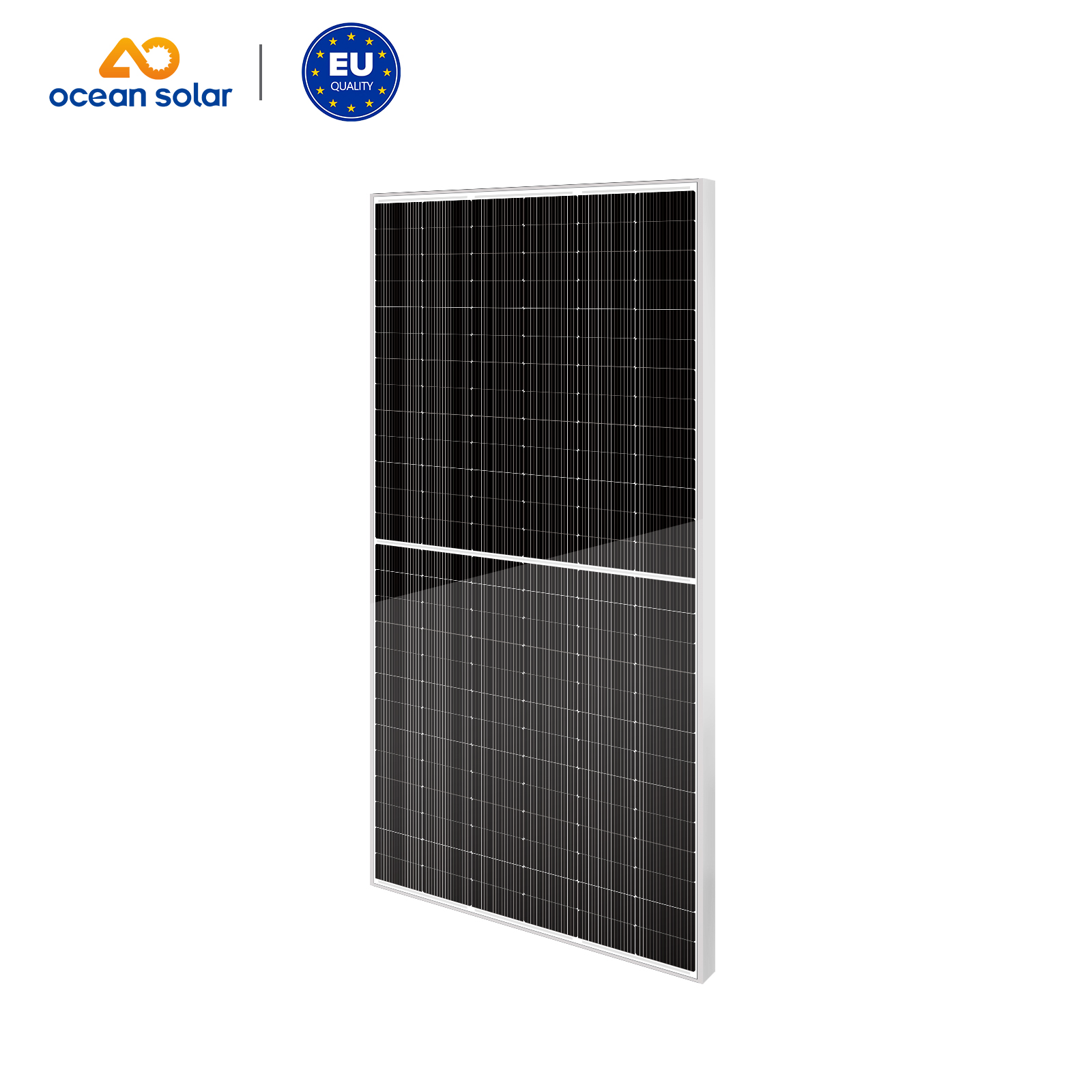
620W-650W N-Type TOPCon Bifacial Solar Panel
Ocean Solar AOX-132G12RHC is a high-power 620W-650W N-type TOPCon bifacial dual-glass solar module designed for utility-scale solar plants, commercial and industrial projects, agrivoltaic systems and other large photovoltaic installations where module power, installed DC capacity and rear-side energy generation are important.
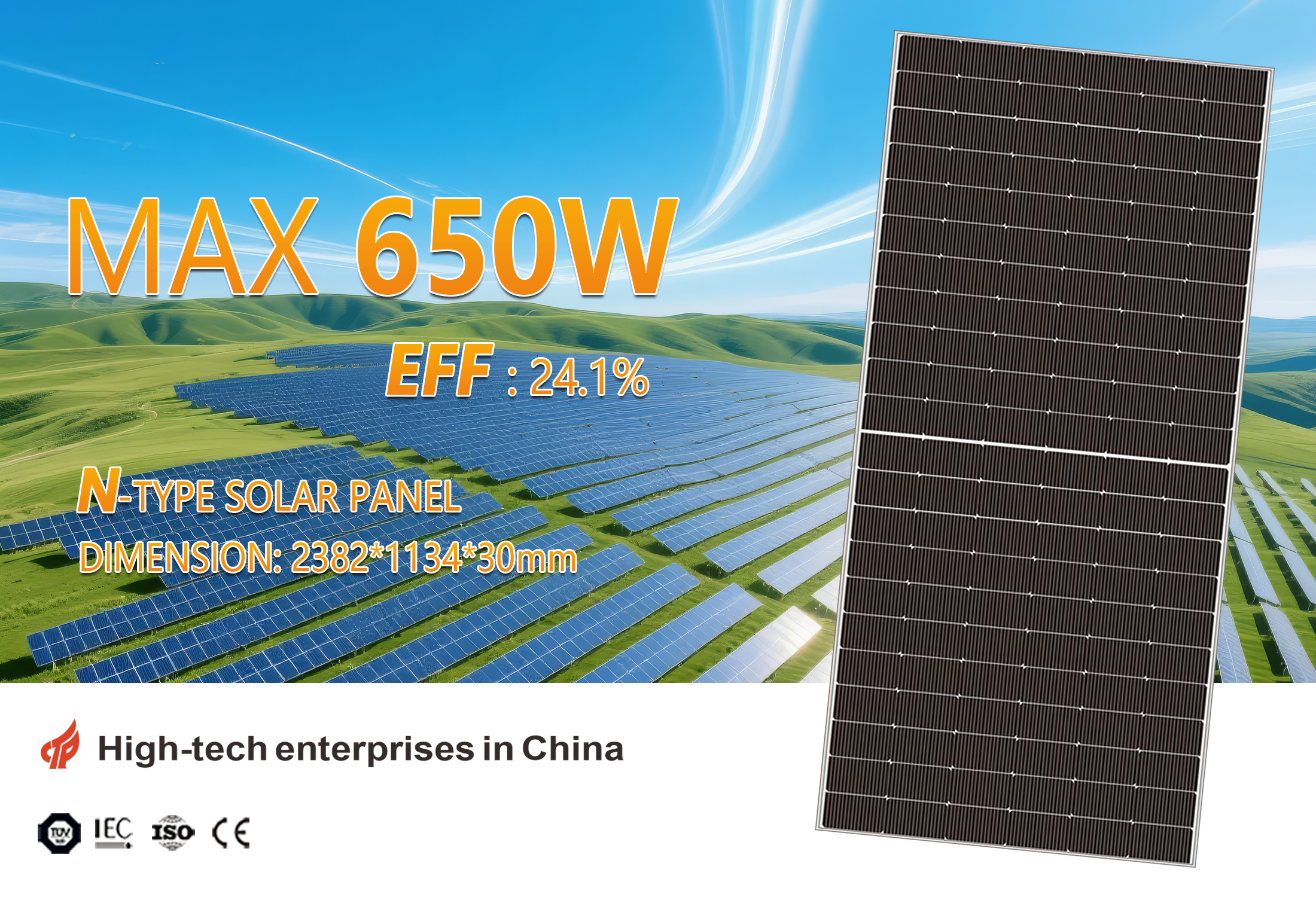
The series uses 132 N-type TOPCon half-cut cells in a 6 × 22 configuration and reaches up to 650W front-side rated power with module efficiency up to 24.10%. The module measures 2382 × 1134 × 30mm and weighs approximately 32.5kg.
Its bifacial dual-glass construction allows the rear cell surface to convert reflected and diffuse irradiance into additional electrical output when installation conditions provide sufficient rear-side exposure. A 1500VDC maximum system voltage, -40°C to +85°C operating range and 5400Pa front / 2400Pa rear mechanical-load ratings support large commercial and utility photovoltaic system design.
Request a Quote

AOX-132G12RHC Key Specifications
| Parameter | Specification |
| Module Model | AOX-132G12RHC |
| Power Range | 620W-650W |
| Module Efficiency | 22.90%-24.10% |
| Cell Technology | N-Type TOPCon Half-Cut Cells |
| Cell Layout | 132 Half Cells, 6 × 22 |
| Module Construction | Bifacial Dual Glass |
| Dimensions | 2382 × 1134 × 30mm |
| Weight | Approx. 32.5kg |
| Maximum System Voltage | 1500VDC (IEC) |
| Operating Temperature | -40°C to +85°C |
| Nominal Operating Cell Temperature | 45±2°C |
| Front Mechanical Load | 5400Pa / 550kg/m² |
| Rear Mechanical Load | 2400Pa / 244kg/m² |
| Packaging | Approx. 740pcs / 40HQ Container |
| Product Warranty | 12 Years |
| Linear Power Warranty | 30 Years |
Up to 650W Output and 24.10% Module Efficiency
The AOX-132G12RHC series covers front-side rated power from 620W to 650W. The highest-power version reaches module efficiency up to 24.10%, providing high installed DC capacity per module for large photovoltaic projects.
Higher module power can reduce the number of modules required for a target system capacity compared with lower-wattage products. Depending on the project layout, this can also reduce the number of mounting positions, connectors and module-handling operations.
Actual project savings depend on module price, mounting-system design, tracker configuration, inverter architecture, electrical balance of system, labor and site conditions.
Get Project Pricing
G12R N-Type TOPCon Cell Technology
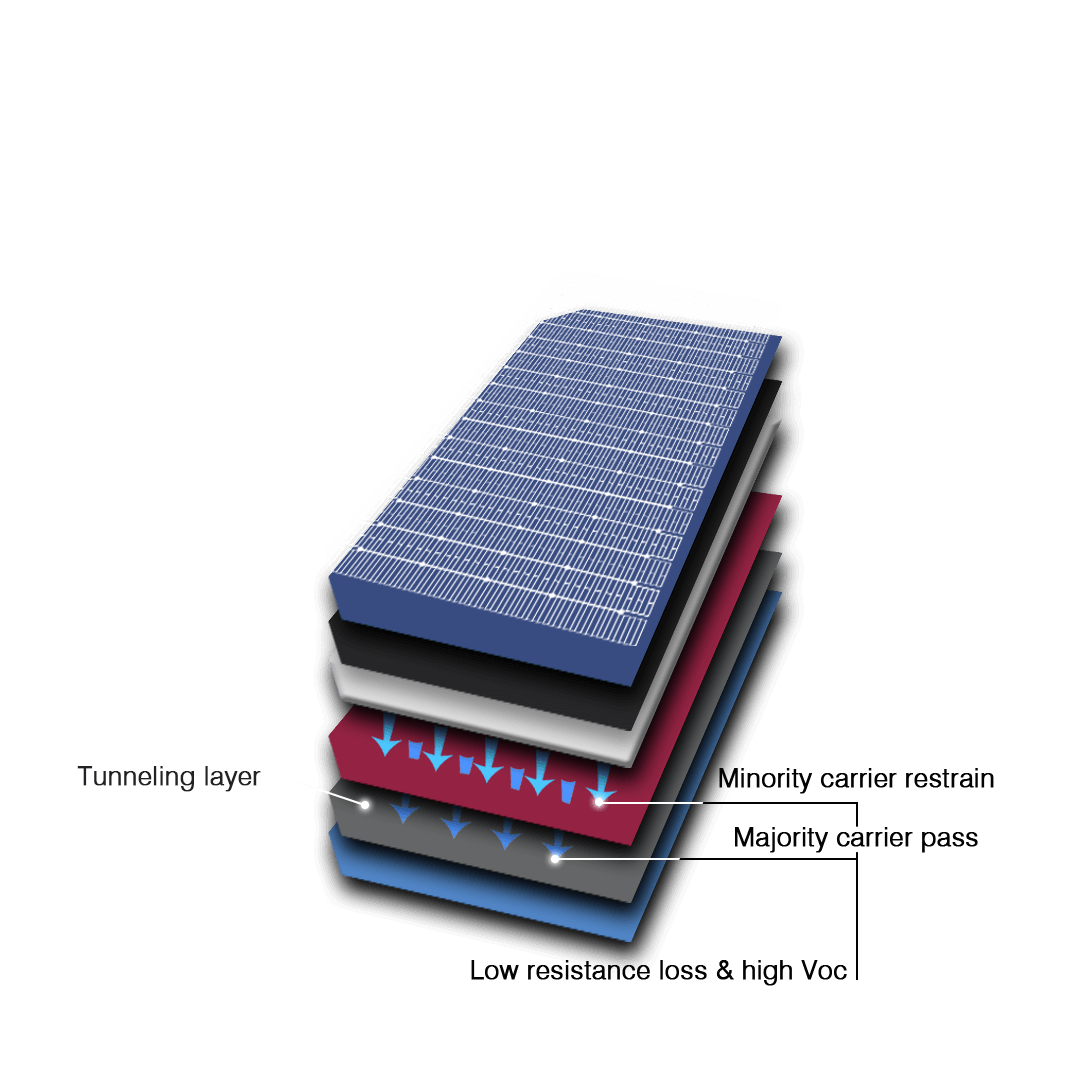
The AOX-132G12RHC uses N-type TOPCon half-cut cells in a 132-cell, 6 × 22 configuration. TOPCon passivated-contact technology is designed to support high photovoltaic conversion efficiency while reducing carrier recombination losses within the solar cell.
Half-cut cell architecture and multi-busbar interconnection provide multiple current-collection paths and support efficient electrical performance across the module.
For EPC contractors and project developers, cell technology should be evaluated together with module power, dimensions, bifacial performance, electrical compatibility, mechanical loading and total installed system cost.
Bifacial Dual-Glass Solar Module
The AOX-132G12RHC uses a bifacial dual-glass structure designed to generate electricity from direct irradiance reaching the front side together with reflected and diffuse irradiance reaching the rear cell surface.
Actual rear-side contribution varies with installation conditions. Ground reflectivity, roof surface, mounting height, tilt angle, tracker geometry, row spacing, structural members and cable routing can all affect the amount of irradiance reaching the rear side.
For commercial and utility projects, expected bifacial gain should therefore be modeled using site-specific irradiance, albedo and array geometry instead of assuming a fixed percentage increase for every installation.
Discuss Your Bifacial PV Project
2382 × 1134mm High-Power Module Format
The AOX-132G12RHC uses a 2382 × 1134 × 30mm large-format module design that combines up to 650W rated power with a standardized rectangular footprint for commercial and utility photovoltaic installations.
Large-format modules can increase the amount of DC capacity installed per module, but system designers should evaluate physical handling, tracker or racking compatibility, module spacing and access requirements before finalizing the array layout.
Each module weighs approximately 32.5kg. Installation planning should therefore consider two-person handling or appropriate lifting methods, site access and the requirements of the selected mounting system.
1500VDC System Design
The AOX-132G12RHC supports a maximum system voltage of 1500VDC according to the published specification, making it suitable for evaluation in large commercial and utility photovoltaic system architectures.
Final modules-per-string calculations must consider the exact module open-circuit voltage, minimum project temperature, inverter maximum DC voltage and applicable electrical requirements.
Module operating current and short-circuit current should also be checked against the selected inverter or central inverter input-current limits before the final string configuration is approved.
Check Inverter and String Compatibility
Mechanical Load Capability
5400Pa Front-Side Load
The module is specified for a maximum front-side mechanical load of 5400Pa. Final structural capability depends on the approved mounting method, support location, clamp configuration and project-specific snow and structural load requirements.
2400Pa Rear-Side Load
The published rear-side mechanical-load rating is 2400Pa. Mounting rails, trackers, clamps and supporting structures should be selected according to the applicable module installation requirements and local wind-load calculations.
Operating Temperature from -40°C to +85°C
The published operating-temperature range is -40°C to +85°C, with a nominal operating cell temperature of 45±2°C.
System designers should consider local minimum and maximum temperatures during electrical and structural design, particularly when calculating maximum string voltage, selecting inverters and evaluating balance-of-system components.
Applications for 620W-650W Bifacial Solar Panels
Utility-Scale Ground-Mounted Solar Plants
High module power and bifacial generation make the AOX-132G12RHC suitable for evaluation in large ground-mounted photovoltaic plants where module count, mounting-system compatibility, inverter design and rear-side irradiance all influence system economics.
Commercial and Industrial Solar Projects
Commercial and industrial projects can use the high module power to increase installed DC capacity. Roof dimensions, structural capacity, module handling and inverter compatibility should be verified before finalizing rooftop system design.
Agrivoltaic Solar Systems
Elevated agricultural photovoltaic structures can provide useful rear-side exposure while allowing agricultural activities below or between module rows. Array height, spacing, shading and structural layout should be designed for both energy generation and agricultural requirements.
Fishery-Solar and Water-Side PV Projects
Bifacial modules can also be evaluated for elevated fishery-solar and water-side photovoltaic systems where reflected and diffuse irradiance can reach the rear module surface. Structural, electrical and environmental requirements should be reviewed for the specific site.
Desert and High-Irradiance Solar Projects
Large high-irradiance photovoltaic projects can use high-power modules to reduce module quantity for a target plant capacity. Final engineering should consider ambient temperature, dust, wind, surface reflectivity, cleaning strategy and maintenance access.
How to Improve Rear-Side Bifacial Energy Yield
Rear-side energy generation increases when more reflected and diffuse irradiance reaches the back of the module. Light-colored, concrete, gravel or other reflective surfaces can provide more rear-side irradiance than dark low-reflectance surfaces.
Module mounting height, tilt angle and row spacing also affect rear-side exposure. Tracker beams, mounting structures and cables should be positioned to reduce unnecessary rear-side shading where practical.
Project developers should use site-specific albedo, irradiance and array geometry when estimating bifacial gain rather than applying a fixed percentage to every project.
What EPC Contractors Should Confirm Before Ordering
High-power modules should be evaluated as part of the complete photovoltaic system rather than selected only by wattage. Before ordering, EPC contractors should confirm the selected power class, module dimensions, mounting system, inverter configuration and project environmental conditions.
For bifacial projects, site albedo, module height, row spacing, tracker or fixed-tilt geometry and rear-side shading should be included in the energy-yield assessment.
Buyers should also confirm destination-market documentation, required product certificates, warranty documentation, packaging configuration and shipping requirements before tender submission or mass procurement.
| Project Check | Information to Confirm |
| Electrical Design | Inverter model, MPPT voltage and current limits, string configuration and minimum site temperature |
| Mechanical Design | Racking or tracker compatibility, module support positions, wind load and snow load |
| Bifacial Design | Albedo, mounting height, tilt, row spacing and rear-side shading |
| Logistics | Project quantity, pallet configuration, container loading, destination and delivery schedule |
| Documentation | Applicable datasheet, warranty document and destination-market certificates |
Send Your Project Requirements
12-Year Product Warranty and 30-Year Linear Power Warranty
The current AOX-132G12RHC product information specifies a 12-year product warranty together with a 30-year extra linear power output warranty.
Product warranty and linear power output warranty are separate terms. Project buyers should review the applicable written warranty document for detailed coverage, power-retention conditions, installation requirements, exclusions and claim procedures before procurement.
Solar Module Manufacturing and Quality Inspection
The Ocean Solar production workflow covers photovoltaic cell interconnection, automatic string layout, bussing, EL electroluminescence inspection, lamination, framing, curing, visual inspection, electrical power testing, final EL inspection and packaging.

SMBB PV cell soldering
Automatic PV cell-string layup
Automatic bussing
PV cell-string positioning
EL electroluminescence testing
Automatic edge sealing
Solar module lamination
Automatic edge trimming
Visual inspection
Automatic frame installation
Automatic glue dispensing
Silicone curing
Visual inspection and cleaning
Power testing
Final EL testing
Packaging
Packaging and Container Loading
The current product specification lists approximately 740 AOX-132G12RHC modules per 40HQ container. This container quantity should be considered together with module dimensions, project quantity and destination logistics when planning large-volume procurement.
Final pallet configuration, loading quantity, destination documentation, shipping terms and delivery schedule should be reconfirmed in the commercial quotation before production and shipment.
For Distributors, EPC Contractors and Project Buyers
The AOX-132G12RHC is intended for professional photovoltaic procurement where module power, dimensions, logistics, electrical compatibility and project documentation need to be evaluated together.
Distributors, importers, EPC contractors and solar brands can discuss project-specific labeling, packaging, cable configuration and documentation requirements with Ocean Solar before production.
Any customization that changes electrical characteristics, module dimensions, glass structure, cell configuration or mechanical construction should be technically confirmed as a separate configuration before ordering.
Get Project Pricing & Specifications
Download the 620W-650W Bifacial Solar Panel Datasheet
 Download MONO 620W-650W Bifacial Dual-Glass Datasheet
Other Ocean Solar Bifacial Module Options
Other bifacial module power ranges are available for projects requiring different module dimensions, power classes and photovoltaic system configurations.
Frequently Asked Questions About 620W-650W Bifacial Solar Panels
What is the maximum output of the AOX-132G12RHC?
The AOX-132G12RHC series covers a front-side rated power range from 620W to 650W.
What is the maximum module efficiency?
The published module efficiency range is 22.90% to 24.10%, with the 650W model reaching up to 24.10%.
What solar cell technology does the module use?
The module uses N-type TOPCon technology with 132 half-cut cells arranged in a 6 × 22 configuration.
Is the AOX-132G12RHC a bifacial solar panel?
Yes. It uses a bifacial dual-glass structure designed to generate electricity from front-side sunlight together with additional reflected and diffuse irradiance reaching the rear cell surface.
How much extra energy can the rear side generate?
Rear-side contribution is project dependent. Ground reflectivity, mounting height, tilt, row spacing, tracker geometry, shading and local irradiance all affect bifacial energy gain, so project-specific simulation is recommended.
What are the dimensions of the 650W module?
The AOX-132G12RHC measures 2382 × 1134 × 30mm.
How much does the module weigh?
The published module weight is approximately 32.5kg.
What is the maximum system voltage?
The current specification lists a maximum system voltage of 1500VDC under the stated IEC specification.
What is the operating temperature range?
The published operating-temperature range is -40°C to +85°C, with a nominal operating cell temperature of 45±2°C.
What are the mechanical load ratings?
The module is specified for up to 5400Pa front-side mechanical load and 2400Pa rear-side mechanical load when installed according to the applicable mounting requirements.
Is the 620W-650W module suitable for utility-scale solar plants?
Yes. Its high rated power, bifacial construction, large module format and 1500VDC system compatibility make it suitable for evaluation in utility-scale and large commercial photovoltaic projects.
Can the module be used with solar trackers?
It can be evaluated for compatible tracker systems. Module dimensions, weight, mounting-hole or clamp requirements, tracker geometry and project wind-load conditions should be checked with the tracker supplier before final system design.
Can the module be used for commercial rooftops?
It can be used in appropriately engineered commercial and industrial rooftop projects. Roof dimensions, structural capacity, module handling, racking compatibility and inverter electrical limits should be verified before installation.
How can rear-side bifacial generation be improved?
Rear-side generation can be improved by increasing useful reflected irradiance and reducing rear-side shading. Surface reflectivity, module height, row spacing, tilt angle, tracker structure and cable routing should all be considered during array design.
What warranty is provided for the AOX-132G12RHC?
Current product information specifies a 12-year product warranty and a 30-year extra linear power output warranty. Detailed conditions should be confirmed in the applicable written warranty document.
How many modules can be loaded in a 40HQ container?
The current packaging specification lists approximately 740 modules per 40HQ container. Final pallet configuration and loading quantity should be reconfirmed before shipment.
Can Ocean Solar support OEM and distributor projects?
Distributors, EPC contractors, importers and solar brands can discuss project-specific labeling, packaging, documentation and agreed product configurations with Ocean Solar before ordering.
What information should I provide for a project quotation?
Please provide the required power class, project quantity, destination country, project type, inverter model, mounting or tracker system, planned string design, site conditions, expected rear-side exposure and any documentation or OEM requirements.
Contact Ocean Solar
 English
 العربية
 Русский
 Español
 Português
 Deutsch
 italiano
 日本語
 Nederlands
 Tiếng Việt
 ไทย
 Polski
 Türkçe
 ພາສາລາວ
 ភាសាខ្មែរ
 Bahasa Melayu
 ဗမာစာ
 தமிழ்
 Filipino
 Bahasa Indonesia
 magyar
 Română
 Čeština
 Српски
 हिन्दी
 فارسی
 Slovenčina
 Slovenščina
 Norsk
 Svenska
 українська
 Ελληνικά
 Suomi
 עברית
 Dansk
 اردو
 বাংলা
 Hrvatski
 Eesti keel
 සිංහල
 latviešu
 Azərbaycan dili
 Български
 ગુજરાતી
 ಕನ್ನಡ
 Kurdî
 Lietuvių
 മലയാളം
 मराठी
 پښتو
 తెలుగు


 简体中文