Thailand’s PV market is entering a "golden boom period"—the 2026 residential solar tax exemption policy has been extended to 2028 (up to 200,000 baht tax deduction per household), and the Power Development Plan 2024-2037 mandates 51% clean energy by 2037. However, Thailand’s tropical climate—high temperatures, heavy salt spray, and intense UV radiation—poses a major challenge for panel selection. As two leading N-type technologies, N-TOPCon and BC (Back Contact) panels each have unique strengths. Today, we’ll objectively compare their core differences, explain why BC will gain momentum in the future, and highlight Ocean Solar’s N-TOPCon series— a popular choice in Thailand’s market.
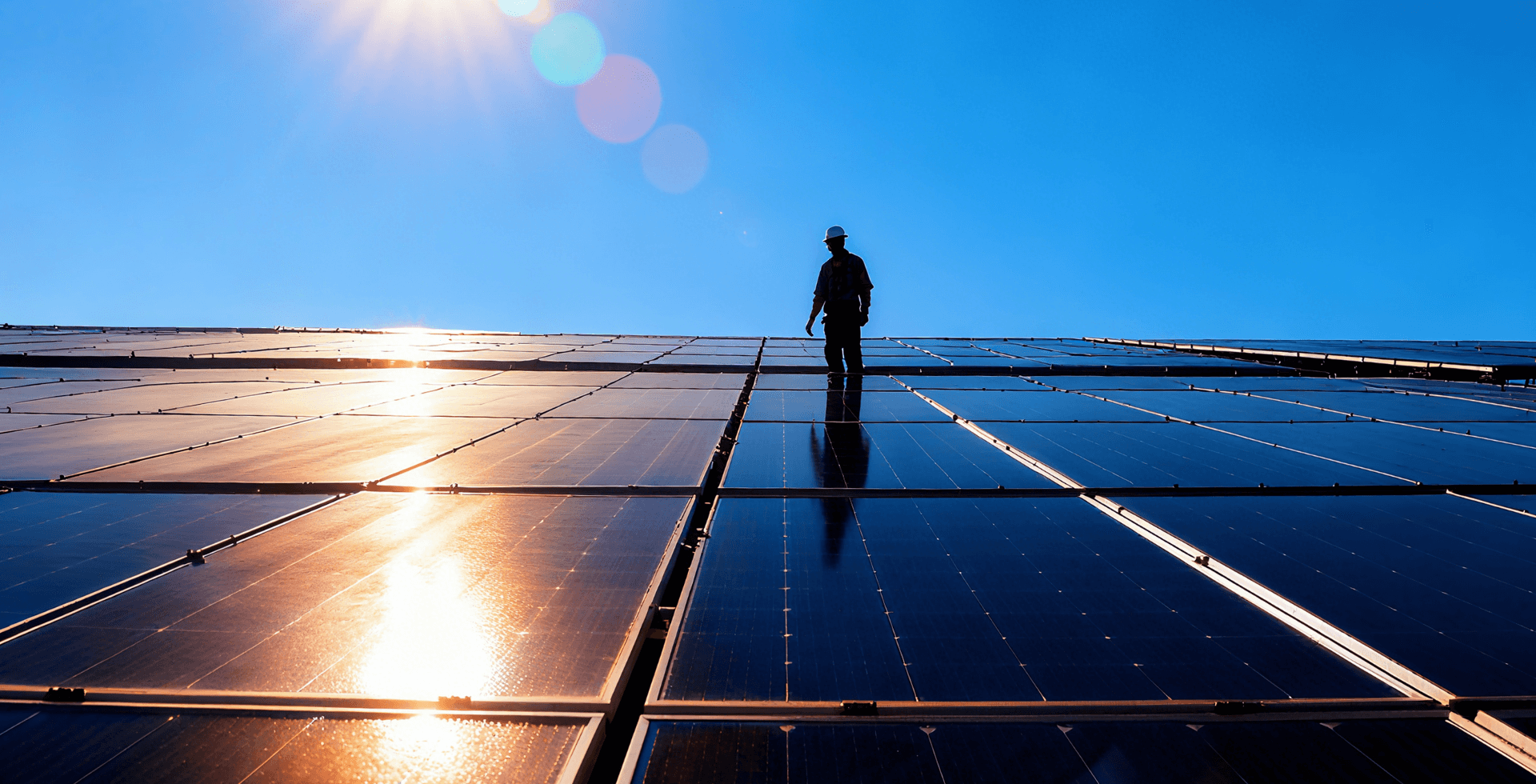
I. Core Pain Points of PV Selection in Thailand: Driven by Climate and Policy
1. The "Harsh Test" of Tropical Climate: Panels Must Pass the "Three Highs"
Thailand’s average annual temperature exceeds 30°C, with midday surface temperatures reaching 50°C. Coastal areas have 5x the salt spray concentration of inland regions, and UV intensity is 30% higher than in China. For solar panels, this means overcoming three critical challenges: high-temperature degradation, salt spray corrosion, and UV aging. Additionally, Thailand’s new rooftop PV regulations simplify installation requirements (only limiting weight to ≤20kg/㎡), opening opportunities for lightweight, high-energy-density panels.
2. Market Demand Under Policy Dividends: Balancing Efficiency and Cost
Thailand’s PV investors focus on two key goals: maximizing power generation from over 2,000 hours of annual sunshine, and recouping costs quickly during the tax incentive period (2026-2028). N-TOPCon and BC panels each excel in efficiency, cost, and reliability—selection depends on project scenarios, not technical superiority. Ocean Solar’s N-TOPCon products precisely address this "balance between efficiency and cost" pain point.
II. Technology Showdown: Core Differences Between Two Routes
1. N-TOPCon: The "Mass-Production Champion" of Maturity and Stability
N-TOPCon (Tunnel Oxide Passivated Contact) technology adds a thin tunnel oxide layer and polycrystalline silicon layer to the back of solar cells, reducing carrier recombination losses. It retains the front grid design of traditional panels, making it a seamless transition from P-type PERC technology—currently holding ~70% of the global market share.
✅ Core Advantages:
• Mature manufacturing process, high compatibility with PERC production lines, and low retrofitting costs
• Bifaciality rate of over 85%, ideal for high-reflectivity ground scenarios
• Stable mass-production yield (95%-98%) with reliable supply chain support
❌ Areas for Improvement:
• Minor shading from front grid lines, with efficiency gains approaching technical limits
• High silver paste usage, vulnerable to fluctuations in precious metal prices
Ocean Solar N-TOPCon Technical Highlights:
A specialist in N-TOPCon technology, Ocean Solar adopts M10 MBB (Multi-Busbar) + half-cut cell design. This preserves N-TOPCon’s maturity while addressing key drawbacks: half-cut cells reduce hot spot risks (critical for Thailand’s high temperatures), and multi-busbar design lowers series resistance for stable power generation. With a maximum mass-production efficiency of 22.8%, it perfectly suits Thailand’s high-irradiance conditions.
www.oceansolarcn.com We look forward to your contact!
2. BC Panels: The "Tech Innovator" with Unlimited Potential
BC (Back Contact) technology relocates all positive and negative electrodes to the back of cells, eliminating front grid lines for a "all-black appearance + maximum light absorption." Mainstream variants include HPBC, IBC, and XBC (represented by Longi’s Hi-MO 9 series), with global market share expected to exceed 8% in 2026.
✅ Core Advantages:
• No front shading—lab efficiency up to 27.8%, mass-production efficiency ≥24.8%
• 90% reduction in exposed metal, offering superior salt spray corrosion resistance
• Strong shade tolerance, ideal for complex rooftops and mountainous areas
❌ Areas for Improvement:
• Complex manufacturing process, initial yield of 95%-96% (to rise to 98% in 2026)
• Current cost per watt is ~0.05 USD higher than N-TOPCon
III. Neutral Performance Comparison: Which Fits Thailand Better?
Performance Metric | N-TOPCon Panels (Including Ocean Solar) | BC Panels | Thailand Market Adaptability Analysis |
Conversion Efficiency | Mass-production: 22.5%-25.5% (Ocean Solar max 22.8%) | Mass-production: 24.8%-25.9% | BC holds a slight edge (1%-3% gap), but has greater room for growth (theoretical limit of 29.4%) |
Bifaciality Rate | 85%±5% (Ocean Solar tested: 83%-88%) | 70%-80% (new models reach 80%) | N-TOPCon is more advantageous for ground-mounted projects, but BC is narrowing the gap with 0BB technology |
High-Temperature Tolerance | Temperature coefficient: -0.30%/℃ (Ocean Solar standard) | Temperature coefficient: -0.26%/℃ | Both outperform traditional panels; BC has marginally lower degradation in extreme heat, but Ocean Solar meets the needs of over 95% of Thailand’s regions |
Salt Spray Resistance | Dual-glass design + enhanced encapsulation (Ocean Solar standard) | 90% less exposed metal, 30-year degradation is ideal for high-salt areas (Bangkok, Chonburi), while Ocean Solar’s dual-glass N-TOPCon passes IEC61701 salt spray testing for moderate salt environments |
|
Cost (Q1 2026) | 0.28-0.30 USD/W (Ocean Solar all-black models: +0.01 USD/W) | 0.32-0.35 USD/W | N-TOPCon offers better current cost-performance, but BC’s cost reduction is accelerating (copper-for-silver technology cuts costs by 0.02 USD/W) |
Aesthetics | Traditional grid or all-black options (Ocean Solar 470W-485W all-black series) | All-black, no shading—superior appearance | BC is better for high-end residential projects; Ocean Solar’s all-black N-TOPCon provides an affordable aesthetic alternative |
Warranty | 12-year product + 30-year power warranty (Ocean Solar standard) | 10-year product + 25-year power warranty | Ocean Solar’s extended warranty aligns with Thailand’s 25+ year project lifecycle requirements |
IV. Scenario-Based Selection Guide: Which to Choose for Your Project?
1. Large-Scale Ground-Mounted Projects: N-TOPCon Remains the Top Choice (Ocean Solar Advantages)
Thailand’s large ground-mounted projects (e.g., Eastern Economic Corridor) prioritize "scale + cost control." N-TOPCon’s bifacial gain (12%-15% backside generation), mature supply chain (98% yield), and lower upfront costs minimize land and BOS expenses. Over 80% of Thailand’s ground-mounted projects still use N-TOPCon, with no immediate replacement in sight.
Ocean Solar N-TOPCon Adaptability:
• Power range: 430W-485W, compatible with 210/182 silicon wafer platforms for flexible project design
• 30-year power warranty (industry average: 25 years), matching Thailand’s long-term energy plans
• Certified by TUV, CE, CQC, and meets MEA/PEA grid-connection requirements (no additional testing needed)
• Bifaciality rate of 83%-88%, delivering 8%-12% more annual power than single-glass panels in Thailand’s concrete or sandy ground projects
2. Residential PV Market: BC Grows Rapidly, Ocean Solar’s All-Black N-TOPCon Complements
Driven by the 200,000 baht tax deduction, Thailand’s residential PV installations surged 60% YoY in Q1 2026. These projects value rooftop aesthetics—BC’s all-black design is perfect for high-end homes. Additionally, Thai households have limited rooftop space, making BC’s high energy density (6% more power per m²) a key advantage.
Ocean Solar All-Black N-TOPCon Use Case:
For budget-conscious households seeking aesthetics, Ocean Solar’s 470W-485W all-black series offers a cost-effective alternative. It retains N-TOPCon’s cost advantage (10%-15% cheaper than equivalent BC panels) while meeting aesthetic needs. With a 30-year warranty (5 years longer than BC), it ensures hassle-free long-term operation.
3. Coastal Commercial & Industrial (C&I) Projects: BC’s "Natural Habitat," Ocean Solar Dual-Glass as Backup
Salt spray corrosion is a major cause of panel failure in Thailand’s coastal industrial zones (Chonburi, Rayong). BC’s back-contact design reduces exposed metal, with lab data showing over 30 years in 5% salt spray—far better than the 15%-20% degradation of standard N-TOPCon.
Ocean Solar Dual-Glass N-TOPCon Application Boundary:
For coastal areas with moderate salt spray (e.g., Bangkok suburbs), Ocean Solar’s dual-glass N-TOPCon is a cost-effective backup. Its reinforced glass + low-water-permeability film design passes IEC61701 salt spray testing, with 30-year degradation controlled at 0.04-0.05 USD/W cheaper than BC, it shortens payback periods by 1-2 years.
4. Complex Scenarios (Mountains/Shaded Rooftops): BC Offers Greater Resilience
In northern Thailand’s mountainous regions or urban rooftops with shade, BC’s strong shade tolerance shines. Traditional N-TOPCon loses 10%-15% power under partial shading, while BC limits losses to ideal for distributed C&I and residential projects.
V. Future Trend: Why BC Will Gain Momentum
1. Clear Cost Reduction Path: Rapidly Narrowing Gap
Currently 0.05 USD/W more expensive than N-TOPCon, BC’s costs are falling fast: thinning silicon wafers (150μm→130μm), copper-for-silver technology (60%+ silver reduction), and yield improvements to 98% will align BC’s costs with N-TOPCon by 2027. Leading manufacturers like Longi have invested 100 billion RMB in BC capacity, with 100% of domestic cell production switching to BC by late 2026—scalability will drive further price cuts.
2. Higher Efficiency Ceiling: Matching Thailand’s High Irradiance
N-TOPCon’s lab efficiency is approaching 27% (technical limit), with diminishing returns for further gains. BC’s lab efficiency already reaches 27.8%, and perovskite tandem technology could push it to 34%. Thailand’s abundant sunshine means higher efficiency directly translates to more revenue—BC’s technical potential better aligns with Thailand’s long-term energy transition.
3. Dual Drivers: Policy and Market Demand
Thailand’s government incentivizes high-efficiency energy equipment, with BC panels qualifying for 50% income tax deductions via 5-star energy certifications. As residential and rooftop C&I PV’s share grows (expected to reach 40% in 2026), market demand for aesthetics and reliability will rise—BC’s all-black design and corrosion resistance will become key differentiators.
4. Maturing Supply Chain
BC capacity will explode in 2026: Longi alone plans 70-100GW of BC production, with HPBC 2.0 securing over 1GW of orders. A mature supply chain will solve BC’s historical pain points (limited capacity, long lead times) and ensure stable supply for Thailand’s market.
VI. Neutral Conclusion: No "Best" Option—Only the Most Suitable
• For large-scale ground-mounted project investors prioritizing short-term cost-performance and stable supply: N-TOPCon panels (e.g., Ocean Solar’s series) remain the optimal choice. With a 30-year warranty, full international certifications, and significant bifacial gains, they maximize Thailand’s high irradiance and enable fast cost recovery.
• For residential/coastal C&I/complex scenario projects valuing long-term returns, aesthetics, and reliability: BC panels are a forward-thinking choice.
• Over the next 3-5 years: BC will grow rapidly in Thailand’s residential and distributed markets, while N-TOPCon will dominate ground-mounted projects—they are "complementary," not "competitive."
Ocean Solar’s N-TOPCon products exemplify the "steady performer" in the N-type technology landscape. Rather than chasing extreme efficiency, they leverage mature manufacturing, extended warranties, and a flexible product portfolio (standard/all-black/dual-glass models) to meet the core needs of most Thai PV projects. For investors seeking "hassle-free investment and stable returns," market-proven N-TOPCon products like Ocean Solar’s remain a "safe bet" in Thailand’s PV market.
Want to know which panel fits your project? Share your project type (ground/residential/C&I), location (coastal/inland), and budget—I’ll provide a customized selection guide, plus Ocean Solar’s Thailand project cases and quote references!
 English
 العربية
 Русский
 Español
 Português
 Deutsch
 italiano
 日本語
日本語 Nederlands
 Tiếng Việt
 ไทย
ไทย Polski
 Türkçe
 ພາສາລາວ
 ភាសាខ្មែរ
 Bahasa Melayu
 ဗမာစာ
ဗမာစာ தமிழ்
தமிழ் Filipino
 Bahasa Indonesia
 magyar
 Română
 Čeština
 Српски
 हिन्दी
 فارسی
فارسی Slovenčina
 Slovenščina
 Norsk
Norsk Svenska
 українська
 Ελληνικά
 Suomi
Suomi עברית
עברית Dansk
Dansk اردو
اردو বাংলা
বাংলা Hrvatski
 Eesti keel
 සිංහල
සිංහල latviešu
 Azərbaycan dili
 Български
 ગુજરાતી
 ಕನ್ನಡ
ಕನ್ನಡ Kurdî
Kurdî Lietuvių
 മലയാളം
 मराठी
मराठी پښتو
پښتو తెలుగు


 简体中文
简体中文
