How to Choose the Right Lithium Battery (A Practical Guide for Small Residential Backup Systems)
You are here: Home » Blog » How to Choose the Right Lithium Battery (A Practical Guide for Small Residential Backup Systems)
How to Choose the Right Lithium Battery (A Practical Guide for Small Residential Backup Systems)
Views: 0 Author: Site Editor Publish Time: 2026-07-29 Origin: Site
If you plan to install a small-scale lithium battery system at home, such as small energy storage for off-grid/grid-tied PV systems, backup power supply, camping power or household emergency power reserve, you may find all lithium batteries on the market look nearly identical on the surface, yet deliver drastically different practical performance.
This guide breaks down the selection logic in plain language, without excessive technical jargon. It clarifies exactly what indicators to check, how to compare products, and which pitfalls to avoid. It also introduces the product development ideas that Ocean Solar can offer for small-scale residential lithium battery applications.
1.1 First Clarify Your Core Demand: What Problem Do You Intend to Solve with the Lithium Battery?
Define your application goals before picking specific models. A "suitable" lithium battery is never judged by the most impressive parameter sheet, but by its alignment with your actual usage scenarios.
Core Demand Orientation: Energy Storage vs Emergency Backup
Energy storage focus:
Prioritize usable capacity, charge-discharge efficiency and cycle life;
Emergency backup focus:
Prioritize safety performance, response speed and operational stability.
Daily Runtime & Continuous Discharge Duration
Most buyers only pay attention to rated power output, but overlook sustained discharge capability and Depth of Discharge (DoD).
Future Expandability
The most common upgrade path for small residential systems is phased installation: deploy a basic set for trial operation first, then expand capacity gradually later.
In short, a household power backup battery should never be selected based on standards for high-performance traction batteries for long-distance vehicles. Align the positioning correctly, and you can save costs while enjoying trouble-free operation.
1.2 Core Differentiators of Small Residential Lithium Batteries: Cell Chemistry & BMS
Many consumers only compare rated capacity (Ah) and nominal voltage (V) when purchasing lithium batteries. For household applications, however, cell chemical system + Battery Management System (BMS) are the decisive factors determining safety and service life.
1.2.1 Cell Chemistry System: LFP (Lithium Iron Phosphate) Is the Top Pick for Home Use
If you are hesitating between different lithium battery technologies, LFP (LiFePO4) is strongly recommended for residential scenarios for three practical reasons:
1. More stable intrinsic safety performance;
2. Cost-effective long-term cycle lifespan;
3. Well-adapted to daily frequent charge-discharge cycles in household environments.
Admittedly, product performance varies across brands and structural designs, but overall, LFP serves as the most rational starting point for small-scale home energy storage systems.
1.2.2 BMS: Do Not Merely Check Its Availability, But Its Full Protection Coverage
The value of BMS lies in its practical protection execution rather than its label on the specification sheet. It prevents battery damage under abnormal operating conditions via the following core functions:
•Overcharge & over-discharge protection
•Overcurrent protection
•Over-temperature & low-temperature protection
•Cell voltage balancing for series-connected battery packs
You can regard the BMS as the battery’s safety supervisor: a high-quality BMS will automatically cut off abnormal operations to safeguard the battery when operational errors occur.
1.3 How to Interpret Key Specifications & Avoid Misleading Parameters
1.3.1 Capacity (Ah / kWh): Match with Actual Power Consumption Requirements
Consumers usually estimate battery size based on daily household electricity consumption, yet two extra critical factors must be factored in:
•Actual usable capacity limited by DoD setting;
•Required continuous backup duration;
•Charging speed matching solar PV generation (sunny days) or grid supplementary charging.
Batteries with the same nominal capacity can deliver vastly different effective usable energy. Therefore, always confirm with suppliers the clear rated usable capacity range and recommended DoD strategy during comparison.
1.3.2 Voltage Class & System Compatibility: Ensure Effective Matching
Small residential energy storage systems commonly adopt these voltage architectures:
•Battery pack voltage: 12V, 24V, 48V, etc.
•Input voltage compatibility of inverters/converters
•Expandability for series/parallel connection
A prevalent purchasing pitfall: batteries with seemingly correct nominal parameters fail to run stably due to mismatched communication protocols, voltage operating ranges or working modes. Best practice: Confirm in advance whether the battery supports matching charge-discharge communication protocols and operating modes of the inverter.
1.3.3 Discharge Rate & Sustained Power Output: Peak Rating Does Not Equal Long-Term Load Capacity
The advertised maximum instantaneous power cannot represent stable long-duration load-bearing capacity. For household loads including refrigerators, routers, lighting and motor-driven appliances with high startup inrush current, continuous rated discharge power carries greater practical significance.
1.4 Safety & Certifications: Non-Negotiable Bottom-Line Requirements for Home Batteries
Lithium batteries are not consumer toys. For long-term indoor installation, safety benchmarks must be strictly met.
Lithium batteries generate heat during charging and discharging, especially under high-rate working conditions. Pay attention to:
•Complete thermal management design and real-time temperature monitoring inside the battery pack;
•Reliable insulation protection for outer casing and internal wiring layout.
1.4.2 Verifiable Complete Protection Mechanisms
Premium BMS protection should not only exist on paper but also trigger accurately under abnormal faults. You can judge the manufacturer’s systematic safety design from product manuals, interface definitions and detailed protection logic descriptions.
1.4.3 Standardized Charging Strategy: Protect Battery Lifespan Rather Than Aggressive Charging
Overly aggressive charging algorithms accelerate capacity degradation. Qualified products will specify clear charging parameter ranges and recommended operating modes. If you plan to pair the battery with a solar charge controller or hybrid inverter, double-check the compatibility of charging curves and operating modes between devices.
1.5 Lifespan Cost Evaluation: Cycle Times & Actual Service Life
Most manufacturers advertise cycle life figures tested under lab-specific conditions. Focus on three practical indicators for real-world application:
•Capacity retention stability under actual operating conditions;
•Recommended DoD threshold (huge lifespan gap between long-term 80% DoD and 100% full discharge);
•Capacity attenuation performance under extreme ambient temperatures.
1.5.1 Temperature Impact Is More Significant Than Expected
High summer temperatures and freezing winter weather both impair battery performance. Well-designed products are equipped with the following temperature-adaptive mechanisms:
•Power derating or discharge limitation under low-temperature environments;
•Output derating or automatic protection triggered under excessive high temperatures;
•Reasonable layout of temperature detection points for full monitoring coverage.
1.6 System Matching & Installation: Ensure Correct Deployment of the Battery Bank
You are purchasing a complete energy storage system instead of individual electronic components. Even top-tier batteries will malfunction with improper peripheral matching.
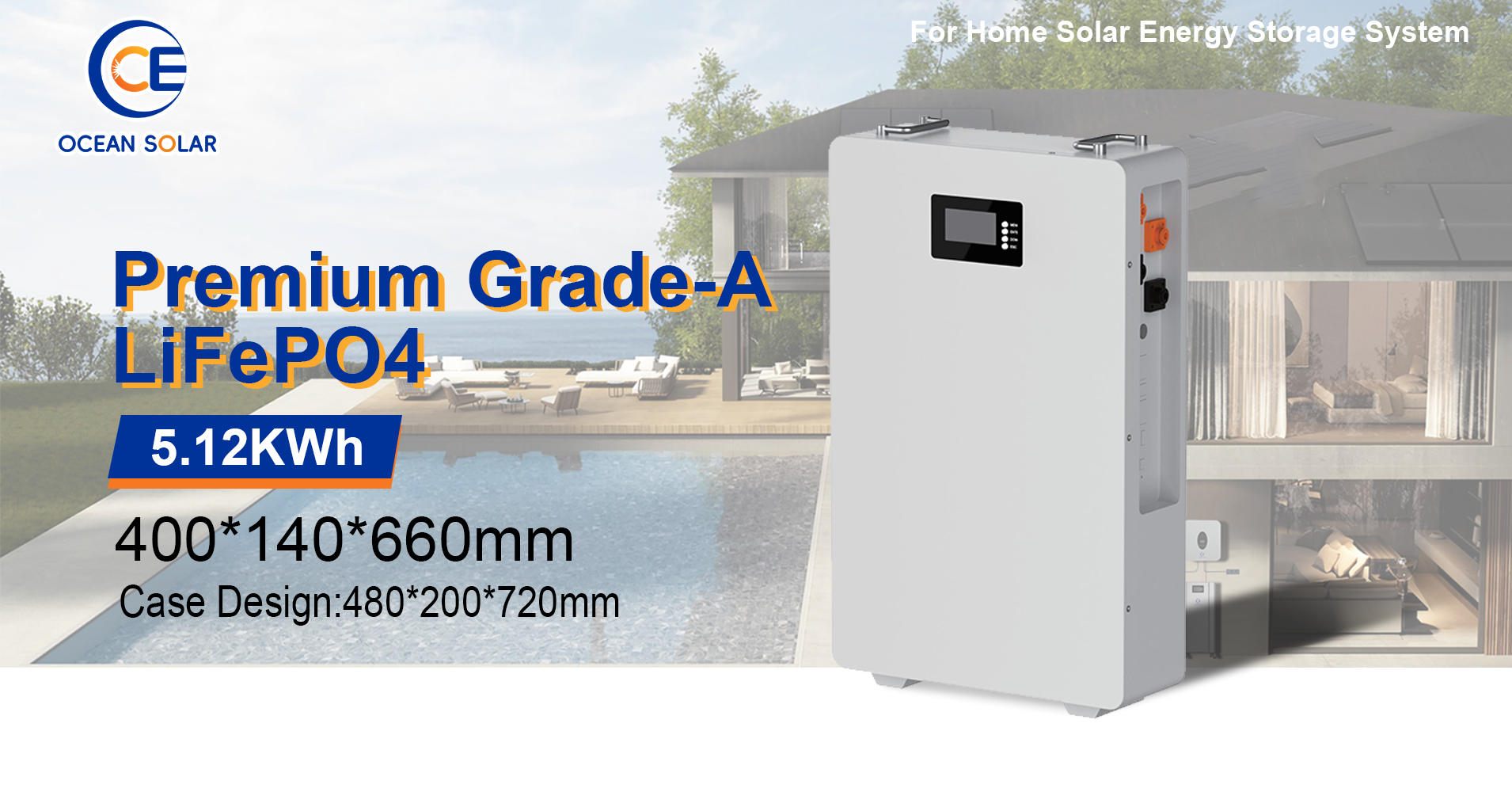
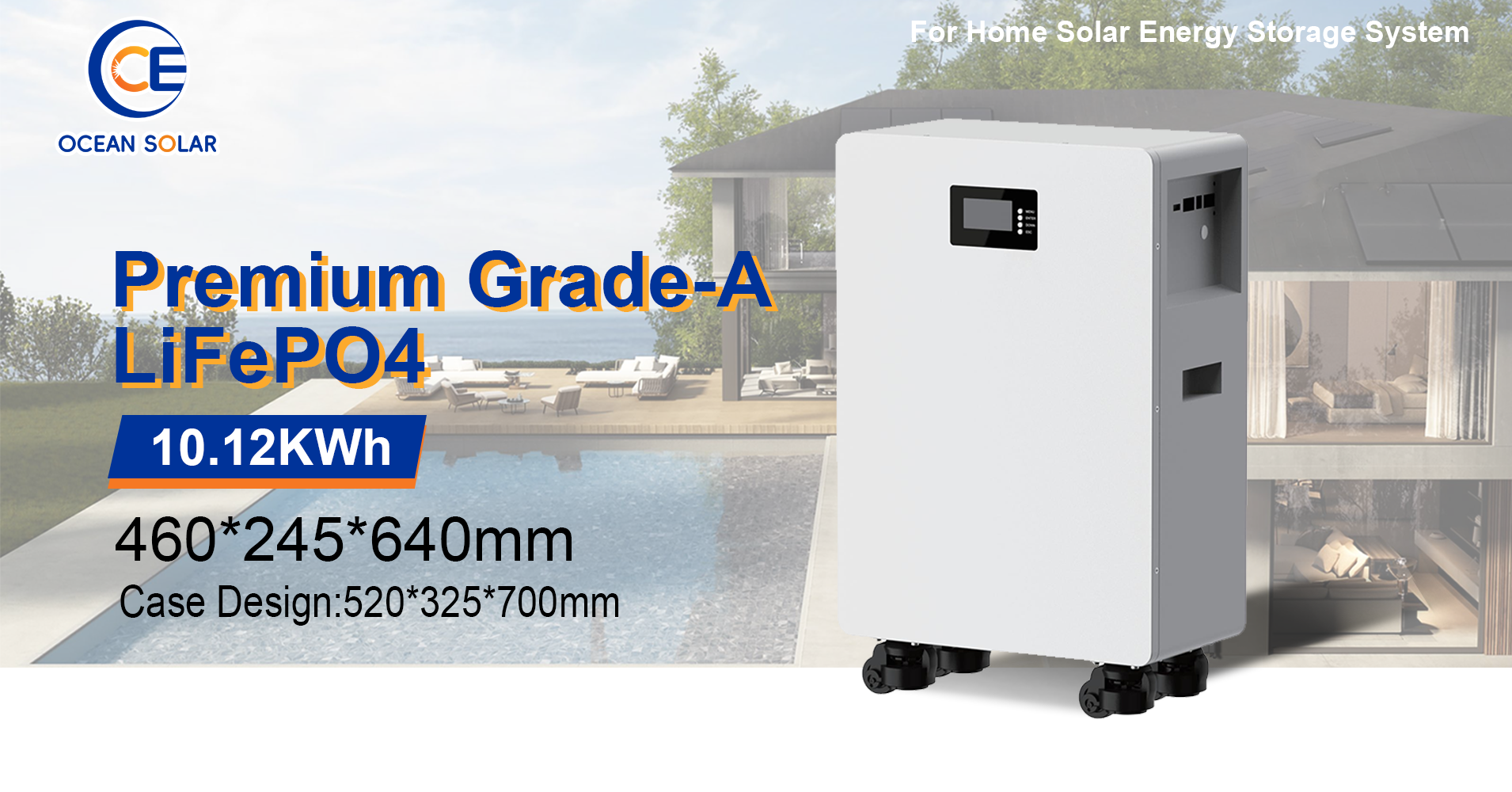
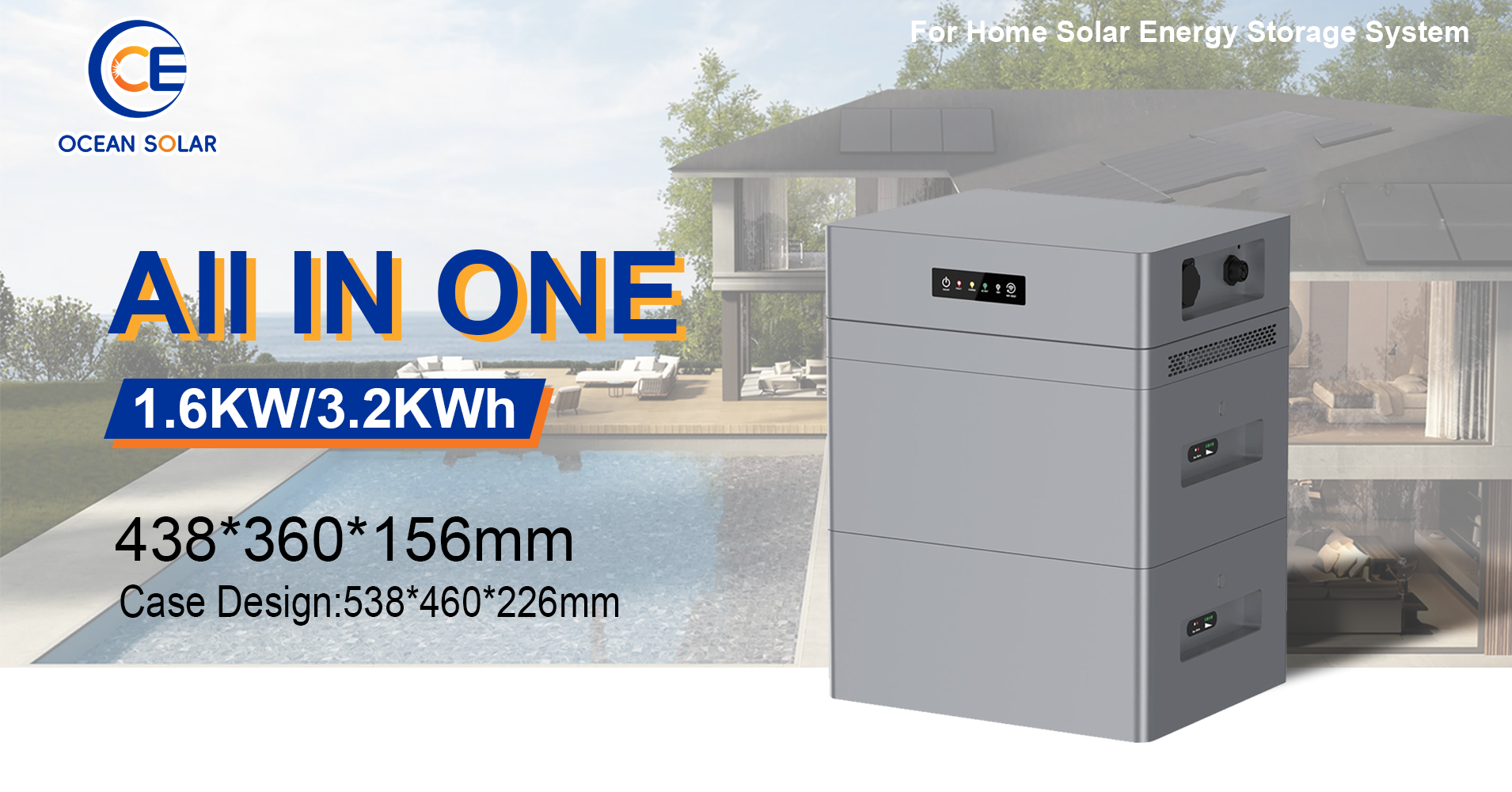
As mentioned earlier, OceanSolar develops user-friendly lithium battery solutions centered on reliable safety, consistent configuration and adaptability to small household backup scenarios.
Its mainstream product ideas for residential small energy storage are summarized below (subject to official website and specific model specifications):
1. Adopt lithium iron phosphate (LFP) cell chemistry for household energy storage, delivering stable safety performance and extended cycle life for daily use;
2. Offer battery packs compatible with both grid-tied and off-grid PV systems, ensuring seamless coordination with inverters and solar controllers;
3. Equip battery modules with comprehensive BMS protection and systematic thermal management, enabling long-term stable unattended operation post-installation;
4. Provide flexible capacity and configuration options to support initial small-capacity deployment and easy subsequent capacity expansion.
For residential end users, it is ideal to select a supplier capable of delivering systematic deployment solutions rather than merely selling standalone battery hardware. This is also the core selection principle recommended for household energy storage buyers.
Tip: If you inform me of your system voltage (12V/24V/48V), solar controller model/power rating and expected backup hours, I can sort out a targeted framework for recommended OceanSolar product specifications and model selection.
2.4 Common Beginner Pitfalls to Avoid
Pitfall 1: Only Compare Nominal Capacity While Ignoring DoD Limitations
Long-term deep full charge-discharge cycles will drastically shorten battery service life. Always clarify the manufacturer’s recommended DoD limit and cycle operation strategy.
Pitfall 2: Overlook Continuous Power Rating & Appliance Startup Inrush Current
Motor-driven loads generate high instantaneous startup current. Nominal peak power alone cannot guarantee stable load operation; the system’s sustained discharge capability must be validated.
Pitfall 3: Purchase Batteries First Then Retrofit Compatible Systems
The most trouble-free workflow: confirm the overall system architecture (inverter & charger model) first, then select matching batteries. This effectively eliminates problems such as operational failure or frequent protective tripping after installation.
2.5 Ultimate Selection Principle: Prioritize Scenario Matching Over Parameter Anxiety
The core rule for small residential lithium battery selection: safety first, followed by system compatibility and long-term cycle durability.
Follow this step-by-step decision flow:
1. List all essential electrical appliances and required backup duration;
2. Confirm system voltage and model specifications of PV/charging equipment;
3. Lock in LFP batteries with fully functional BMS and qualified operating temperature range;
4. Compare rated capacity and pricing as the final step;
5. Double-check warranty terms and after-sales service support.
2.6 Frequently Asked Questions (FAQ)
2.6.1 Can lithium batteries be permanently installed indoors at home?
Yes, provided the product has complete safety design and the installation complies with requirements for ambient temperature, ventilation and environmental protection.
2.6.2 Do lithium batteries need to be fully charged regularly for maintenance?
Frequent full charging is not recommended for most household energy storage batteries. Avoid prolonged deep discharge cycles per the manufacturer’s official operational guidelines.
2.6.3 Can I start with a smaller battery bank and expand capacity later?
Most residential energy storage systems support modular capacity expansion, but you need to confirm two points in advance: the battery’s parallel expansion compatibility, and whether the solar controller/inverter allows power upgrade.
Conclusion: A Well-Chosen Battery Delivers Long-Term Cost Savings
A lithium battery is not a one-time purchase for a decade of use; it acts as a long-term core component of your household energy system. The earlier you clarify compatibility, safety and cycle maintenance strategies, the fewer hidden troubles you will encounter in later operation.
If you need a customized solution tailored to your actual conditions, kindly provide three key pieces of information:
1. Household system voltage (12V/24V/48V);
2. Inverter or solar controller model and power rating;
3. Required power backup duration (e.g., 2 hours / 8 hours during blackouts).
 English
 العربية
 Русский
 Español
 Português
 Deutsch
 italiano
 日本語
日本語 Nederlands
 Tiếng Việt
 ไทย
ไทย Polski
 Türkçe
 ພາສາລາວ
 ភាសាខ្មែរ
 Bahasa Melayu
 ဗမာစာ
ဗမာစာ தமிழ்
தமிழ் Filipino
 Bahasa Indonesia
 magyar
 Română
 Čeština
 Српски
 हिन्दी
 فارسی
فارسی Slovenčina
 Slovenščina
 Norsk
Norsk Svenska
 українська
 Ελληνικά
 Suomi
Suomi עברית
עברית Dansk
Dansk اردو
اردو বাংলা
বাংলা Hrvatski
 Eesti keel
 සිංහල
සිංහල latviešu
 Azərbaycan dili
 Български
 ગુજરાતી
 ಕನ್ನಡ
ಕನ್ನಡ Kurdî
Kurdî Lietuvių
 മലയാളം
 मराठी
मराठी پښتو
پښتو తెలుగు


 简体中文
简体中文