650W-680W All Back Contact Solar Panel
You are here: Home » Products » Solar Panel » BC-Solar Panels » 650W-680W All Back Contact Solar Panel

loading

Share to:
facebook sharing button
twitter sharing button
line sharing button
wechat sharing button
linkedin sharing button
pinterest sharing button
whatsapp sharing button
sharethis sharing button

650W-680W All Back Contact Solar Panel

 
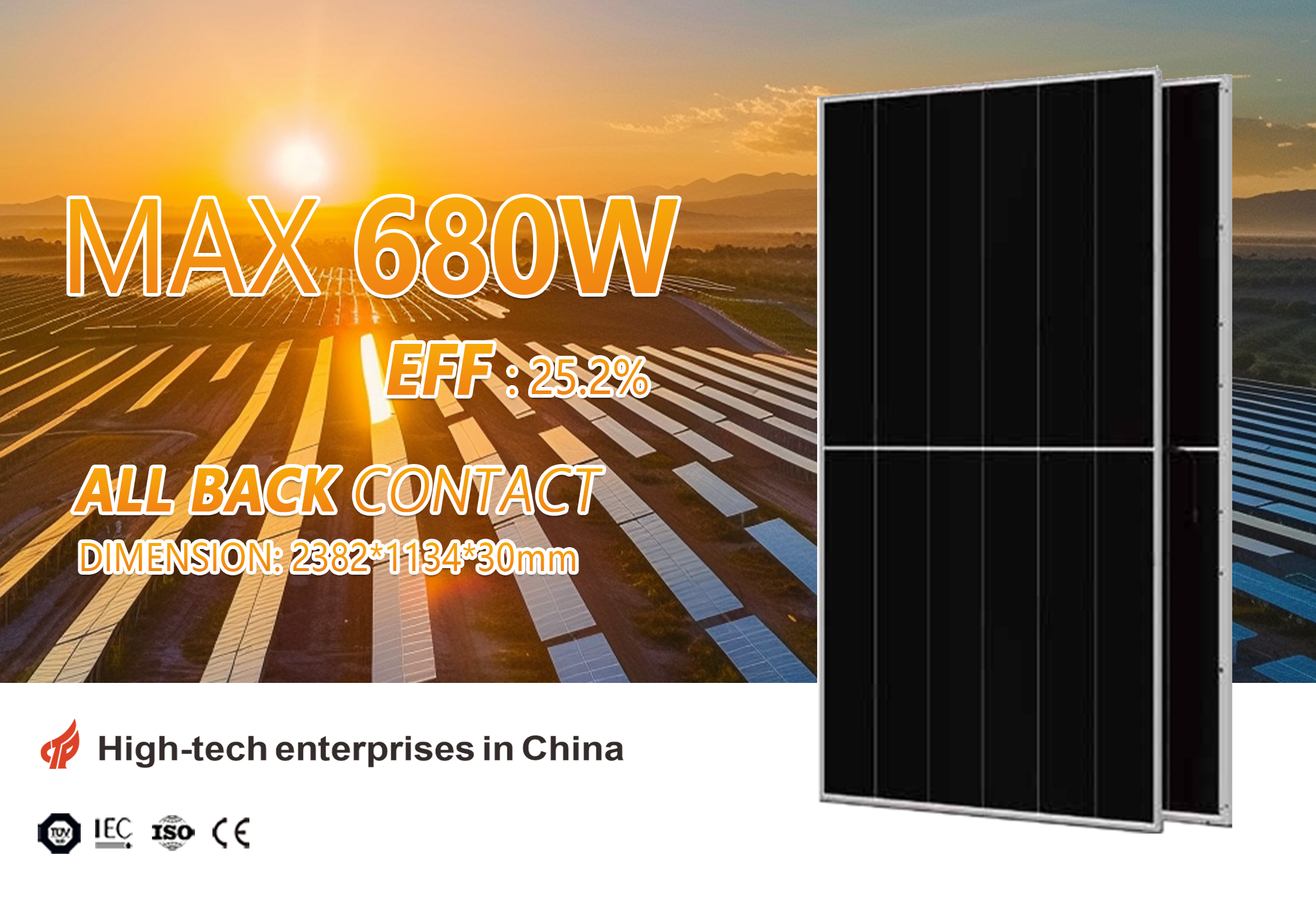
Power Range: 650W-680W
Technology:
All Back Contact Technology
Perfect for residential, industrial, and commercial rooftops, this solution also excels across all scenarios—from massive ground-mounted solar plants and desert PV bases to agrivoltaic and fishery-solar integration (e.g., solar water pump irrigation).
  • AOX-66G12R-BDHC

  • Ocean Solar

  • Aluminum/Steel

  • All Back Contact Technology

  • 2382m x 1134mm x 30 mm

  • 720pcs/40HQ Container

  • 32.5kg±3%(Aluminum)

  • 30years

Availability:

Product Description

详情主页-BC 拷贝

BC MONO 650-680W.pdf

Core Specifications of AOX-66G12R-BDHC BC Solar Panel

Parameter

Specification

Module Model

AOX-66G12R-BDHC

Power Range

650W - 680W

Cell Technology

All Back Contact (BC) Solar Cell

Number of Cells

132 cells (6 × 22 arrangement)

Module Structure

Dual Glass Bifacial (2.0mm + 2.0mm)

Power Output Tolerance

0 ~ +5W (Positive Tolerance Only)

Temperature Coefficient of Pmax

-0.26%/°C (Superior Performance)

Temperature Coefficient of Voc

-0.22%/°C

Temperature Coefficient of Isc

+0.05%/°C

Maximum System Voltage

1500 VDC (IEC Standard)

Maximum Series Fuse Rating

30A

Operating Temperature Range

-40°C ~ +85°C

NOCT (Nominal Operating Cell Temp)

43 ± 2°C

Protection Class

Class II (UL Type 1 or 2)

Fire Rating

IEC Class C

Junction Box

IP68 Rated, 3 Bypass Diodes

Snow Load Resistance

5400 Pa (550 kg/m²)

Wind Load Resistance

2400 Pa (244 kg/m²)

Hail Resistance

Ø25mm at 23 m/s Impact Speed

Frame Material

Anodized Aluminum Alloy

Connector Type

MC4 Compatible / MC4-EVO2A

Cable Specification

4mm² (IEC) / 12AWG (UL), ±300mm Standard

Module Dimensions

2382 × 1134 × 30 mm

Module Weight

32.5 kg ± 3%

Packaging

36 pcs/pallet, 720 pcs/40' HC Container

Product Warranty

12-year Materials & Processing Warranty

Power Warranty

30-year Extra Linear Power Output Warranty


Frequently Asked Questions About BC Solar Panels

1. Technology & Performance FAQs

Q1: What is All Back Contact (BC) solar panel technology?

All Back Contact (BC) solar panel technology moves both the positive and negative electrical contacts to the rear side of the solar cell, completely eliminating front-side metal grid fingers. This design maximizes the active light-absorbing area on the front surface, resulting in significantly higher conversion efficiency and improved aesthetics compared to conventional PERC or TOPCon solar panels. The AOX-66G12R-BDHC BC solar panel represents the cutting edge of back contact photovoltaic technology.

Q2: How much more efficient is a BC solar panel compared to conventional panels?

A BC solar panel typically delivers 3-5% higher absolute efficiency than equivalent conventional PERC panels. The AOX-66G12R-BDHC BC solar panel achieves up to 680W of output power from the same G12 wafer format, thanks to the elimination of front-side shading losses. In real-world conditions, the efficiency advantage translates to 5-8% more energy yield per installed watt, especially under diffuse and low-light conditions.

Q3: What makes the temperature coefficient of BC solar panels superior?

The AOX-66G12R-BDHC BC solar panel features an industry-leading -0.26%/°C temperature coefficient for Pmax, significantly better than the -0.34 to -0.40%/°C typical of conventional silicon panels. This means that at 40°C ambient temperature (where panel surface can reach 65°C+), a BC solar panel loses only ~10.4% of its rated power versus 13.6-16% for standard panels. In hot climates, this translates to 3-6% additional annual energy production.

Q4: What is partial shading optimization in BC solar panels?

Partial shading power generation optimization is a key advantage of BC solar panel architecture. With all contacts on the rear side and optimized cell interconnection, the AOX-66G12R-BDHC BC solar panel experiences significantly lower power loss when partially shaded (by tree branches, chimneys, bird droppings, or soiling). Combined with 3 bypass diodes in the IP68 junction box, shaded cells cause minimal impact on the overall string performance, protecting your energy yield investment.

2. Durability & Reliability FAQs

Q5: Why is dual glass construction important for BC solar panels?

Dual glass (glass-glass) construction in the AOX-66G12R-BDHC BC solar panel provides superior durability and longevity compared to glass-backsheet panels. The 2.0mm + 2.0mm coated semi-tempered glass sandwich eliminates potential-induced degradation (PID), resists UV degradation, and prevents moisture ingress. Combined with BC technology, dual glass BC solar panels deliver exceptional long-term performance, backed by our 30-year linear power warranty.

Q6: How resistant are BC solar panels to microcracks?

The AOX-66G12R-BDHC BC solar panel features high anti-microcrack performance through optimized cell metallization and dual glass encapsulation. Unlike conventional front-contact panels where microcracks directly interrupt front-side busbars, BC solar panel architecture distributes stress more evenly across the rear contact structure. The 32.5kg robust module with anodized aluminum frame further withstands 5400Pa snow load and 2400Pa wind load, ensuring structural integrity in harsh environments.

Q7: What is the expected lifespan of a BC solar panel?

With all-back-contact technology and premium dual glass construction, the AOX-66G12R-BDHC BC solar panel is engineered for 30+ years of reliable operation. Ocean Solar backs this with an industry-leading 12-year product warranty (covering materials and workmanship) and a 30-year extra linear power output warranty. At year 30, your BC solar panel is guaranteed to retain at least 80-85% of its original rated power, significantly outperforming standard 25-year warranty panels.

Q8: Can BC solar panels withstand hail, snow, and extreme weather?

Absolutely. The AOX-66G12R-BDHC BC solar panel is certified to withstand 25mm diameter hailstones at 23 m/s impact velocity, 5400 Pa snow load (equivalent to 550 kg/m²), and 2400 Pa wind load (244 kg/m²). The dual glass construction and robust anodized aluminum frame ensure reliable performance in desert, coastal, mountain, and snow-belt climates across the globe. The operating temperature range of -40°C to +85°C covers virtually all inhabited regions.

3. Installation & Compatibility FAQs

Q9: Are BC solar panels compatible with standard inverters and mounting systems?

Yes, the AOX-66G12R-BDHC BC solar panel is 100% compatible with all standard grid-tie, hybrid, and off-grid inverters. It uses industry-standard MC4 compatible connectors, 1500VDC maximum system voltage, and standard module dimensions (2382×1134mm) that fit all mainstream aluminum mounting rail systems. Whether you use string inverters, microinverters, or power optimizers, BC solar panels integrate seamlessly into any solar energy system design.

Q10: How do BC solar panels reduce Balance of System (BOS) costs?

BC solar panels reduce BOS costs through higher power density per square meter. The AOX-66G12R-BDHC delivers up to 680W from the same footprint as a standard 550-600W panel. This means: fewer modules needed for the same system size, less mounting hardware, fewer cables and connectors, reduced labor hours, and smaller inverter sizing per watt. For utility-scale projects, BOS cost savings with BC solar panels can reach 8-12% of total system cost.

Q11: What is the bifacial gain of dual glass BC solar panels?

Dual glass BC solar panels gain additional energy production from albedo (reflected) light striking the rear surface. Depending on the mounting height and ground surface, bifacial gain typically ranges from 5% to 20%. White reflective rooftops, sand, snow, or water surfaces maximize rear-side generation. When combined with the already higher front-side efficiency of BC technology, the total energy yield advantage over conventional mono-facial PERC panels becomes truly substantial.

4. Application & Value FAQs

Q12: Which applications benefit most from BC solar panel technology?

BC solar panels excel in virtually all photovoltaic applications, but deliver the strongest value in: residential rooftop systems (premium aesthetics + maximum power per roof area), commercial and industrial rooftops (BOS cost savings + high-temperature performance), utility-scale solar farms (lowest LCOE), hot climate installations (superior temperature coefficient), and space-constrained projects (highest power density). The sleek all-black front appearance also makes BC solar panels ideal for architecturally sensitive residential installations.


离网系统示意图

Product Overview: AOX-66G12R-BDHC BC Solar Panel

Market Positioning of BC Solar Panel Technology

The AOX-66G12R-BDHC represents Ocean Solar's flagship All Back Contact (BC) solar panel series, engineered for customers who demand the highest efficiency, superior aesthetics, and exceptional long-term reliability. Built on G12R (210mm) wafer platform with 132 cells in a 6×22 configuration, this BC solar panel delivers industry-leading power output ranging from 650W to 680W, setting a new benchmark for large-format high-efficiency photovoltaic modules.

As next-generation photovoltaic technology continues to evolve, BC solar panels have emerged as the premium choice for discerning installers, EPC companies, and system owners. The elimination of front-side metal grid lines not only boosts electrical performance but also creates a clean, uniform, aesthetically pleasing all-black appearance that elevates any rooftop installation. For residential customers who value curb appeal alongside energy production, the BC solar panel represents the perfect fusion of form and function.

Key Differentiators of Ocean Solar BC Solar Panels

Ocean Solar's AOX-66G12R-BDHC BC solar panel stands out in the competitive high-efficiency module market through seven core technological advantages: all-back-contact cell architecture, dual-glass bifacial construction, partial shading optimization, superior temperature coefficient, high anti-microcrack performance, high temperature suppression technology, and premium aesthetic design. Each of these technologies contributes to making this BC solar panel one of the most advanced and reliable photovoltaic products available on the global market today.

Deep Dive: All Back Contact (BC) Solar Panel Technology

How BC Solar Panel Cells Work

Fundamental Architecture of Back Contact Solar Cells

In a conventional silicon solar cell, the front surface is covered with metallic silver busbars and fingers that collect the generated electrical current. While necessary for conduction, these metal lines shade 3-5% of the active cell area, directly reducing the amount of sunlight that can be converted into electricity. A BC solar panel eliminates this fundamental limitation by moving both the emitter (positive) and base (negative) contacts entirely to the rear surface of the wafer.

The Interdigitated Back Contact (IBC) Pattern

The AOX-66G12R-BDHC BC solar panel employs an interdigitated back contact pattern, where alternating positive and negative contact fingers run parallel to each other on the cell's rear side. This intricate pattern requires advanced photolithography and metallization processes to manufacture, but delivers exceptional results. With zero front-side shading, every photon that strikes the front glass has a chance to be absorbed and converted into electricity, maximizing the quantum efficiency of the BC solar panel across the entire solar spectrum.

Carrier Collection Efficiency Advantages

Beyond the shading elimination, BC solar panel technology improves carrier collection efficiency. In conventional cells, minority carriers generated near the front surface must travel through the bulk silicon to reach the front contact. In a BC solar panel, both contacts are on the rear, allowing for optimized doping profiles that reduce recombination losses. The result is higher open-circuit voltage (Voc) and fill factor (FF), contributing to the overall superior conversion efficiency of back contact solar cells.

Performance Advantages of BC Solar Panels

Higher Energy Yield in Real-World Conditions

While the rated power (STC) advantage of BC solar panels is already impressive, the real-world energy yield advantage is even greater. BC solar panels consistently outperform their rated wattage advantage because they perform better under low light conditions (morning, evening, cloudy days), have superior temperature coefficients (less power loss in heat), and maintain better performance under partial shading. Independent testing has shown that BC solar panels can deliver 6-10% more kilowatt-hours per installed kilowatt compared to equivalent PERC panels over a full year of operation.

Low-Light Performance Excellence

One of the most underappreciated benefits of BC solar panel technology is exceptional low-light performance. With no front-side metal grid lines causing optical losses, the BC solar panel captures more photons at dawn, dusk, and on overcast days. Given that approximately 20-30% of annual solar irradiance occurs at intensities below 500 W/m², this low-light advantage contributes meaningfully to the total energy harvest. For installations in northern latitudes or frequently cloudy regions, the BC solar panel advantage is particularly pronounced.

Diffuse Light Conversion Superiority

Diffuse sunlight (scattered light from clouds, haze, or atmospheric conditions) strikes the solar panel at varying angles. In conventional panels with raised front busbars, angled diffuse light experiences additional shading losses. In a BC solar panel with a completely flat front surface, diffuse light of all angles enters the cell unobstructed. This makes BC solar panels especially valuable in regions with high diffuse irradiance, such as maritime climates, tropical zones, and high-altitude locations.

Dual Glass Bifacial Construction in BC Solar Panels

Glass-Glass Module Architecture

Symmetrical Dual Glass Design

The AOX-66G12R-BDHC BC solar panel features a symmetrical dual glass design with 2.0mm coated semi-tempered glass on both the front and rear sides. This glass-glass sandwich structure replaces the traditional polymer backsheet with a second glass layer, creating a module that is inherently more resistant to UV degradation, moisture penetration, and mechanical stress. The EVA encapsulant layers on both sides of the BC solar cells ensure optimal light transmission and long-term adhesion.

Anti-Reflective (AR) Coated Glass

Both front and rear glass surfaces of this BC solar panel feature advanced anti-reflective (AR) coatings that minimize light reflection and maximize photon absorption. The front-side AR coating is optimized for direct and angled sunlight, while the rear-side coating enhances the capture of reflected albedo light. Combined with the BC cell's zero front-shading advantage, the AR-coated dual glass construction ensures that this BC solar panel extracts the maximum possible energy from every ray of sunlight.

Bifacial Energy Gain Explained

Rear-Side Power Generation Mechanism

A bifacial BC solar panel generates electricity from both the front and rear surfaces. Light reflected from the ground, roof, or surrounding surfaces passes through the rear glass and is absorbed by the back side of the BC solar cells. While the rear-side efficiency is lower than the front (typically 70-90% of front efficiency), the additional energy gain is substantial and free. For ground-mounted systems elevated 1-2 meters above reflective ground, bifacial gains of 10-20% are commonly observed with dual glass BC solar panels.

Factors Affecting Bifacial Gain

The actual bifacial energy gain from your BC solar panel installation depends on several factors: mounting height (higher = more rear light), ground albedo (white membrane roofs, sand, snow = highest reflection), tilt angle, row spacing, and latitude. Snow-covered ground in winter can temporarily boost bifacial gain to 20%+. For rooftop systems, white TPO or PVC roofing membranes deliver excellent albedo values, making dual glass BC solar panels a smart choice for commercial flat-roof installations.

Long-Term Reliability of Dual Glass BC Solar Panels

Elimination of Potential-Induced Degradation (PID)

Potential-Induced Degradation (PID) is a common failure mode in conventional glass-backsheet modules, caused by sodium ion migration through the encapsulant under high voltage and humidity conditions. Dual glass construction in the AOX-66G12R-BDHC BC solar panel effectively eliminates PID risk because glass provides an impermeable barrier. Combined with the inherently robust BC cell architecture, this ensures that your BC solar panel system maintains peak performance for decades, even in high-humidity coastal environments.

UV and Weathering Resistance

Polymer backsheets degrade over time when exposed to UV radiation, heat, and moisture — eventually yellowing, cracking, or delaminating. Glass is completely immune to UV degradation. The dual glass BC solar panel from Ocean Solar will not yellow, become brittle, or lose structural integrity from decades of sun exposure. The 30-year power warranty is not just marketing; it is an engineering reality made possible by premium dual glass construction and advanced BC solar cell technology.


image17


Temperature Performance & High-Temperature Suppression

Understanding Temperature Coefficients

Why Temperature Matters for Solar Panels

All silicon solar panels lose efficiency as their temperature rises. The question is: how much? The temperature coefficient of Pmax quantifies this loss as a percentage per degree Celsius above the 25°C STC benchmark. A BC solar panel with a -0.26%/°C coefficient loses significantly less power in hot weather than a conventional PERC panel with -0.38%/°C. Given that rooftop solar panels routinely operate at 45-65°C in summer, this difference translates directly into meaningful energy production gains for BC solar panel owners.

Calculating Real-World Power Output

Consider a typical summer day where panel temperature reaches 55°C (30°C above STC). A conventional 600W PERC panel at -0.38%/°C loses 11.4%, producing only 531.6W. The AOX-66G12R-BDHC BC solar panel at 680W and -0.26%/°C loses only 7.8%, producing 626.96W. The actual output gap widens from 80W at STC to 95.36W at 55°C. In hot climates like the Middle East, Southeast Asia, Southern Europe, and the southern United States, BC solar panels deliver substantially more energy than their nameplate rating advantage would suggest.

High Temperature Suppression Technology

Thermal Management Design in BC Solar Panels

Ocean Solar's BC solar panels incorporate proprietary high temperature suppression technology that optimizes heat dissipation from the cell layer. The all-back-contact design places all heat-generating metal conductors on the rear side, directly adjacent to the rear glass where heat can dissipate more effectively to the ambient air. Combined with the dual glass structure's thermal mass and optimized EVA thermal conductivity, the AOX-66G12R-BDHC BC solar panel maintains lower operating temperatures under full sun, further enhancing real-world energy yield.

NOCT Advantage of BC Solar Panels

Nominal Operating Cell Temperature (NOCT) measures how hot a panel gets under realistic working conditions (800 W/m², 20°C ambient, 1 m/s wind). The AOX-66G12R-BDHC BC solar panel achieves a NOCT of 43±2°C, which is competitive with the best-in-class modules. A lower NOCT means the panel runs cooler during operation, which not only improves immediate power output but also extends the service life of all components — encapsulant, junction box, connectors, and the BC solar cells themselves all degrade more slowly at lower temperatures.


流程设计


Mechanical Strength & Environmental Certifications

Structural Design and Load Ratings

Robust Frame Engineering

The AOX-66G12R-BDHC BC solar panel features a precision-extruded anodized aluminum alloy frame engineered for maximum structural rigidity with minimum weight. At 32.5 kg, the module strikes an optimal balance between mechanical strength and handling practicality. The frame profile is compatible with all standard clamping and mounting systems, and the anodized surface provides excellent corrosion resistance for coastal and industrial installations where salt spray or chemical exposure is a concern.

Snow and Wind Load Certifications

Certified to 5400 Pa static snow load (550 kg/m²) and 2400 Pa wind load (244 kg/m²), this BC solar panel meets and exceeds IEC 61215 and IEC 61730 mechanical load requirements. These ratings ensure safe installation in heavy snow regions (mountainous areas, northern US states, Canada, Northern Europe) and high-wind zones (hurricane-prone coastal areas, typhoon regions). The dual glass construction further contributes to mechanical robustness, as glass provides superior compressive strength compared to polymer backsheets.

Hail Impact Resistance

Hailstorms can devastate unprotected solar installations. The AOX-66G12R-BDHC BC solar panel is tested and certified to withstand 25mm (1 inch) diameter hailstones at 23 m/s (82.8 km/h) impact velocity without damage to the glass, cells, or frame. The semi-tempered glass used on both sides of this BC solar panel provides excellent impact resistance while maintaining high light transmission. For customers in hail-prone regions (Colorado, Texas, Central Europe, parts of Australia and China), this certification provides essential peace of mind.

Environmental and Safety Certifications

IEC and UL Standards Compliance

The AOX-66G12R-BDHC BC solar panel is certified to all major international photovoltaic standards, including IEC 61215 (crystalline silicon module performance and durability), IEC 61730 (photovoltaic module safety), and relevant UL standards. The Class II protection rating and UL Type 1/2 compatibility ensure safe electrical installation in residential, commercial, and utility-scale systems worldwide. Every BC solar panel undergoes rigorous factory testing including electroluminescence (EL) imaging, flash testing, and hi-pot testing before shipment.

IP68 Junction Box Protection

The junction box is one of the most critical components for long-term reliability. This BC solar panel features an IP68 rated junction box — the highest level of dust and water protection available for outdoor electrical enclosures. With 3 bypass diodes integrated into the sealed housing, the junction box ensures that partial shading affects only one-third of the module while protecting internal electronics from rain, snow, dust, and humidity for the entire 30-year service life of the BC solar panel.

BOS Cost Reduction & System-Level Value

Balance of System Cost Savings

Lower Cost Per Watt Installed

The high power density of the AOX-66G12R-BDHC BC solar panel directly reduces Balance of System (BOS) costs. When each module produces 650-680W instead of 550-600W, you need fewer modules, fewer mounting clamps, fewer rails, fewer connectors, less DC cabling, and fewer labor hours to install the same system capacity. For a 100kW commercial system, switching from 550W conventional panels to 680W BC solar panels reduces the module count from 182 to 147 — saving 35 modules worth of mounting hardware, cable, and installation labor.

Land and Roof Area Optimization

For utility-scale solar farms, land cost is a significant factor. BC solar panels' higher efficiency means more megawatts per hectare, reducing land acquisition, site preparation, and fencing costs. For rooftop installations, higher power density means you can fit more kilowatts on a given roof area — maximizing the value of limited rooftop real estate. Commercial building owners with constrained roof space particularly benefit from BC solar panel technology, as it allows them to achieve their renewable energy targets without expanding to additional buildings.

Levelized Cost of Energy (LCOE) Advantage

Why BC Solar Panels Deliver Lower LCOE

The Levelized Cost of Energy (LCOE) — the total cost of solar electricity over a system's lifetime, divided by total energy produced — is the most important metric for comparing solar technologies. BC solar panels improve LCOE through multiple channels: higher energy yield per watt (temperature coefficient, low-light, bifacial gain), lower BOS cost (fewer components), longer service life (30-year warranty, dual glass), and lower degradation rate. While the upfront module cost may be slightly higher than PERC panels, the LCOE of a BC solar panel system is consistently lower over the full project lifecycle.

ROI and Payback Period Analysis

For residential and commercial system owners, the return on investment (ROI) and payback period are the key financial metrics. BC solar panels shorten the payback period by producing more kWh per year and requiring less maintenance over their longer service life. Combined with the 30-year power warranty (vs. the standard 25 years), BC solar panel owners enjoy 5 additional years of guaranteed energy production — pure profit after the system has paid for itself. For businesses evaluating solar investments, the BC solar panel premium typically pays for itself within the first 3-5 years through increased energy production alone.

Applications of AOX-66G12R-BDHC BC Solar Panels

Residential Rooftop Solar Systems

Premium Aesthetics for Discerning Homeowners

For homeowners who care about their home's appearance, the BC solar panel is a game-changer. The absence of visible front-side busbars creates a sleek, uniform, all-black aesthetic that blends beautifully with modern architecture. Unlike conventional panels with visible silver grid lines that create a striped industrial look, BC solar panels present a clean, homogeneous surface that enhances rather than detracts from curb appeal. Luxury home builders and high-end residential installers increasingly specify BC solar panel technology for premium rooftop installations.

Maximum Power from Limited Roof Space

Many residential roofs have limited usable area due to vents, chimneys, dormers, roof planes, and shading obstacles. The high power density of a 650-680W BC solar panel means homeowners can install their desired system capacity with fewer modules, fitting more solar generation into the available roof space. For homes where roof area is the constraining factor, BC solar panel technology is the clear choice — delivering the maximum possible solar savings from the available footprint.

Commercial & Industrial (C&I) Rooftop Installations

Maximizing Rooftop ROI for Businesses

Commercial and industrial building owners typically measure solar investments by ROI and payback period. The AOX-66G12R-BDHC BC solar panel excels in C&I applications by delivering higher energy yield per roof square meter, reducing BOS costs, and providing superior long-term reliability. The 1500VDC system voltage compatibility further reduces DC-side cabling costs for large commercial arrays. Warehouse roofs, factory rooftops, shopping centers, and office buildings all benefit from the cost-per-watt advantages of BC solar panel technology.

Hot Climate Commercial Performance

Commercial rooftops — especially metal roofs and dark membrane roofs — get extremely hot in summer, often exceeding 70°C surface temperature. This heat degrades the output of conventional solar panels significantly. With its superior -0.26%/°C temperature coefficient and high temperature suppression technology, the BC solar panel maintains much higher output in these challenging thermal environments. For commercial installations in Arizona, the Middle East, Southeast Asia, Southern Spain, Italy, and Australia, BC solar panels deliver substantially better financial returns than standard modules.

Utility-Scale Solar Farms

Utility-Grade Performance and Reliability

For utility-scale solar developers and Independent Power Producers (IPPs), every fraction of a percent in efficiency and every dollar saved in BOS costs matters at scale. The AOX-66G12R-BDHC BC solar panel's combination of high efficiency, superior temperature coefficient, bifacial gain, 30-year warranty, and 1500VDC compatibility makes it an outstanding choice for utility-scale projects. When multiplied across hundreds of megawatts, the energy yield advantage of BC solar panel technology translates into millions of dollars in additional revenue over the project lifetime.

Tracker System Synergy

Single-axis and dual-axis solar trackers maximize irradiance capture but also expose panels to a wider range of incident angles and operating conditions. BC solar panels perform exceptionally well with tracking systems because: their all-front-surface-active design captures more angled light, bifacial gain is enhanced by the elevated tracker mounting, and the robust dual glass construction withstands the dynamic wind loading inherent to tracker operation. For utility-scale projects using trackers, BC solar panel technology delivers compounded performance benefits.

Specialized Applications

Agrivoltaics and Floating Solar

BC solar panels are well-suited for emerging applications like agrivoltaics (solar panels over farmland) and floating photovoltaics (FPV). In agrivoltaics, the bifacial gain from light reflecting off crops and soil boosts BC solar panel output while providing shade for crops below. In floating solar installations on reservoirs and lakes, the high humidity and reflected water surface light both play to the BC solar panel's strengths — PID-free dual glass construction and bifacial rear-side gain. As these innovative solar applications grow, BC solar panel technology will play an increasingly important role.

Off-Grid and Remote Power Systems

For off-grid installations in remote locations — telecom towers, mountain cabins, mining camps, island communities — reliability and energy density are paramount. BC solar panels deliver more power per panel, reducing the number of modules and mounting structures needed at remote sites. The exceptional durability of dual glass BC solar panels means fewer maintenance visits and longer service intervals, which is critical when access is difficult and service trips are expensive. For off-grid system designers, the BC solar panel represents the most reliable and cost-effective energy source per square meter.

Top 10 Reasons to Choose AOX-66G12R-BDHC BC Solar Panels

Industry-Leading Efficiency — All Back Contact technology delivers up to 680W per module, maximizing power from every square meter of roof or land.

Superior Temperature Coefficient — -0.26%/°C Pmax coefficient means significantly more power production in hot climates and summer conditions.

Dual Glass Bifacial Design — Glass-glass construction adds 5-20% rear-side energy gain while eliminating PID and extending service life.

30-Year Linear Power Warranty — Industry-leading 30-year output guarantee plus 12-year product warranty, protecting your investment for decades.

Premium Aesthetic Appearance — Clean all-black front surface with no visible busbars elevates the look of any residential or commercial installation.

Partial Shading Resilience — Optimized BC cell architecture and 3 bypass diodes minimize power loss from shade, soiling, and debris.

Exceptional Low-Light Performance — Zero front shading produces more energy at dawn, dusk, and on cloudy days, boosting annual yield.

Reduced BOS Costs — Higher power density means fewer modules, less mounting hardware, fewer cables, and lower installation labor costs.

Industrial-Grade Durability — 5400Pa snow load, 2400Pa wind load, 25mm hail resistance, and IP68 junction box for all-weather reliability.

Lowest Levelized Cost of Energy — Higher yield + longer life + lower BOS = the lowest LCOE of any silicon solar panel technology available today.

Conclusion: Invest in the Future with BC Solar Panel Technology

The AOX-66G12R-BDHC BC solar panel represents the pinnacle of current photovoltaic engineering — combining cutting-edge All Back Contact cell technology with premium dual glass construction, exceptional thermal performance, and industry-leading warranty coverage. Whether you are a homeowner seeking the best for your residence, a commercial developer optimizing ROI, or a utility-scale IPP targeting the lowest LCOE, this BC solar panel delivers measurable advantages that translate directly into financial value.

As solar energy continues its global march toward grid parity and beyond, choosing the right panel technology becomes increasingly important. BC solar panel technology is not an incremental improvement — it is a generational leap in photovoltaic performance, aesthetics, and reliability. By selecting Ocean Solar's AOX-66G12R-BDHC BC solar panel for your project, you are investing in a product that will outperform, outlast, and outvalue conventional solar panels for decades to come.

Contact Ocean Solar for BC Solar Panel Solutions

Ready to deploy the most advanced BC solar panel technology for your next project? Contact Ocean Solar today for detailed datasheets, pricing quotations, sample availability, and technical support. Our engineering team can assist with system design optimization, BOS cost analysis, and performance modeling to demonstrate exactly how AOX-66G12R-BDHC BC solar panels will improve the economics of your solar installation. Join the growing number of forward-thinking installers, EPCs, developers, and system owners who have already made the switch to All Back Contact solar technology — the future of photovoltaics is here, and it starts with a BC solar panel from Ocean Solar.


Previous: 
Next: 
By The Way
Contact us
Product
About Us
Contacts Us
+86-15961100770
info@oceansolar.cn
No. 8 Jianerkang, Industrial Park, Zhixi Town, Jintan District, Changzhou City,Jiangsu province, China

Solar and Storage Live Vietnam
Solar and Storage Live Vietnam 2026
July 08-09, 2026
BOOTH NO.: 1-B19
© COPYRIGHT 2025 OCEAN SOLAR ALL RIGHTS RESERVED.