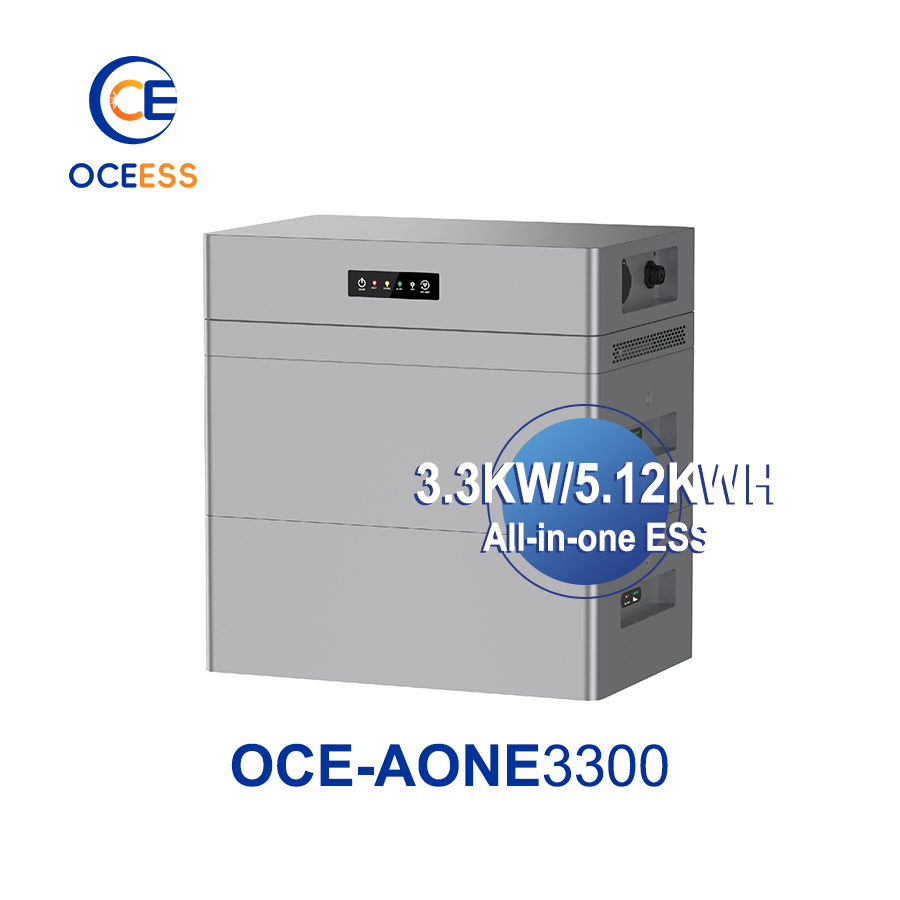
OCE-AONE3300 3.3kW/5.12kWh AC-Coupled All-in-One ESS
Ocean Solar OCE-AONE3300 is an AC-coupled all-in-one energy storage system combining a 3300W bidirectional inverter, 5.12kWh LiFePO4 battery, backup power capability and intelligent monitoring in a modular energy storage platform.
The AC-coupled architecture is designed for energy storage applications where the battery system connects on the AC side of the electrical installation, making it suitable for compatible new installations and retrofit projects with existing photovoltaic generation.
The system provides 3300W rated output and 4950W peak power, together with a 51.2V LFP battery platform, IP65 enclosure protection, less than 20ms backup transfer and CAN, RS485 and remote APP communication.
Request a Quote
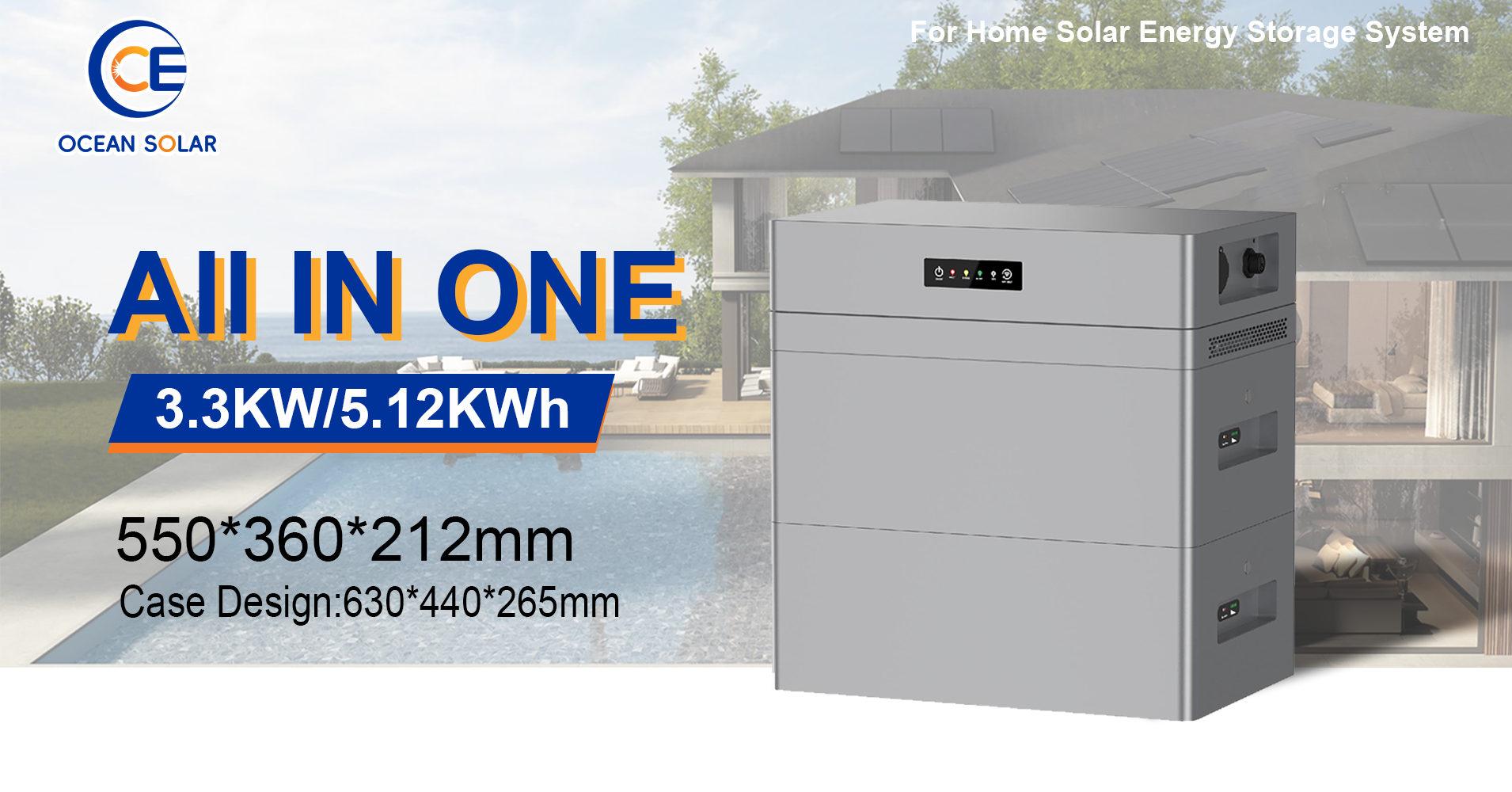
OCE-AONE3300 Key Specifications
| Parameter | Specification |
| Model | OCE-AONE3300 |
| System Architecture | AC-Coupled All-in-One ESS |
| Rated Inverter Power | 3300VA / 3300W |
| Peak Power | 4950W |
| Battery Chemistry | LiFePO4 / LFP |
| Nominal Battery Energy | 5.12kWh / 5120Wh |
| Nominal Battery Voltage | 51.2V |
| Battery Operating Voltage Range | 40.0-58.4VDC |
| Maximum Continuous Battery Charge Current | 50A |
| Maximum Continuous Battery Discharge Current | 100A |
| Maximum Pulse Discharge Current | 150A / 1 Second |
| Published AC Charging Setting | Up to 65A, Adjustable |
| Published Charging Current Range | 0-80A |
| Maximum Conversion Efficiency | >95% |
| UPS Transfer Time | <20ms, Typical 10ms |
| Rated AC Voltage | 220 / 230 / 240VAC |
| AC Input Voltage Range | 170-280VAC |
| Grid Frequency | 50 / 60Hz |
| Ingress Protection | IP65 |
| Operating Temperature | -25°C to +60°C |
| Relative Humidity | 0-98%, Non-Condensing |
| Communication | CAN / RS485 |
| Remote Monitoring | APP Control |
| Cooling | Intelligent Fan Cooling |
| Published Noise Level | <45dB at 1m |
| Inverter Unit Dimensions | 550 × 360 × 156mm |
| Inverter Unit Net Weight | 12.1kg |
| Battery Unit Dimensions | 550 × 360 × 212mm |
| Battery Unit Net Weight | 44.4kg |
Charging-current parameters should be configured according to the permitted battery and BMS limits for the supplied product version. Final commissioning settings should be confirmed before operation.
Download OCE-AONE3300 Datasheet
 OCE-AONE3300 3.3kW/5.12kWh All-in-One Solar Energy System PDF
AC-Coupled Energy Storage Architecture
The OCE-AONE3300 uses an AC-coupled architecture in which battery charging and discharging are managed through the AC side of the electrical system.
This architecture can be useful for compatible retrofit projects where an existing photovoltaic system already has its own PV inverter and additional battery storage is required.
Compatibility with an existing installation depends on grid configuration, metering, energy-management logic, protection equipment and the electrical design of the project. The existing inverter model and system diagram should therefore be reviewed before installation.
3300W Continuous AC Output
The OCE-AONE3300 provides 3300W of rated inverter output for compatible residential and distributed energy storage loads.
Continuous connected load should remain within the inverter rating, taking into account simultaneous operation of appliances and other connected equipment.
4950W Peak Output Capability
Peak output power is specified at 4950W for short-duration demand above the 3300W continuous rating.
This additional headroom can be useful when compatible loads require temporary startup power.
Motors, compressors, pumps and air-conditioning equipment should be evaluated using actual starting current and surge duration rather than rated running power alone.
5.12kWh 51.2V LFP Battery
The integrated energy storage battery uses lithium iron phosphate chemistry with a nominal energy capacity of 5.12kWh and a nominal voltage of 51.2V.
The published operating-voltage range is 40.0-58.4VDC.
The 51.2V architecture is a 48V-class low-voltage battery platform commonly used in residential energy storage systems.
Actual usable energy depends on the battery operating window, state of charge, system settings, temperature and conversion losses.
50A Continuous Charge and 100A Continuous Discharge
The battery specification lists a maximum continuous charging current of 50A and a maximum continuous discharge current of 100A.
A 150A pulse discharge capability for one second is also specified for temporary current demand.
Final charge and discharge settings should remain within the permitted BMS and battery limits for the supplied configuration.
Adjustable AC Battery Charging
The current product information lists an adjustable AC charging function for the OCE-AONE3300.
Because the battery specification separately defines its continuous charging-current limit, the commissioning value should be set according to the battery, BMS and complete system requirements.
Discuss Your System Configuration
Less Than 20ms Backup Transfer
The OCE-AONE3300 has a published UPS transfer time of less than 20ms, with a typical switching time of approximately 10ms.
During a suitable backup configuration, the system can transition to battery-backed inverter output when the normal AC supply is interrupted.
Equipment with strict continuity requirements should be checked against the equipment manufacturer's permitted transfer time before being selected as a critical backup load.
More Than 95% Maximum Conversion Efficiency
The current OCE-AONE3300 specification lists maximum inverter conversion efficiency above 95%.
Actual conversion efficiency varies with battery voltage, load level, operating mode and environmental conditions.
220V / 230V / 240V AC Operation
The current product information lists rated AC voltage options of 220V, 230V and 240V with a published AC input-voltage range of 170-280VAC.
The system supports 50Hz and 60Hz operation.
Required voltage, frequency, grid connection and protection configuration should be confirmed according to the destination market before ordering.
IP65 Enclosure Protection
The OCE-AONE3300 is specified with an IP65 enclosure protection rating.
The rating provides protection against dust ingress and water jets under the conditions defined by the applicable enclosure protection standard.
Outdoor installation should still follow the manufacturer's mounting, cable-entry, drainage, ventilation and environmental requirements.
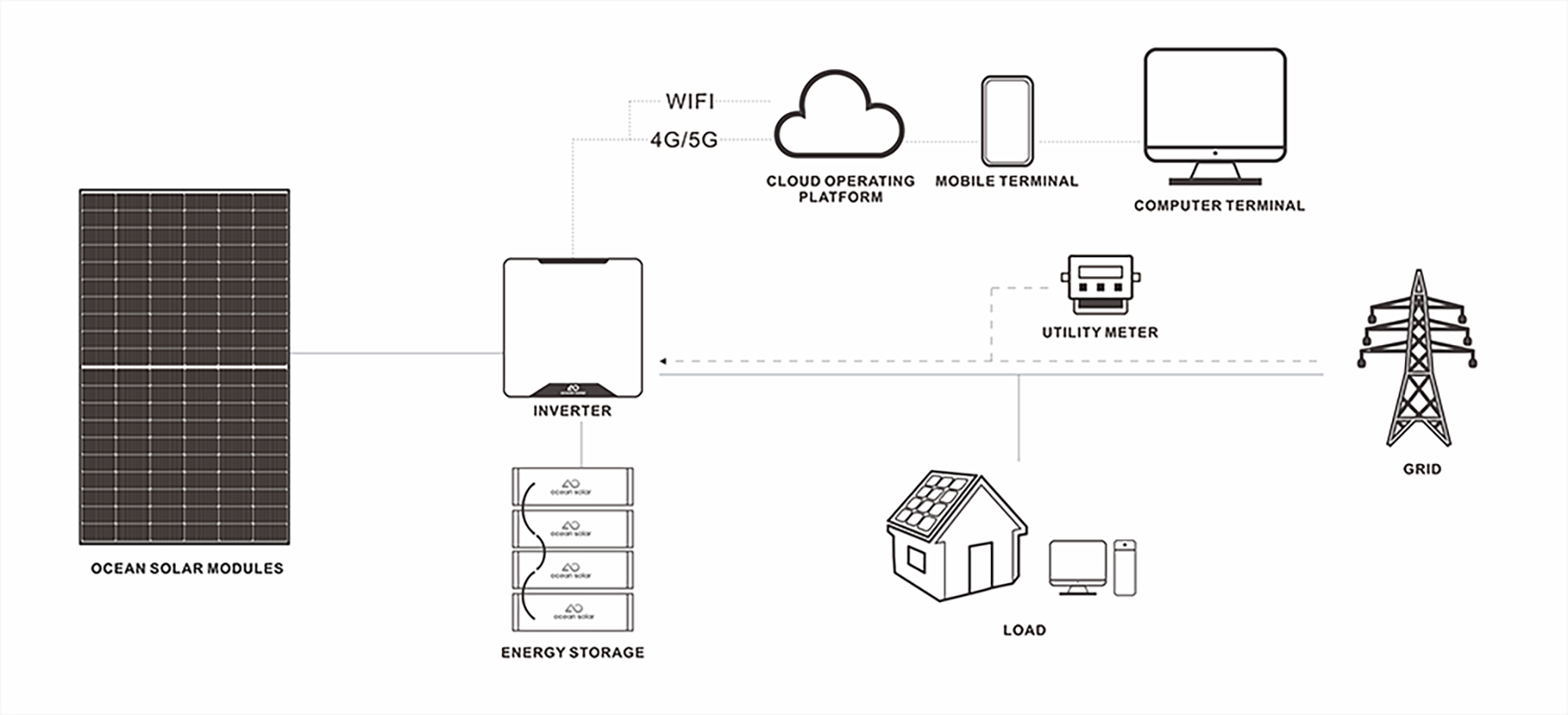
Retrofit Storage for Existing PV Systems
One of the main advantages of an AC-coupled storage architecture is the ability to add battery storage to compatible photovoltaic installations without placing the battery system directly in the existing PV string circuit.
This can reduce the amount of modification required on the DC side of an existing solar installation.
Retrofit compatibility is not universal. The existing inverter, grid connection, smart meter or CT arrangement, backup circuit design and energy-management configuration should be checked before installation.
Grid Charging and Energy Management
AC-coupled architecture allows the battery system to manage charging and discharging through the AC electrical system.
Depending on the final system configuration, this architecture can be used to increase solar self-consumption, provide backup energy or shift stored energy between different periods of the day.
Available operating modes depend on the configured control equipment, software and applicable grid requirements.
CAN, RS485 and Remote APP Monitoring
The OCE-AONE3300 provides CAN and RS485 communication together with remote APP monitoring.
These interfaces can support battery communication, commissioning and compatible energy-management functions according to the supplied hardware and software configuration.
Compatibility with third-party equipment or communication protocols should be confirmed before project integration.
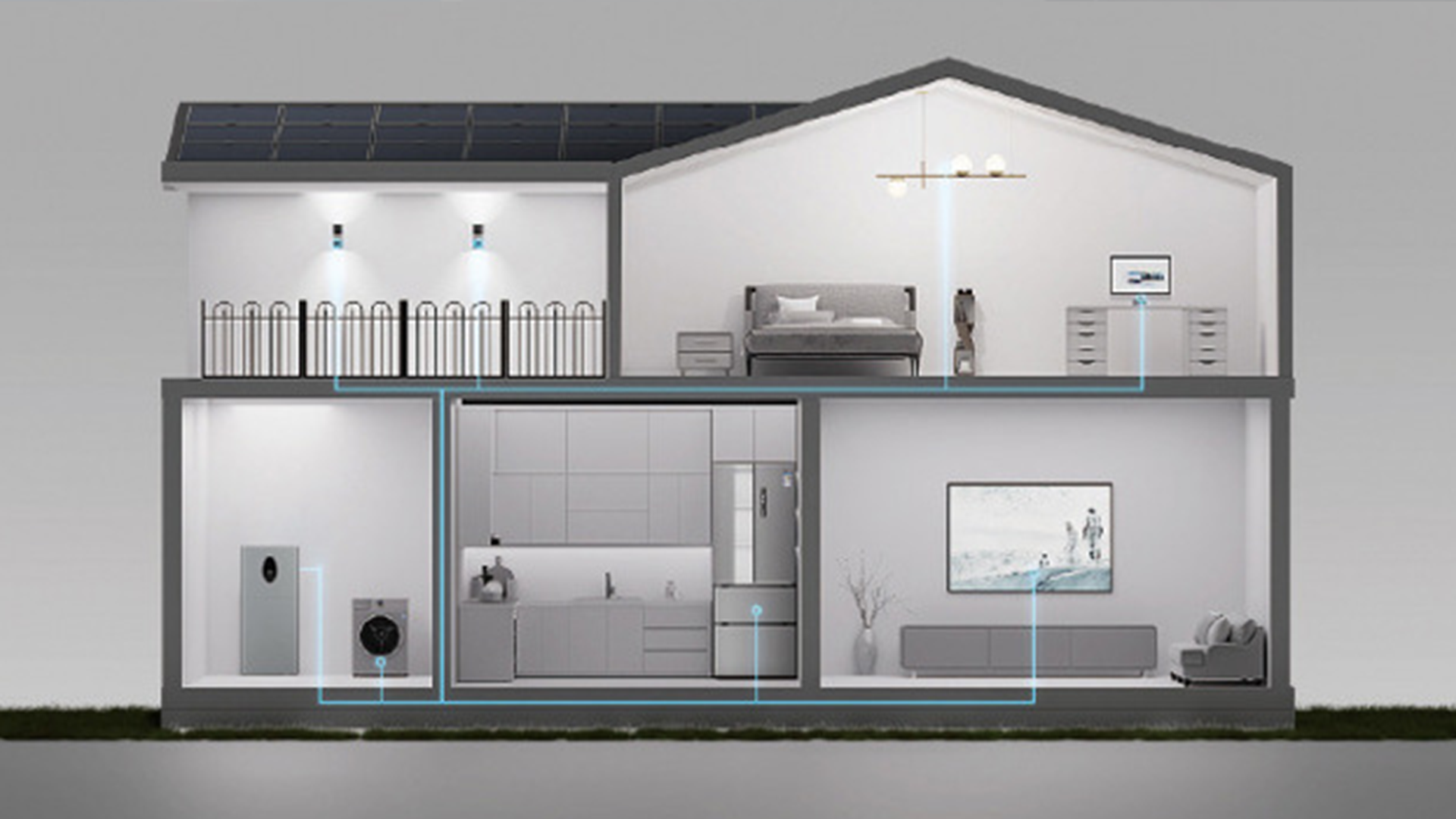
Modular Inverter and Battery Units
The inverter and battery use matching 550mm × 360mm footprints for coordinated system installation.
The inverter unit measures 550 × 360 × 156mm and weighs approximately 12.1kg.
The battery unit measures 550 × 360 × 212mm and weighs approximately 44.4kg.
Installation should follow the specified mounting, spacing, cable routing and structural load requirements for the selected project.
Intelligent Fan Cooling and Operating Environment
The current product information lists intelligent fan cooling with published operating noise below 45dB at a distance of one meter.
Published operating temperature is -25°C to +60°C and relative humidity is 0-98% non-condensing.
Available charge and discharge power may vary with battery temperature and other operating conditions.
Typical OCE-AONE3300 Applications
Existing Residential PV Retrofit
The AC-coupled architecture can be evaluated for compatible homes that already have a photovoltaic inverter and require battery storage without redesigning the complete PV DC system.
Residential Backup Power
The 3300W inverter and 5.12kWh nominal battery can support appropriately selected backup loads when the connected continuous and starting power requirements remain within system limits.
Solar Self-Consumption
In a compatible AC-coupled installation, surplus photovoltaic generation can be managed for battery charging and later consumption according to the configured metering and energy-management strategy.
Time-of-Use Energy Management
Where supported by the control configuration and local electricity tariff structure, stored energy can be scheduled for use during selected periods of the day.
Small Offices and Professional Workspaces
The system can be evaluated for compatible office, communication, lighting and other appropriately sized loads where total continuous power remains within the 3300W inverter rating.
How to Evaluate an Existing PV Retrofit
Start by confirming the existing PV inverter model, AC grid connection, phase configuration and electrical distribution arrangement.
Next, determine where the AC-coupled storage system, meter or current transformer and backup circuits will be connected.
The system designer should also confirm local grid requirements, protection devices, export-control requirements and the communication architecture before installation.
How to Estimate Backup Runtime
Backup runtime depends on the actual energy consumption of the connected loads and the usable energy available from the battery.
The OCE-AONE3300 provides 5.12kWh of nominal battery energy. Nominal capacity should not be interpreted as 5.12kWh of guaranteed usable AC output because battery operating limits and conversion losses must also be considered.
For project calculations, add the watt-hour consumption of the loads that must remain powered and compare this requirement with the available usable battery energy.
Get Retrofit System Support
For Distributors, Installers and Energy Storage Integrators
The OCE-AONE3300 is intended for professional procurement and integration into compatible residential and distributed AC-coupled energy storage projects.
Buyers should provide the destination country, existing PV inverter model, grid voltage, installation type, backup-load requirements and required quantity when requesting a quotation.
For grid-connected projects, the required metering method, export-control configuration, local grid code and applicable electrical approvals should also be confirmed before ordering.
Get Pricing & Technical Support
Frequently Asked Questions About OCE-AONE3300
What is the rated output power of the OCE-AONE3300?
The OCE-AONE3300 provides 3300W of rated inverter output with a published peak output of 4950W.
What is the battery capacity?
The system uses a 51.2V LiFePO4 battery with 5.12kWh of nominal energy capacity.
What does AC-coupled energy storage mean?
AC coupling means the battery storage system exchanges energy with the installation through the AC electrical bus rather than being inserted directly into the photovoltaic DC string circuit.
Can OCE-AONE3300 be added to an existing solar system?
The AC-coupled architecture is suitable for many retrofit applications, but compatibility depends on the existing inverter, grid connection, metering configuration, protection devices and required operating mode. The existing system should be reviewed before installation.
Is the OCE-AONE3300 compatible with every grid-tied inverter?
No universal compatibility should be assumed. The existing inverter model, AC electrical configuration, metering and control requirements should be checked for the specific project.
What is the battery operating voltage range?
The published battery operating-voltage range is 40.0-58.4VDC.
What is the continuous battery charge current?
The battery specification lists a maximum continuous charging current of 50A. System charging settings should remain within the permitted battery and BMS limits.
What is the maximum battery discharge current?
Maximum continuous discharge current is specified at 100A, with a 150A pulse discharge capability for one second.
What is the backup transfer time?
The published UPS transfer time is less than 20ms, with a typical transfer time of approximately 10ms.
Is OCE-AONE3300 suitable for outdoor installation?
The product is specified with an IP65 enclosure rating. Outdoor installation should still follow the manufacturer's mounting and environmental requirements.
What is the operating temperature range?
The published operating-temperature range is -25°C to +60°C.
Does the system support remote monitoring?
Yes. The current product specification lists remote APP monitoring together with CAN and RS485 communication.
Can excess energy be exported to the grid?
Grid export depends on the system configuration, metering and control equipment, inverter settings, local grid code and utility requirements. Export capability should be confirmed for the destination market before installation.
Does the system require professional electrical installation?
Installation requirements depend on the electrical connection method and local regulations. Fixed grid-connected installations should be completed according to applicable electrical and utility requirements.
How long will the 5.12kWh battery provide backup power?
Backup duration depends on usable battery energy and actual load consumption. It should be calculated for the required appliances rather than expressed as a fixed number of hours.
What information should I provide when requesting a quotation?
Please provide the destination country, existing PV inverter model if applicable, grid voltage, installation type, backup-load requirements, operating requirements and required quantity.
Contact Ocean Solar
 English
 العربية
 Русский
 Español
 Português
 Deutsch
 italiano
 日本語
 Nederlands
 Tiếng Việt
 ไทย
 Polski
 Türkçe
 ພາສາລາວ
 ភាសាខ្មែរ
 Bahasa Melayu
 ဗမာစာ
 தமிழ்
 Filipino
 Bahasa Indonesia
 magyar
 Română
 Čeština
 Српски
 हिन्दी
 فارسی
 Slovenčina
 Slovenščina
 Norsk
 Svenska
 українська
 Ελληνικά
 Suomi
 עברית
 Dansk
 اردو
 বাংলা
 Hrvatski
 Eesti keel
 සිංහල
 latviešu
 Azərbaycan dili
 Български
 ગુજરાતી
 ಕನ್ನಡ
 Kurdî
 Lietuvių
 മലയാളം
 मराठी
 پښتو
 తెలుగు


 简体中文