Fox ESS H1(G2)/AC1(G2) 3-6kW Single-Phase Energy Storage Inverter
Fox ESS H1(G2)/AC1(G2) is a single-phase high-voltage energy storage inverter platform for residential solar and battery storage systems. Ocean Solar supplies H1(G2) hybrid inverters for new solar-plus-storage projects and AC1(G2) AC-coupled inverters for compatible battery retrofit applications.
H1(G2) integrates direct PV input, two independent MPPT trackers, high-voltage battery connection, grid operation and EPS backup. AC1(G2) provides the corresponding AC-coupled storage architecture for systems where the battery is integrated on the AC side without connecting PV strings directly to the storage inverter.
The 3.0kW-6.0kW models support 80-480V LFP batteries, up to 40A battery charge and discharge current, less than 10ms EPS transfer, IP65 protection, natural cooling, remote monitoring and parallel operation of up to 10 compatible units.
Request a Quote

H1(G2) Hybrid vs AC1(G2) AC-Coupled Inverter
Selecting between H1(G2) and AC1(G2) depends primarily on the system architecture. H1(G2) is designed for direct connection of the photovoltaic array, while AC1(G2) is intended for compatible AC-coupled battery storage systems.
| Feature | H1(G2) Hybrid | AC1(G2) AC-Coupled |
| Rated Power | 3.0-6.0kW | 3.0-6.0kW |
| Direct PV Input | Yes | No direct PV input |
| PV MPPT | 2 independent MPPTs | Not applicable |
| Battery | 80-480V High-Voltage LFP | 80-480V High-Voltage LFP |
| Maximum Battery Current | 40A Charge / Discharge | 40A Charge / Discharge |
| EPS Backup | Supported | Supported |
| Typical Application | New PV + Battery Storage System | AC-Coupled Battery Retrofit |
PV voltage, current and MPPT specifications apply to H1(G2) hybrid models only. AC1(G2) project design should instead consider the existing PV inverter, AC system architecture, battery compatibility, metering and control requirements.
Ask Which Model Fits Your Project
H1(G2)/AC1(G2) 3kW-6kW Model Range
Ocean Solar offers selected H1(G2)/AC1(G2) power classes from 3.0kW to 6.0kW. The table below shows the principal ratings for project selection.
| Model | Rated AC Output | Max PV Array* | Max DC Input* | EPS Rated | EPS Peak / 60s | Max Efficiency |
| H1/AC1-3.0-E-G2 | 3000W | 6000Wp | 6000W | 3000VA | 3600VA | 97.01% |
| H1/AC1-3.7-E-G2 | 3680W | 7400Wp | 7400W | 3680VA | 4400VA | 97.08% |
| H1/AC1-4.6-E-G2 | 4600W | 9200Wp | 9200W | 4600VA | 5500VA | 97.04% |
| H1/AC1-5.0-E-G2 | 5000W | 10000Wp | 10000W | 5000VA | 6000VA | 97.08% |
| H1/AC1-6.0-E-G2 | 6000W | 12000Wp | 12000W | 6000VA | 7200VA | 97.08% |
*PV array and DC input ratings apply to H1(G2) hybrid models. Final PV string design must also comply with voltage and current limits.
Dual MPPT Solar Input for H1(G2)
Two Independent MPPT Trackers
H1(G2) hybrid models provide two independent MPPT trackers with one PV string connected to each MPPT. Independent tracking can be useful when photovoltaic strings operate under different roof orientations or solar conditions.
80-550V MPPT Operating Range
The H1(G2) MPPT operating voltage range is 80-550VDC. Start-up voltage is 75V, rated PV input voltage is 360V and maximum PV input voltage is 600VDC.
16A Input Current per MPPT
Maximum operating input current is 16A per MPPT and maximum short-circuit current is 20A per MPPT. PV module Imp, Isc, Voc and Vmp should all be checked before finalizing string configuration.
Up to 12kW PV on the 6kW H1(G2)
The H1-6.0-E-G2 supports up to 12000Wp of PV array power according to the applicable specification. PV oversizing should still be engineered around the inverter's maximum voltage, MPPT current and short-circuit-current limits.
80-480V High-Voltage LFP Battery Platform
H1(G2) and AC1(G2) are designed for compatible high-voltage lithium iron phosphate battery systems operating between 80V and 480V.
Maximum battery charge and discharge current is 40A. CAN communication is used for compatible battery management system communication.
Battery compatibility should be confirmed by exact battery model, operating voltage, BMS protocol, charge and discharge limits before ordering or commissioning.
High-Efficiency Battery Conversion
Maximum PV-to-battery charging efficiency is specified at 98.5%, while maximum battery-to-AC discharge efficiency is specified at 97.0%.
Check Battery Compatibility
EPS Backup Power with Less Than 10ms Transfer
H1(G2)/AC1(G2) provides an EPS output for appropriately designed backup-load circuits when a compatible battery system is installed.
Rated EPS output follows the inverter power class from 3.0kVA to 6.0kVA. Peak EPS output is available at up to 120% of rated power for 60 seconds, with the 6kW model providing up to 7200VA for 60 seconds.
EPS transfer time is specified at less than 10ms. Equipment with specific continuity requirements should still be checked against its permitted interruption time before being assigned to the backup circuit.
| EPS Parameter | Specification |
| Rated EPS Output | 3.0-6.0kVA, Depending on Model |
| Peak EPS Output | Up to 120% Rated Power for 60 Seconds |
| 6kW Model Peak | 7200VA / 60 Seconds |
| EPS Voltage | 220 / 230 / 240V |
| Frequency | 50 / 60Hz |
| Transfer Time | <10ms |
| THDv | <2% at Rated Power with Linear Load |
Up to 97.08% Maximum Inverter Efficiency
Maximum inverter efficiency reaches up to 97.08%, depending on model. European efficiency for the selected 3.0kW-6.0kW models ranges from 95.26% to 96.33%.
Grid-side current total harmonic distortion is specified below 3% at rated power. The power factor is 1 and is adjustable from 0.8 leading to 0.8 lagging where supported by the applicable grid requirements.
IP65 Protection and Natural Cooling
IP65 Enclosure
The inverter enclosure is rated IP65 for dust and water ingress protection. This provides installation flexibility for suitable residential indoor and outdoor locations when installed according to the Fox ESS installation requirements.
Fanless Natural Cooling
Natural cooling avoids the need for a continuously operating cooling fan. Noise emission is specified at approximately 35dB.
FoxCloud Remote Monitoring
WiFi monitoring is supported as standard, with optional LAN and 4G monitoring modules available depending on project configuration.
Operating information can be accessed through supported LCD, app and web interfaces. FoxCloud provides remote system monitoring for compatible installations.
Communication interfaces include RS485, DRM, Ripple Control, USB, CAN and SG Ready according to the applicable product configuration.
Parallel Operation up to 10 Inverters
The H1(G2)/AC1(G2) platform supports parallel operation of up to 10 compatible units.
Parallel-system configuration should follow the applicable Fox ESS installation documentation, including communication, battery, metering, EPS and protection requirements.
Integrated Electrical Protection
| Protection Function | Availability |
| Insulation Monitoring | Yes |
| Residual Current Monitoring | Yes |
| DC Reverse Polarity Protection | Yes |
| Anti-Islanding Protection | Yes |
| AC Short-Circuit Protection | Yes |
| AC Overcurrent / Overvoltage Protection | Yes |
| DC Switch | Yes |
| Battery Wake-Up Function | Yes |
| Surge Protection | DC Type II / AC Type III |
| AFCI | Optional |
Dimensions and Environmental Specifications
| Parameter | Specification |
| Dimensions | 434 × 418 × 185mm |
| Weight | 22kg |
| Installation | Wall Mounted |
| Topology | Non-Isolated |
| Cooling | Natural Cooling |
| Noise Emission | 35dB |
| Operating Temperature | -25°C to +60°C |
| Relative Humidity | 0-100%, Non-Condensing |
| Maximum Operating Altitude | 2000m |
| Ingress Protection | IP65 |
| Standby Consumption | <15W |
Residential Energy Storage Applications
New Solar Plus Battery Systems
H1(G2) is suitable for appropriately designed new residential photovoltaic and battery installations where PV generation, high-voltage battery storage, grid connection and EPS backup are managed through one hybrid inverter.
AC-Coupled Battery Retrofit
AC1(G2) provides an AC-coupled storage option for compatible installations where battery storage is added on the AC side without routing existing photovoltaic strings directly through the storage inverter.
Solar Self-Consumption
A compatible energy storage system can store available solar generation for later household use, helping increase the proportion of locally generated electricity consumed on site.
Time-of-Use Energy Management
Battery charging and discharging schedules can be configured according to supported operating modes, household demand and applicable electricity tariffs. Available functions depend on local system configuration and grid requirements.
Emergency Backup Power
EPS output can supply appropriately designed essential-load circuits during a grid outage. Backup duration depends on connected load, battery capacity, usable state of charge and system conditions.
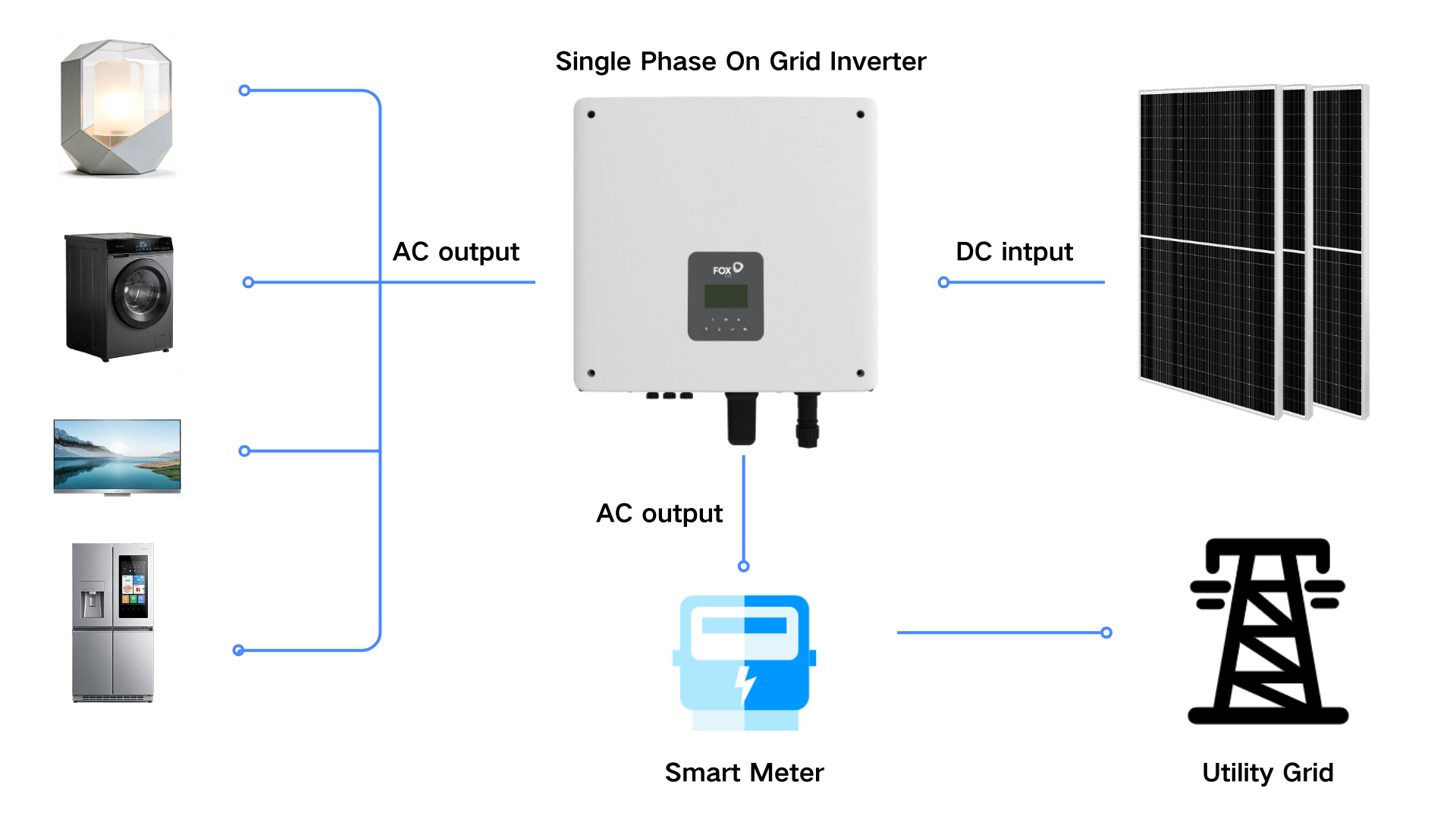
How to Select H1(G2) or AC1(G2)
Choose H1(G2) when the new photovoltaic array will connect directly to the storage inverter and the project requires integrated PV conversion, high-voltage battery storage and EPS functionality.
Choose AC1(G2) when a compatible battery storage system needs to be integrated on the AC side of an existing or separately designed photovoltaic system.
Before selection, confirm the existing PV inverter, battery model, smart meter or CT arrangement, required backup loads, grid connection and energy-management requirements.
PV Module Compatibility for H1(G2)
PV module selection should consider more than total array wattage. String Voc, Vmp, Imp and Isc must all remain within the inverter electrical limits.
H1(G2) provides a 600V maximum PV input voltage, 80-550V MPPT operating range, 16A maximum operating current per MPPT and 20A maximum short-circuit current per MPPT.
Cold-temperature Voc calculations should be completed before finalizing the number of modules connected in series.
Battery Compatibility and System Design
The inverter requires a compatible high-voltage LFP battery operating within the 80-480V battery range.
Battery voltage, usable capacity, maximum charge and discharge current and CAN communication compatibility should be confirmed for the specific battery model before installation.
Installation and Grid Connection
Installation involves photovoltaic DC wiring for H1(G2), high-voltage battery connections, utility AC wiring, EPS circuits, protective devices, grounding, communication connections and meter or CT installation.
Installation and commissioning should be completed by qualified personnel according to the applicable Fox ESS documentation and local electrical and grid-connection requirements.
Safety and Grid Standards
The applicable product documentation lists EN 62109-1 and EN 62109-2 safety standards together with grid requirements including G98, G99, EN 50549 and AS/NZS 4777.2.
Required approvals vary by country, utility and model configuration. Buyers and installers should confirm that the exact inverter model and firmware configuration are approved for the destination market before ordering.
For Distributors, Installers and Residential Energy Storage Projects
The H1(G2)/AC1(G2) platform provides two energy-storage architectures within one product family: direct-PV hybrid operation with H1(G2) and AC-coupled battery integration with AC1(G2).
For a project quotation, provide the required inverter power, destination country, PV module model, planned PV capacity for H1 projects, battery model and capacity, backup-load requirement, monitoring requirements and order quantity.
Get Pricing & System Support
Frequently Asked Questions About Fox ESS H1(G2)/AC1(G2)
What is the difference between H1(G2) and AC1(G2)?
H1(G2) is the hybrid version with direct photovoltaic input and two MPPT trackers. AC1(G2) is the AC-coupled version and does not use direct PV input.
What power ratings are available from Ocean Solar?
The product range shown here includes 3.0kW, 3.7kW, 4.6kW, 5.0kW and 6.0kW single-phase models.
How many MPPT trackers does H1(G2) have?
H1(G2) provides two independent MPPT trackers with one photovoltaic string per MPPT.
What is the H1(G2) MPPT voltage range?
The MPPT operating range is 80-550VDC. Start-up voltage is 75V and maximum PV input voltage is 600VDC.
What is the maximum PV input current?
Maximum PV operating current is 16A per MPPT and maximum short-circuit current is 20A per MPPT.
How much PV can be connected to the 6kW H1(G2)?
The applicable specification lists a maximum PV array power and maximum DC input power of 12000W for the H1-6.0-E-G2. Voltage and current limits must also be observed.
What battery voltage does H1(G2)/AC1(G2) support?
The battery operating voltage range is 80-480V for compatible high-voltage LFP batteries.
What is the maximum battery charge and discharge current?
Maximum battery charge and discharge current is 40A.
Does the inverter provide backup power?
Yes. H1(G2)/AC1(G2) provides EPS backup output when a compatible battery and correctly designed backup circuit are installed.
What is the EPS transfer time?
EPS switching time is specified at less than 10ms.
What peak backup output does the 6kW model provide?
The 6kW model provides 6000VA rated EPS output and up to 7200VA peak EPS output for 60 seconds.
What is the maximum inverter efficiency?
Maximum inverter efficiency reaches up to 97.08%, depending on model.
Can H1(G2)/AC1(G2) be installed outdoors?
The inverter is rated IP65. Outdoor installation should follow the applicable Fox ESS installation manual, mounting requirements and local electrical regulations.
Does the inverter use a cooling fan?
The H1(G2)/AC1(G2) uses natural cooling. Noise emission is specified at approximately 35dB.
Does the inverter support remote monitoring?
Yes. WiFi monitoring is supported, with optional LAN and 4G communication depending on configuration. LCD, app and web-based monitoring interfaces are available.
Can several H1(G2)/AC1(G2) inverters operate in parallel?
Yes. The product platform supports up to 10 compatible inverters in parallel when the system is designed according to the applicable Fox ESS parallel-installation requirements.
What are the dimensions and weight?
The inverter measures 434 × 418 × 185mm and weighs approximately 22kg.
When should I choose H1(G2)?
H1(G2) is generally the relevant architecture for a new residential solar-plus-storage system where the photovoltaic array will connect directly to the hybrid inverter.
When should I choose AC1(G2)?
AC1(G2) is intended for compatible AC-coupled battery-storage applications where the photovoltaic generation system is connected separately on the AC side.
What information should I provide for a quotation?
Please provide the required inverter power, quantity, destination country, PV module and array information for H1 projects, battery model and capacity, backup-load requirements and required monitoring configuration.
Contact Ocean Solar
 English
 العربية
 Русский
 Español
 Português
 Deutsch
 italiano
 日本語
 Nederlands
 Tiếng Việt
 ไทย
 Polski
 Türkçe
 ພາສາລາວ
 ភាសាខ្មែរ
 Bahasa Melayu
 ဗမာစာ
 தமிழ்
 Filipino
 Bahasa Indonesia
 magyar
 Română
 Čeština
 Српски
 हिन्दी
 فارسی
 Slovenčina
 Slovenščina
 Norsk
 Svenska
 українська
 Ελληνικά
 Suomi
 עברית
 Dansk
 اردو
 বাংলা
 Hrvatski
 Eesti keel
 සිංහල
 latviešu
 Azərbaycan dili
 Български
 ગુજરાતી
 ಕನ್ನಡ
 Kurdî
 Lietuvių
 മലയാളം
 मराठी
 پښتو
 తెలుగు


 简体中文


