Solar PV Panel Guide: Types, Efficiency & Commercial Uses
You are here: Home » Blog » Solar PV Panel Guide: Types, Efficiency & Commercial Uses
Solar PV Panel Guide: Types, Efficiency & Commercial Uses
Views: 0 Author: Site Editor Publish Time: 2026-06-30 Origin: Site
Choosing the wrong solar panel can quietly reduce your project’s returns for decades.
That is why every commercial buyer needs a clear Solar PV Panel guide.
A Solar PV Panel affects power output, project cost, payback time, and long-term system reliability.
In this post, you’ll learn what a Solar PV Panel is and how main panel types compare.
We’ll also explain efficiency, durability, ROI, and best uses for commercial rooftops, factories, and solar farms.
Main Types of Solar PV Panels
Choosing a Solar PV Panel gets much easier once you stop comparing only wattage. I usually tell buyers to start with the project site, roof space, budget, and output goal. After that, the right panel type becomes clearer.
Crystalline Solar PV Panels: The Mainstream Choices
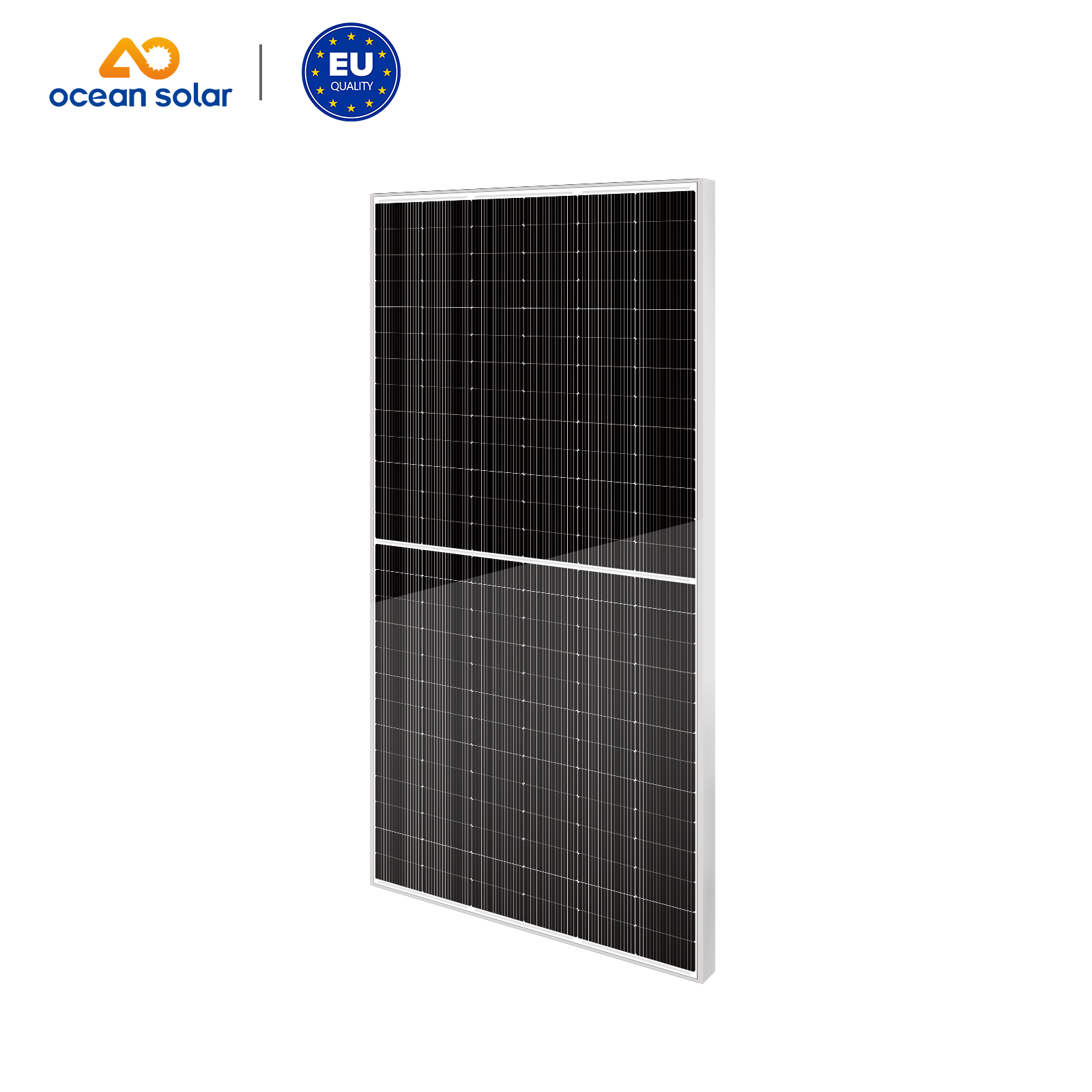
Monocrystalline solar PV panels are made from single-crystal silicon. They usually have uniform black cells and a clean, premium look. They are popular because they offer high efficiency, strong power output per square foot, and a long working life. If roof space is limited, this type is often the safest choice.
They work well on commercial rooftops, residential buildings, office blocks, warehouses, and factories. Many modern commercial projects now prefer monocrystalline panels because they help produce more power from the same roof area. Ocean Solar focuses on high-efficiency monocrystalline modules, including N-type options for buyers who want stronger long-term output.
Polycrystalline solar PV panels are made from multiple silicon fragments. They often have a blue, speckled surface, so they look different from mono panels. Their main advantage is lower upfront cost. The production process is also mature and widely understood.
The trade-off is lower efficiency and lower power density. You may need more panels and more space to reach the same system capacity. They can still fit budget-sensitive projects, large open areas, and older systems, but they are less common in new high-efficiency commercial installations.
Solar PV Panel Type
Appearance
Main Strength
Best Fit
Monocrystalline
Uniform black cells
High efficiency and strong power density
Commercial rooftops, factories, limited space
Polycrystalline
Blue, speckled surface
Lower upfront cost
Large areas, budget projects, legacy systems
Thin-Film and Surface-Based Solar PV Panel Designs
Thin-film solar PV panels are made by placing thin semiconductor layers onto glass, plastic, or metal. Common materials include amorphous silicon, or a-Si, cadmium telluride, or CdTe, and copper indium gallium selenide, or CIGS. They feel very different from crystalline panels because they can be lighter and more flexible.
They are useful when a roof cannot carry heavy modules or when the surface is curved. I have seen them make sense for portable solar systems, RV solar panels, boat solar panels, and unusual commercial roofs. The downside is simple: they usually have lower efficiency, so they often need more space for the same output.
Monofacial solar PV panels absorb sunlight only from the front side. They have a simple structure, clear installation process, and good cost control. For standard commercial rooftops, small buildings, and residential systems, they remain a practical option.
They are best when the rear side cannot receive useful reflected light. If the roof surface is dark or there is little space below the panel, a monofacial design can be enough. It keeps the project simple while still delivering reliable performance.
Bifacial and All-Black Solar PV Panels
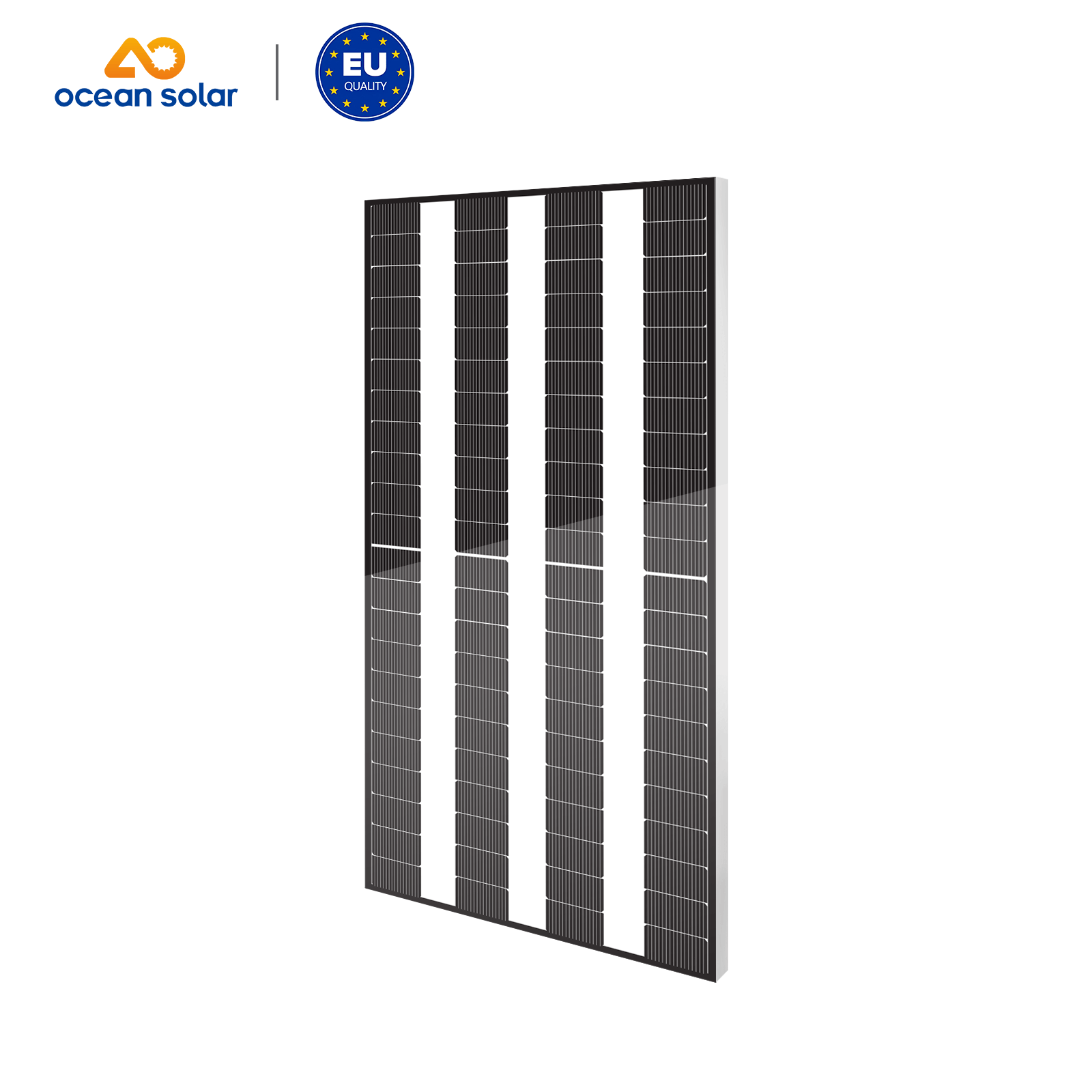
Bifacial solar PV panels absorb sunlight from both the front and rear sides. This gives them extra energy gain when light reflects from the ground, roof, or nearby surface. They often use durable double-glass structures, which also helps in demanding commercial environments.
They perform especially well on white rooftops, concrete ground, deserts, snowfields, and other high-albedo sites. For utility-scale solar farms, large commercial rooftops, ground-mounted projects, floating solar plants, and industrial systems, bifacial panels can improve total energy yield. Ocean Solar offers bifacial options across several high-power module series.
All-black solar PV panels are built for projects where appearance matters. They use black cells, black frames, and black backsheets, so they blend well with dark roof surfaces. They are often chosen for residential buildings, office rooftops, and commercial sites where clean design supports the building image.
The main benefit is visual appeal, not just power. If a buyer wants a premium rooftop look, all-black panels help the system feel less industrial. They suit hotels, offices, villas, and customer-facing buildings where the roof is still part of the brand impression.
Solar PV Panel Power Ratings and Output
Power rating is one of the first numbers buyers notice. It looks simple, but it affects panel count, roof layout, wiring, labor, and system capacity. When we compare a Solar PV Panel, wattage tells only part of the story. Real output still depends on sunlight, site design, and daily operating conditions.
What Does Solar PV Panel Wattage Mean?
Solar PV Panel wattage shows the rated power a panel can produce under Standard Test Conditions, often called STC. A 600W panel does not produce 600 watts every minute. It means the panel reached that output under controlled lab conditions, not under every rooftop or ground-mount condition. For most buyers, wattage helps size the system quickly. Many rooftop modules fall around 400W–450W. High-power commercial panels often sit near 550W–650W. Large-format modules, including advanced commercial options, may reach 700W–750W for projects needing stronger output per panel.
Solar PV Panel Power Range
Common Application
Buyer Benefit
400W–450W
Residential rooftops and standard small commercial roofs
Higher capacity per module, lower project complexity
What Are Standard Test Conditions?
STC ratings come from controlled laboratory testing. The test uses fixed sunlight intensity, fixed cell temperature, and a fixed air mass value. This keeps panel comparison fair, since each Solar PV Panel is measured under the same baseline. Field output often looks different. Heat can reduce power. Cloud cover can lower sunlight. Dirt on glass can block light. Shading from vents, trees, or nearby structures can reduce production. Installation angle also matters, since poor tilt wastes useful sunlight. System losses matter too. Cables, inverters, connectors, and mismatch losses all reduce usable output. This is why experienced buyers compare both rated wattage and expected real energy yield. It gives a more honest view of project performance.
How to Estimate Solar PV Panel Output
A simple starting point is easy: panel wattage × number of panels = total system DC capacity. For example, 100 panels rated at 600W create a 60kW DC system. This helps buyers plan roof space, inverter size, mounting needs, and budget. Daily and yearly output need one more factor: local peak sun hours. A site receiving more peak sun hours will produce more energy from the same system size. So a 60kW system in a sunny region can outperform the same system in a cloudy coastal area. Use this basic planning logic:
●Start with the panel wattage and total panel count. This gives the DC capacity. It is the foundation for early project sizing, even before detailed engineering begins.
●Check local peak sun hours next. They show how much useful sunlight the system may receive each day. This makes the output estimate more realistic.
●Review site losses before final decisions. Dirt, shade, heat, inverter loss, and cable loss can all reduce output. A good design accounts for them early.
Why High-Power Solar PV Panels Reduce Project Complexity
High-power panels can simplify commercial projects in practical ways. If each Solar PV Panel produces more watts, the system needs fewer modules for the same capacity. Fewer modules often mean fewer mounting rails, clamps, cables, connectors, and installation steps. This matters on busy commercial rooftops. Warehouses, factories, and office buildings often have vents, skylights, walkways, and safety zones. A higher-wattage panel helps EPC teams reach the target capacity while using less roof area per watt. For ground-mounted solar farms, the same idea applies at a larger scale. Fewer panels can reduce wiring routes, pile counts, inspection points, and maintenance workload. It also helps buyers control labor costs, especially where installation time is expensive. High-power panels do not replace good design. They simply give the project team more room to work. When paired with the right inverter, layout, and mounting system, they can help a commercial project reach stronger output with less complexity.
Commercial Uses of Solar PV Panels
A Solar PV Panel is not just a product choice. It shapes roof use, energy savings, project payback, and long-term power stability. For commercial buyers, the best option usually depends on space, load demand, site conditions, and how much power the business needs during working hours.
Solar PV Panels for Commercial Rooftops and Business Buildings
Commercial rooftops are one of the most common places to install Solar PV Panels. The reason is simple: many buildings have large idle roof areas and high daytime electricity use. Solar helps turn unused space into a working energy asset, while it also supports sustainability targets and reduces grid dependence. For shopping malls and office buildings, solar can offset lighting, HVAC, elevators, and daily operation loads. High-efficiency monocrystalline panels are a strong fit where roof space is limited. All-black panels also work well for appearance-sensitive buildings, especially offices, hotels, and customer-facing sites. Good rooftop choices often include:
●Monocrystalline Solar PV Panels: They deliver strong output per square meter, so they suit rooftops where every section matters. They also look clean and fit modern commercial sites. We usually recommend them when power density matters more than the lowest upfront price.
●N-type TOPCon Solar PV Panels: They support higher output and lower degradation, which helps commercial users protect long-term returns. They fit warehouses, offices, factories, and larger flat roofs. If the roof is white or reflective, bifacial TOPCon can add more value.
Solar PV Panels for Warehouses, Logistics Centers, and Factories
Warehouses and logistics centers often have wide, flat rooftops. They also use plenty of power during the day for lighting, equipment, ventilation, and charging systems. That makes them a practical match for high-power Solar PV Panel systems. Factories and industrial facilities have a similar need. Manufacturing plants, industrial parks, cold storage sites, and processing facilities all face rising energy costs. Solar helps them lower electricity expenses, control long-term power budgets, and reduce carbon output.
Commercial Site
Main Energy Need
Recommended Solar PV Panel Features
Warehouses
Lighting, ventilation, equipment use
High power output, low degradation, reliable warranty
Logistics centers
Daytime operations, charging, cooling
Strong durability, high module wattage, efficient roof use
Factories
Production lines, machinery, HVAC
High-efficiency modules, stable output, long service life
Cold storage facilities
Continuous cooling demand
Durable panels, strong warranty, reliable system design
Solar PV Panels for Solar Farms, Floating Solar, and Agro-PV
Utility-scale solar farms use large ground-mounted arrays to produce power at scale. Here, buyers usually care about LCOE, energy yield, land-use efficiency, and long-term investment value. High-power monocrystalline panels, bifacial N-type TOPCon panels, and HJT bifacial panels are common choices. Floating solar plants place Solar PV Panels on lakes, reservoirs, and water surfaces. These projects save land and use water areas effectively. Double-glass construction, moisture resistance, high durability, and bifacial design can help panels perform better in this environment. Agricultural PV, also called agro-PV, combines solar generation and farming or livestock activity. Elevated ground-mounted systems can leave space below for crops, animals, or farm operations. Bifacial Solar PV Panels are useful here because they can capture reflected light from the ground.
Solar PV Panels for Off-Grid Commercial Projects
Remote hotels, resorts, communication stations, rural buildings, and island sites often need complete solar systems. They cannot always rely on a stable grid, so the Solar PV Panel is only one part of the solution. The system also needs inverters, lithium batteries, mounting structures, monitoring tools, and proper control design. For these projects, I would not choose panels by wattage alone. We need to think about daily load, battery capacity, weather patterns, and maintenance access. A one-stop supplier can make planning easier because the panels, inverters, batteries, and support services must work together from day one.
FAQ
Q: What is the best Solar PV Panel type for commercial rooftops?
A: High-efficiency monocrystalline or N-type TOPCon panels are usually best because they maximize output in limited roof space.
Q: Which Solar PV Panel is most efficient?
A: Premium monocrystalline, N-type TOPCon, HJT, and Back Contact panels generally offer the highest efficiency.
Q: What is the difference between monocrystalline and polycrystalline Solar PV Panels?
A: Monocrystalline panels use single-crystal silicon and offer higher efficiency. Polycrystalline panels use multiple silicon fragments and usually cost less.
Q: Are bifacial Solar PV Panels worth it?
A: Yes. They work well on reflective rooftops, deserts, snowfields, ground-mounted systems, and floating solar projects.
Q: Are thin-film Solar PV Panels good for commercial use?
A: Yes, for lightweight, curved, portable, or weight-limited applications, but not usually for high-output rooftops.
Conclusion
Choosing the best Solar PV Panel depends on your project type, space, budget, climate, and ROI goals.
Monocrystalline panels suit high-efficiency projects. N-type TOPCon and HJT panels fit commercial and utility-scale systems.
Bifacial panels can raise output in reflective sites. Thin-film panels work well for lightweight or flexible applications.
For long-term value, compare lifetime performance, not only upfront cost. Ocean Solar provides high-efficiency modules, OEM/ODM customization, and one-stop solar solutions.
 English
 العربية
 Русский
 Español
 Português
 Deutsch
 italiano
 日本語
日本語 Nederlands
 Tiếng Việt
 ไทย
ไทย Polski
 Türkçe
 ພາສາລາວ
 ភាសាខ្មែរ
 Bahasa Melayu
 ဗမာစာ
ဗမာစာ தமிழ்
தமிழ் Filipino
 Bahasa Indonesia
 magyar
 Română
 Čeština
 Српски
 हिन्दी
 فارسی
فارسی Slovenčina
 Slovenščina
 Norsk
Norsk Svenska
 українська
 Ελληνικά
 Suomi
Suomi עברית
עברית Dansk
Dansk اردو
اردو বাংলা
বাংলা Hrvatski
 Eesti keel
 සිංහල
සිංහල latviešu
 Azərbaycan dili
 Български
 ગુજરાતી
 ಕನ್ನಡ
ಕನ್ನಡ Kurdî
Kurdî Lietuvių
 മലയാളം
 मराठी
मराठी پښتو
پښتو తెలుగు


 简体中文
简体中文