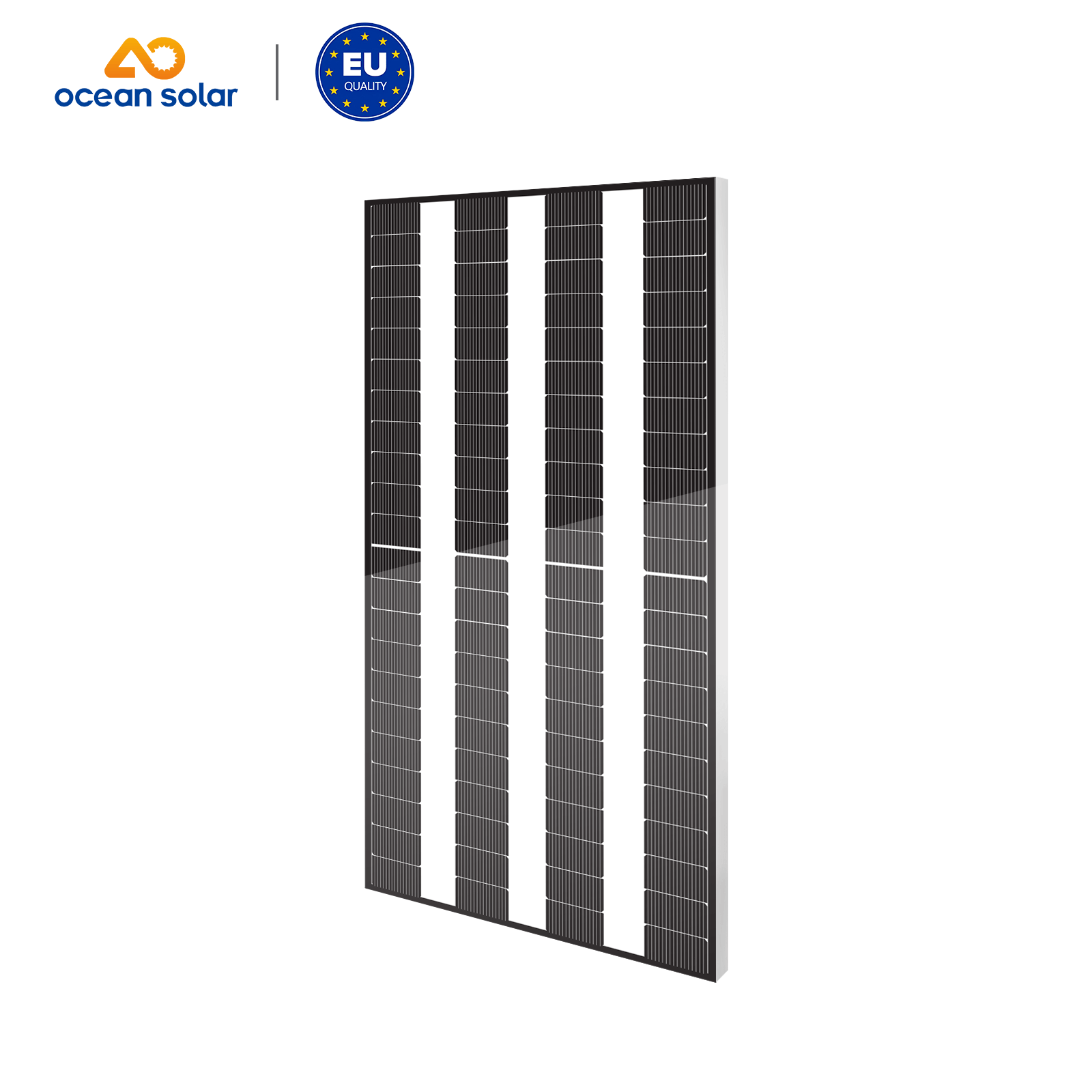
420W N-Type TOPCon High-Transparency Solar Panel
The Ocean Solar 420W high-transparency solar panel is an N-type TOPCon dual-glass photovoltaic module designed for projects that require both solar power generation and controlled light transmission through the module surface.
Unlike conventional opaque photovoltaic modules, the high-transparency design creates open light-transmitting areas between the solar cell zones. This makes the module suitable for selected BIPV, solar canopy, pergola, carport and architectural photovoltaic applications where natural daylight and photovoltaic generation need to be considered together.
The module uses N-type TOPCon half-cut cell technology and a dual-glass structure. Its overall dimensions are 2382 × 1134 × 30mm, with a rated front-side power output of 420W. Ocean Solar specifies a 12-year product warranty and a 30-year extra linear power output warranty.
420W High-Transparency Solar Panel Key Specifications
| Parameter | Specification |
| Rated Power | 420W |
| Cell Technology | N-Type TOPCon |
| Cell Design | Half-Cut Cells |
| Module Type | High-Transparency Dual-Glass Solar Module |
| Dimensions | 2382 × 1134 × 30mm |
| High-Transmittance Glass | Existing Product Specification States >93% Glass Transmittance |
| Product Warranty | 12 Years |
| Linear Power Warranty | 30-Year Extra Linear Power Output Warranty |
| Typical Applications | BIPV, Canopies, Pergolas, Carports, Architectural PV and Custom Light-Transmitting Projects |
Note: Glass transmittance and whole-module transparency are different specifications. The final module transparency ratio depends on solar cell spacing and module layout and should be confirmed for each project.
What Is a High-Transparency Solar Panel?
A high-transparency photovoltaic module is designed to generate electricity while allowing part of the incident light to pass through transparent areas of the module. Instead of covering the complete module area with photovoltaic cells, transparent gaps are incorporated into the module layout.
This design creates a balance between electrical output and daylight transmission. Increasing the cell-covered area can increase module power density, while increasing the transparent area allows more daylight to pass through. The optimum layout therefore depends on the architectural and energy-generation requirements of the project.
For BIPV and architectural projects, buyers should specify the required power output, module dimensions, visual appearance and target transparency ratio before final production.
N-Type TOPCon Technology
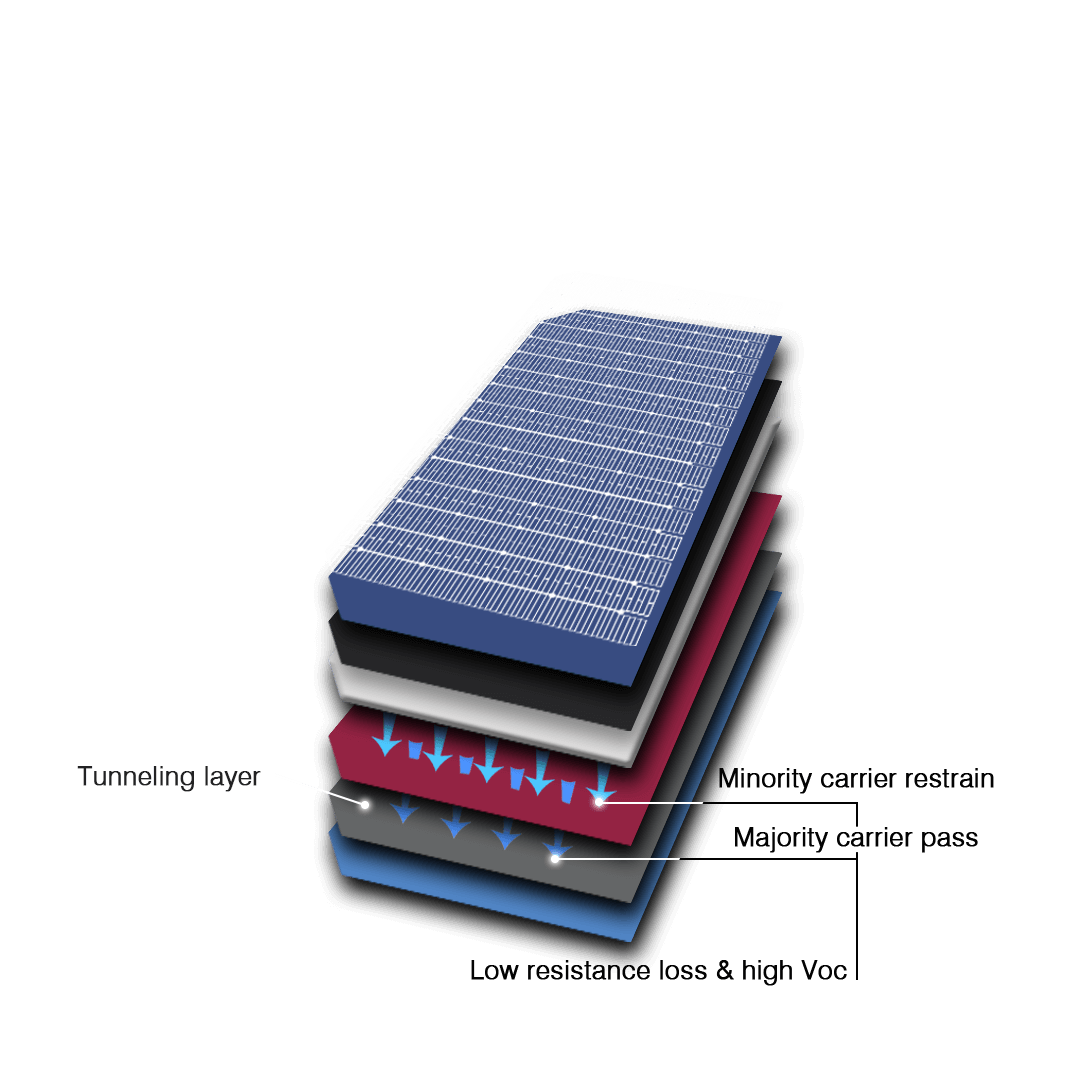
The 420W high-transparency module uses N-type TOPCon solar cell technology. TOPCon uses passivated-contact cell architecture to reduce carrier recombination and improve photovoltaic conversion performance.
Combined with a half-cut cell configuration, N-type TOPCon technology provides a suitable platform for high-transparency photovoltaic modules where part of the module surface is intentionally reserved for daylight transmission.
Dual-Glass High-Transparency Module Design
The existing Ocean Solar product specification describes this model as a high-transparency dual-glass solar panel. Transparent glass on the module structure allows daylight to pass through the intentionally open areas between the photovoltaic cell zones.
The current product copy specifies high-transmittance tempered glass with glass transmittance above 93%. This value describes the optical transmission performance of the glass itself and should not be interpreted as a 93% whole-module transparency ratio.
For projects requiring a specific amount of natural daylight, the total transparent area, solar cell spacing, installation angle and supporting structure should be evaluated together.
Why Use Transparent Solar Modules in BIPV Projects?
Solar Generation and Daylight in One Building Element
Transparent photovoltaic modules can combine solar electricity generation with partial daylight transmission. This makes them useful where a conventional opaque PV panel would block too much natural light.
Architectural Integration
The visible spacing between photovoltaic cell areas creates a distinctive architectural appearance. Cell spacing and module dimensions can therefore become part of the building design rather than being treated only as electrical equipment.
Custom Light-Transmission Requirements
Different projects may prioritize electricity generation, daylight, shading or aesthetics differently. Customized transparent-area layouts can be discussed according to project requirements, subject to photovoltaic and structural engineering review.
Typical Applications of 420W Transparent Solar Panels
Solar Canopies and Carports
High-transparency modules can be integrated into suitable solar canopies and carports where photovoltaic generation and partial daylight beneath the structure are both required.
Pergolas and Outdoor Structures
Pergolas, walkways and similar structures can use transparent PV modules as a multifunctional building surface, subject to structural, waterproofing and local building requirements.
Building-Integrated Photovoltaics
The dual-glass transparent layout can be considered for selected BIPV applications where photovoltaic modules form part of the visible architectural envelope. Final use as a building element must comply with the required structural and building standards for the project.
Agrivoltaic and Light-Transmitting PV Structures
Projects that require some sunlight beneath photovoltaic modules may consider a transparent module layout. The required transparency, crop-light requirements and PV layout must be evaluated at project level.
Reliability and Outdoor Performance
Ocean Solar's current product description states that the module uses high-transmittance tempered glass, anti-aging encapsulation materials and an anodized aluminium frame. The module is intended for long-term photovoltaic operation across different outdoor environments.
Project buyers should request the current technical datasheet and applicable test reports before system design to confirm electrical parameters, mechanical loading, glass configuration, fire classification and environmental certifications for the destination market.
12-Year Product Warranty and 30-Year Power Warranty
Ocean Solar currently lists a 12-year product warranty for this 420W high-transparency solar panel. The existing product content also specifies a 30-year extra linear power output warranty.
Product warranty and linear power output warranty are different warranty terms and should be displayed separately throughout the product page and marketing materials.
Custom High-Transparency Solar Panels
For architectural photovoltaic projects, Ocean Solar can discuss customized module configurations according to project requirements. Important design parameters can include module size, cell layout, transparent-area ratio, electrical output, glass appearance, frame requirements and connection configuration.
Because increasing transparency normally reduces the area available for photovoltaic cells, the required transparency and target output power should be defined together during project development.
Packaging and International Delivery
Ocean Solar supports international project delivery for photovoltaic modules. Final pallet configuration, container quantity, delivery schedule, Incoterms and project packaging requirements should be confirmed in the commercial quotation before shipment.
Other Ocean Solar Module Options
Ocean Solar also supplies higher-power bifacial dual-glass modules for projects where maximum photovoltaic output is more important than daylight transmission.
Frequently Asked Questions About 420W High-Transparency Solar Panels
What is a 420W high-transparency solar panel?
It is a photovoltaic module that combines 420W rated solar generation with transparent areas that allow part of the daylight to pass through the module. This type of design is relevant to selected BIPV and architectural solar applications.
What solar cell technology does the module use?
The Ocean Solar 420W high-transparency module uses N-type TOPCon half-cut solar cell technology.
What are the dimensions of the 420W transparent solar panel?
The current Ocean Solar product specification lists dimensions of 2382 × 1134 × 30mm.
What is the transparency percentage of the solar panel?
The current public product information does not specify a verified whole-module transparency percentage. The existing specification states glass transmittance above 93%, but glass transmittance is not the same as module transparency. The final module transparency depends primarily on cell spacing and transparent-area layout.
Can the transparency level be customized?
Project-specific module layouts can be discussed with Ocean Solar. If a particular transparency ratio is required, the target daylight transmission, module power and cell layout should be defined together before production.
Is this solar panel suitable for BIPV?
Its transparent dual-glass design can be considered for selected building-integrated photovoltaic applications. However, use as a structural or architectural building element requires confirmation of project-specific mechanical, fire, glazing and local building-code requirements.
Can it be used for a solar canopy or pergola?
Yes, transparent photovoltaic modules can be considered for compatible solar canopies, pergolas and similar structures where electricity generation and partial daylight are both required. Structural design and fixing details must be confirmed for each project.
Is the 420W high-transparency panel bifacial?
The current Ocean Solar product content describes a transparent dual-glass module and N-type TOPCon technology but does not publish a verified bifaciality percentage for this specific product. Bifacial performance should therefore be confirmed from the current technical datasheet before it is included in project yield calculations.
What is the warranty for the 420W high-transparency module?
Ocean Solar currently specifies a 12-year product warranty and a 30-year extra linear power output warranty.
What information should be confirmed before ordering transparent solar panels?
Buyers should confirm rated power, module dimensions, required transparency ratio, electrical characteristics, glass configuration, weight, mounting method, mechanical loading, applicable certifications and the intended architectural application before production.
Does Ocean Solar provide customized transparent solar modules?
Ocean Solar supports customized solar module projects. Module dimensions, cell arrangement, transparency requirements and other specifications should be technically reviewed before the final design is confirmed.
 English
 العربية
 Русский
 Español
 Português
 Deutsch
 italiano
 日本語
日本語 Nederlands
 Tiếng Việt
 ไทย
ไทย Polski
 Türkçe
 ພາສາລາວ
 ភាសាខ្មែរ
 Bahasa Melayu
 ဗမာစာ
ဗမာစာ தமிழ்
தமிழ் Filipino
 Bahasa Indonesia
 magyar
 Română
 Čeština
 Српски
 हिन्दी
 فارسی
فارسی Slovenčina
 Slovenščina
 Norsk
Norsk Svenska
 українська
 Ελληνικά
 Suomi
Suomi עברית
עברית Dansk
Dansk اردو
اردو বাংলা
বাংলা Hrvatski
 Eesti keel
 සිංහල
සිංහල latviešu
 Azərbaycan dili
 Български
 ગુજરાતી
 ಕನ್ನಡ
ಕನ್ನಡ Kurdî
Kurdî Lietuvių
 മലയാളം
 मराठी
मराठी پښتو
پښتو తెలుగు


 简体中文
简体中文