Solar Panel Sizes Explained: Dimensions for Residential & Commercial Systems
You are here: Home » Blog » Solar Panel Sizes Explained: Dimensions for Residential & Commercial Systems
Solar Panel Sizes Explained: Dimensions for Residential & Commercial Systems
Views: 0 Author: Site Editor Publish Time: 2026-06-12 Origin: Site
Ever wonder if your roof can actually handle a solar system?
Many homeowners feel confused by the physical space required for solar energy.
Understanding the dimensions of asolar panelis your first step.
It is the key to a cost-effective and efficient energy setup.
In this post, you will learn about standard sizes and weights.
We will help you match the right technology to your unique roof.
Let’s find the perfect fit for your home.
Understanding Solar Panel Dimensions: The Basics
When you start planning a solar project, the physical footprint of the equipment matters just as much as the power output. Most people assume everysolar panelis identical, but they actually come in distinct sizes designed for different installation environments. Recognizing these differences helps you avoid surprises during the actual mounting process on your roof or ground rack.
Standard Residential vs. Commercial Sizes
Residential systems usually prioritize space efficiency and aesthetics, while commercial projects focus on maximizing output over larger areas. You will typically encounter two main categories of modules during your research:
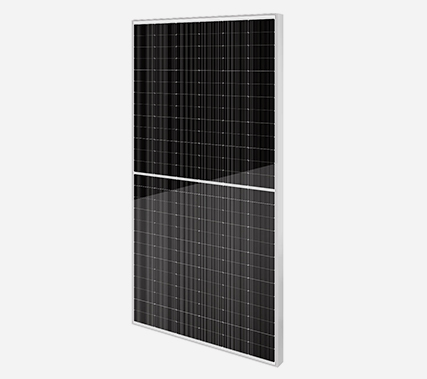
●Residential Modules:These standard units usually feature 60-cell layouts. They measure roughly 65 inches by 39 inches. Their compact frame makes them easier for a two-person crew to handle on sloped residential rooftops. They fit well around common roof obstacles like chimneys or skylights.
●Commercial Modules:These are larger, often utilizing 72 or 96 cells. They typically reach lengths between 78 and 84 inches. Because they cover more surface area, they generate more electricity per unit. You will mostly see them on flat commercial roofs or large ground-mounted arrays where space is abundant.
Module Category
Typical Cell Count
Average Length
Primary Application
Residential
60 Cells
~65 inches
Home Rooftops
Commercial
72–96 Cells
78–84 inches
Industrial/Ground Mount
The Role of Solar Cells and Layout
The internal architecture of asolar paneldictates its final dimensions. Historically, manufacturers used standard 6-inch square cells arranged in simple grids. If you add more cells, the panel grows longer to accommodate them. This is why a 72-cell module is physically taller than a 60-cell version. The frame must be sturdy enough to protect these cells, which adds a bit more to the overall thickness and weight.
Modern engineering has shifted toward "half-cut" cell technology to boost performance. Instead of using whole squares, manufacturers cut the cells in half. This reduces electrical resistance and improves efficiency. You might see labels like "120-half-cell" or "144-half-cell" on product spec sheets. Interestingly, a 120-half-cell module is roughly the same physical size as a traditional 60-cell panel. It simply packs more active surface area into the same footprint. Ocean Solar utilizes these advanced configurations to ensure you get higher wattage without needing a massive, oversized frame. They prioritize smart design so you can fit more power into the limited space available on your property. By choosing these high-density layouts, you effectively turn your roof into a more productive power plant without changing its physical profile.
Solar Panel Weight and Roof Structural Integrity
When you plan a rooftop array, you must account for the physical burden placed on your home. A singlesolar paneltypically weighs between 40 and 55 pounds. While this might seem manageable for a strong person, the cumulative weight of an entire system adds up very quickly. You are not just mounting the modules; you are also adding heavy aluminum rails, clamps, and wiring. This total load requires careful consideration to ensure your roof remains safe and sound for decades.
How Much Do Solar Panels Weigh?
Most residential modules fall into that 40 to 55-pound range, but larger commercial units can easily exceed 60 pounds. If you choose high-output modules, they often carry more glass and thicker frames to maintain structural rigidity over their larger surface area. You should never attempt to move or install these units alone. Professional installers use specialized equipment to lift them safely, preventing damage to both the hardware and your roof shingles.
●Handling Risks:Attempting a DIY install with heavy modules often leads to micro-cracks in the cells. These tiny fractures are invisible to the naked eye but drastically reduce power output over time.
●Safety Protocols:Professional crews utilize safety harnesses and mechanical lifts. They ensure the weight is distributed evenly across the rafters rather than concentrating pressure on weak spots.
●Equipment Burden:Remember to add roughly 2 to 4 pounds per square foot for the mounting system itself. This hardware is essential for securing the array against wind and snow loads.
Component Type
Estimated Weight Range
Standard Residential Module
40–50 lbs
Large-Format Commercial Module
55–70 lbs
Mounting Hardware (per sq ft)
2–4 lbs
Can Your Roof Support the Load?
Before you commit to a specificsolar panelmodel, you need to verify your roof's health. Most modern homes handle these systems without any issues, but older structures might require reinforcement. A professional inspection is the only way to know for sure if your rafters can take the extra weight. They will check for signs of rot, water damage, or sagging that could compromise the installation. If your roof is nearing the end of its life, it is much smarter to replace it before you bolt down a system that should last 30 years.
We often see clients worry about the total weight of a 10kW system, which can exceed 1,000 pounds. While that number sounds intimidating, the weight is spread across a large surface area, usually resulting in a manageable load of 3 to 4 pounds per square foot. Ocean Solar provides detailed technical data for all their modules, making it easier for your engineer to perform these load-bearing calculations accurately. They understand that a successful project starts with a solid foundation, so they ensure their documentation covers every necessary specification for your local building inspector. By working with a qualified installer who does a proper site assessment, you gain peace of mind knowing your home is perfectly prepared for the added weight.
Matching Solar Panel Size to Your Energy Requirements
Choosing the right size for your system is about balancing your actual power needs against the available space on your roof. You might feel tempted to just buy the biggest modules available, but that is not always the smartest move for every property. Instead, we look at how much energy you use annually and match it to asolar panelthat fits your specific site constraints. By understanding these tiers, you can avoid paying for more equipment than your roof can actually hold.
Power Output vs. Physical Footprint
Different applications require different power densities. You will find that the physical dimensions of a module often scale up alongside its wattage, meaning you need to select the right tool for the job. Here is how these categories usually break down for most projects:
●Small Modules (10W–100W):These are compact units perfect for portable setups, RVs, or small off-grid cabins. They take up very little space and provide enough trickle charge for basic lighting or small electronics. You rarely see these on residential rooftops because they lack the scale needed for home energy needs.
●Medium Modules (150W–450W):This is the industry standard for most homes. They strike a great balance between physical size and power output, making them easy to arrange on standard roof rafters. You can fit a decent number of these on a typical house to offset a significant portion of your utility bill.
●High-Power Modules (500W–700W):These are the giants of the industry, typically reserved for large-scale industrial sites or ground-mounted arrays. They are physically larger and heavier, but they allow you to generate massive amounts of electricity without needing an endless sea of smaller panels.
Power Tier
Typical Use Case
Space Efficiency
10W–100W
Portable/Off-Grid
Low (High footprint per Watt)
150W–450W
Residential Rooftop
Medium (Optimized for homes)
500W–700W
Industrial/Ground
High (Best for large areas)
The "Efficiency Sweet Spot"
Efficiency is the secret sauce that lets you do more with less. A highly efficientsolar panelconverts a larger percentage of sunlight into usable electricity, meaning you need fewer physical units to hit your energy targets. This is a huge advantage if your roof has limited space or features many obstructions like chimneys and vents. You want to maximize the power density of every square inch you have available.
Ocean Solar leverages advanced N-Topcon technology to push these boundaries further. By integrating this tech, they ensure their larger modules provide significantly higher output without wasting valuable installation area. It means you get a more productive system that fits neatly into your existing roof layout. They focus on this power density so you can achieve your energy goals without needing to cover every single corner of your property. When you choose high-efficiency options, you reduce the total number of mounting points needed, which simplifies the entire installation process for your team.
Beyond Standard Sizes: Customization and Flexibility
Many homeowners assume their roof is a perfect, empty rectangle waiting for a standard grid. In reality, most roofs are filled with obstacles like chimneys, plumbing vents, and skylights. These features break up your available space, making it nearly impossible to fit uniform modules perfectly. You often find yourself forced to leave large gaps or skip sections entirely, which wastes valuable sunlight potential. Relying on fixed, off-the-shelf dimensions can leave you with a system that looks messy and performs below your actual energy needs.
Why One-Size-Fits-All Rarely Works
When you face a roof full of obstructions, standard panels start to feel like a square peg in a round hole. You might have a narrow strip of space that is too small for a typicalsolar panelbut too valuable to ignore. If you stick to rigid, mass-produced sizes, you lose the chance to optimize every inch of your rooftop. This limitation often forces installers to use creative, yet less efficient, layouts that can lead to shading issues or poor aesthetics.
●Roof Obstacles:Chimneys and roof vents create "dead zones" where you cannot place standard hardware. If your modules are too large, you end up with awkward gaps around these features.
●Irregular Geometry:Not all roofs are simple slopes. Some have dormers, hips, or valleys that cut into your layout space, making standard rectangular arrays difficult to align properly.
●Aesthetic Impact:A mismatched layout with half-empty rows looks unprofessional. Customizing your approach helps maintain the clean, uniform look that many homeowners desire for their property.
Challenge Type
Impact on Installation
Typical Result
Roof Obstructions
Limits usable surface area
Wasted potential energy
Irregular Angles
Complicates mounting rails
Increased labor costs
Fixed Dimensions
Prevents edge-to-edge coverage
Lower system capacity
The Power of Tailored Solutions
You do not have to settle for the limitations of mass-market products. When standard dimensions fail to meet your project goals, Ocean Solar offers specialized OEM/ODM services to bridge the gap. They allow you to customize the length, width, and even the thickness of asolar panelto match your unique site requirements perfectly. This level of flexibility means you can wrap your array around obstacles or maximize tight corners that others simply cannot touch.
By adjusting the physical dimensions, you gain a system that fits your roof like a glove rather than a generic kit. This approach ensures you get the highest possible power density for your specific site. Ocean Solar understands that every roof has a story, so they provide the tools to build a custom solution that respects your home’s architecture. You get the benefit of high-efficiency cells packed into a frame that is built specifically for your layout. It is a smarter way to work, ensuring your investment works harder for you every single day.
FAQ
Q: Are larger panels always more cost-effective?
A: Not necessarily. While larger modules often lower the cost-per-watt, they can increase installation labor costs due to their weight and size. Balance total system efficiency with your specific roof constraints.
Q: What is the difference between monofacial and bifacial panels?
A: Monofacial panels capture sunlight from the front only. Bifacial panels generate electricity from both sides, increasing yield, especially in ground-mounted installations where they can capture reflected light.
Q: How do I calculate the total roof space needed for my system?
A: Multiply the number of panels by the area of each unit. Typically, a 6kW system requires 300–500 square feet of usable roof space.
Q: Do portable solar panels use the same technology as residential ones?
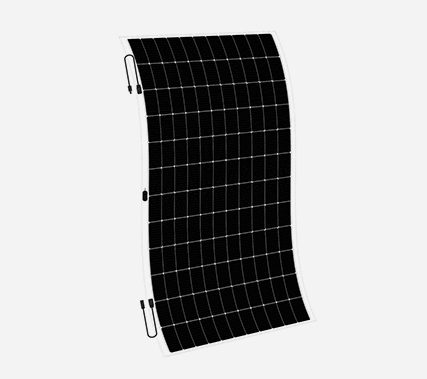
A: They often use similar silicon cells but are designed for mobility. They are typically smaller, lighter, and sometimes flexible, prioritizing transportability over the high power output of fixed residential arrays.
Conclusion
Choosing the rightsolar panelsize requires balancing power, space, and budget.
There is no single perfect fit for every home or business.
You must carefully weigh physical dimensions against your specific energy goals.
Working with a professional installer is the best way to succeed.
They will translate these complex measurements into a high-performing system.
Evaluate your unique needs today to get started.
Seek expert guidance to begin your journey toward clean, renewable energy.
 English
 العربية
 Русский
 Español
 Português
 Deutsch
 italiano
 日本語
日本語 Nederlands
 Tiếng Việt
 ไทย
ไทย Polski
 Türkçe
 ພາສາລາວ
 ភាសាខ្មែរ
 Bahasa Melayu
 ဗမာစာ
ဗမာစာ தமிழ்
தமிழ் Filipino
 Bahasa Indonesia
 magyar
 Română
 Čeština
 Српски
 हिन्दी
 فارسی
فارسی Slovenčina
 Slovenščina
 Norsk
Norsk Svenska
 українська
 Ελληνικά
 Suomi
Suomi עברית
עברית Dansk
Dansk اردو
اردو বাংলা
বাংলা Hrvatski
 Eesti keel
 සිංහල
සිංහල latviešu
 Azərbaycan dili
 Български
 ગુજરાતી
 ಕನ್ನಡ
ಕನ್ನಡ Kurdî
Kurdî Lietuvių
 മലയാളം
 मराठी
मराठी پښتو
پښتو తెలుగు


 简体中文
简体中文